भारतीय संस्कृति में मनुष्य जीवन को चार पुरुषार्थों में विभाजित किया गया है – धर्म, अर्थ, काम और मोक्ष l काम का स्थान चार पुरुषार्थों में तीसरा है और अन्तिम पुरुषार्थ मोक्ष है जिसको जीवन का अन्तिम लक्ष्य कहा गया है l यथा धर्म के लिए धर्मशास्त्रों का, अर्थ के लिए अर्थशास्त्र का और मोक्षप्राप्ति के लिए मोक्ष के ग्रन्थों का अध्ययन आवश्यक है तथैव काम के ज्ञान और यथायोग्य विवेकजन्य प्रयोग के लिए कामशास्त्र का अध्ययन आवश्यक है l इस लेख में काम और कामशास्त्र को ध्यान में रखकर निम्नलिखित मुद्दों पे विवेचन प्रस्तुत है –
काम की व्युत्पत्ति और शास्त्रों में स्थान l
कामशास्त्र का उद्गम और प्रयोजन l
वात्स्यायन और कामसूत्र की रचना l
कामशास्त्र की ग्रन्थ परम्परा l
कामसुत्र का संदेश l
उपसंहार l
इस ग्रन्थ के पठन पर्यन्त यह अपेक्षा है कि पाठक काम और कामशास्त्र के उन बिन्दुओं से अवगत होगा जो सामान्यतया प्रकाश में नहीं आये हैं या उनको दबा दिया गया है और फलतः आज कामसूत्र को शास्त्र होते हुए भी घृणा या जुगुप्सा की दृष्टि से देखा जाता है l
काम की व्युत्पत्ति और शास्त्रों में स्थान
“कम् – कान्तौ” धातु से जन्य शब्द है काम l काम अर्थात् इच्छा[1] l जहाँ इच्छा वहाँ आकर्षण और यह आकर्षण ही समस्त संसार के अस्तित्व का मूल है l विज्ञान से यह सिद्ध है कि विश्व का प्रत्येक पदार्थ अन्य पदार्थ को आकर्षित करता है अतः आकर्षण जिसके मूल में है वह काम प्रत्येक पदार्थ में स्थित है l अमरकोश में काम को ‘मानसिक भाव’ की श्रेणी में रखा गया है l ऋग्वेद में काम को मन का वीर्य (रेतस् ) कहा गया है जो मानसिक भाव को प्रतिपादित करता है l[2]
वात्स्यायन प्रणीत कामसूत्र के अनुसार ज्ञानेन्द्रियों का(कर्ण, त्वचा, नेत्र, जिह्वा, नासिका), अपने अपने विषय में (क्रमशः शब्द, स्पर्श, रूप,रस, गन्ध), अनुकूल रूप में, प्रवृत्त होना अर्थात् काम l[3] यहाँ काम की व्याख्या में वात्स्यायन स्पष्ट है l वह काम को केवल शारीरिक सुख या वासना नहीं बताते l
काम के मुख्य दो प्रकार मिलते हैं – लौकिक और अलौकिक l लौकिक काम में मुख्य रूप से शारीरिक सुख और गौणरूप से अन्य इच्छा का समावेश होता है l अलौकिक काम की श्रेणी में दिव्यकर्म की इच्छा और कभी देवों की इच्छाओं को भी रखा जा सकता हैं l
ऋग्वेद में पृथ्वी की उत्पत्ति का कारण काम ही माना गया है और उसे परब्रह्म के हृदय से जनित बताया है[4] अतः काम की उत्पत्ति अलौकिक है न कि लौकिक l लौकिक हेतुओं की सिद्धि हेतु काम से ही अन्य प्रजा जन्म लेती हैं l उपनिषद में भी इसका प्रतिपादन हुआ है l
सोऽकामयत बहुस्यां प्रजायेत l
काममय एवायं पुरुषः ll – तैत्तिरीयोपनिषद्
श्रीमद्भगवद्गीता में भी भगवान् श्रीकृष्ण ने कहा है कि “समस्त प्राणिजगत् में धर्म के अनुरूप जो भी काम है वह मैं ही हूँ” l[5] “अहं सर्वस्य प्रभवः” बोल कर गीता में, कृष्ण, स्वयं को जगत् की उत्पत्ति का मूल कारण बताते है अतः कामरूप बीज स्वयं को ही बताते है l
पौराणिक साहित्य (पुराण आदि) एवं लौकिक साहित्य (कालिदास, माघ आदि का साहित्य) में काम को देव की उपाधि प्राप्त होती है और उसे नाट्यशास्त्र में भी स्थान प्राप्त होता है l समय का चक्र काम को शिल्प-स्थापत्य में भी स्थानप्राप्ति देता है और साथ साथ शास्त्रपरम्परा में भी l पुरुषार्थचतुष्ट्यम् में धर्म और अर्थ के बाद काम को स्थान मिलता है और बाद में मोक्ष को l व्याकरण के अनुसार सर्वप्रथम धर्म, तत्पश्चात् अर्थ, काम और मोक्ष शब्द होने चाहिए ऐसा कोइ नियम नहीं है, किन्तु सर्वप्रथम अर्थ शब्द होना चाहिए, यद्यपि यह क्रम निश्चित हुआ है जो मुक्ति (मोक्ष) से पूर्व काम की उपयोगिता दर्शित करता है l मुक्ति मानवजीवन का सर्वोच्च ध्येय है किन्तु काम की उपेक्षा कर के नहीं क्योंकि काम (धर्मानुरूप) मानवी के लिए मोक्ष में बाधक नहीं अपितु सहायक है l
शास्त्रोक्त और आज रूढिगत हो चुके षोडश संस्कारों में वर्णित गर्भाधान, पुंसवन और विवाह जैसे संस्कारों से काम का महत्त्व देखने को मिलता है l
गर्भाधान संस्कार – गर्भाधान का सामान्य अर्थ है “धर्मपत्नी के गर्भ में बीज का आरोपण करना” और उस से उत्पन्न संतान ही औरस संतान होती है l इसी संतान से माता-पिता के धर्म एवं अन्य जीवनकार्य (अर्थ आदि) जुडे होते हैं अतः कामप्रेरित व धर्मानुकूल गर्भाधान से जन्य संतति माता-पिता के पुरुषार्थों की वाहक होती है l गृहस्थाश्रम का यह कार्य ही आगे सन्यासाश्रम में मोक्षप्राप्ति तक ले जाता है l
पुंसवन संस्कार– सामान्यतया, गर्भ रहने के तीन या चार माह बाद, संतति के दोषरहित जन्म हेतु किए जाते है l यहाँ भी संतति के जन्म हेतु ‘कामना’ की जाती है जिसे शास्त्रोक्त विधि से अभिषिक्त किया जाता है l
विवाह संस्कार – चारों आश्रमों में गृहस्थाश्रम का महत्त्व सर्वाधिक है और मनु ने उसे अन्य सभी आश्रमों का आधार बताया है[6] तथैव विवाह गृहस्थाश्रम का प्रमुख संस्कार माना गया है l विवाह को वैदिक साहित्य में ‘यज्ञ’ की श्रेणी में रखा गया है[7] और उसका मुख्य उद्देश्य संतानप्राप्ति (वंशप्राप्ति) है जिस की पूर्ति हेतु धर्माधारित काम का आचरण अनिवार्य है l यहाँ दो शब्दों का भेद जानना अत्यावश्यक होगा – काम और यौन.
संतति की प्राप्ति हेतु शारीरिक सम्बन्ध स्थापित होता है तो उसे कामसम्बन्ध कहा जाता है l
शारीरिक सम्बन्ध का हेतु संततिप्राप्ति न हो कर केवल आनन्दप्राप्ति हो तो वह यौनसम्बन्ध है l
निष्कर्ष – वैदिक शास्त्रों में वर्णित दैवी काम, जो जगत् और प्रजा की उत्पत्ति का कारण है, पौराणिक शास्त्रों में देवत्व को प्राप्त होता है और आगे चल कर साहित्य में और कलाओं में भी यथायोग्य स्थान को प्राप्त होता है l श्रुति और स्मृति दोनों प्रकार के ग्रन्थों में काम को अन्य तीन पुरुषार्थों का पूरक माना है और मुख्य सोलह संस्कारों में भी काम का प्रमुख स्थान है अतः धर्मानुकूल काम सदैव ही समाज का एक महत्व का अङ्ग रहा है l
कामशास्त्र का उद्गम
अथर्ववेद के विवाह प्रकरण सूक्त में कामशास्त्र की संकल्पना के बीज मिलते हैं[8] जहाँ अग्निदेव से प्रार्थना की जाती है कि वह नवविवाहिता स्त्री को सुसंतति प्रदान करे l अथर्ववेद के इसी सूक्त की एक ऋचा में सूर्यपुत्री को उत्तम संतति को जन्म देने हेतु प्रसन्नचित्त हो कर पति के साथ समागम के लिए शैया पे आने को कहा जाता है l[9]
छान्दोग्य उपनिषद में यही संकल्पना विकसित हुई है l वहाँ स्त्री-संभोग को ‘सामवेद का गान’, स्त्री को प्रसन्न करने की क्रिया को ‘प्रस्ताव’, स्त्री के साथ शयन को ‘उद्गीथ’, संभोग को ‘प्रतिहार’ और मैथुनक्रिया के अन्त में होते वीर्यस्खलन को ‘निधन’, प्रायः अन्त में समूह में होता सामवेद का गान, कहा गया है l[10]
अतः कामशास्त्र का मूल वैदिक साहित्य में प्राप्त होता है जो आगे जाकर शास्त्र के रूप में विकसित होता है l
कामशास्त्र का प्रयोजन
काम का धर्माधारित होना अत्यावश्यक है यह हमने देखा l अभी यक्ष प्रश्न यह है कि धर्म-आधारित काम क्या है ? उससे हम अवगत कैसे हो ? विभिन्न सामाजिक परिस्थितियों में धर्माधारित काम क्या होगा ? क्योंकि काम धर्माधारित है अतः वह प्रत्येक व्यक्ति के लिए प्रत्येक परिस्थिति में समान न रहकर भिन्न रूपों में होगा l ऐसे अनेक प्रश्न एवं संशयों के निवारण हेतु शास्त्र का होना अनिवार्य है और यही है काम आधारित शास्त्र अर्थात् कामशास्त्र का प्रयोजन l
शास्त्र की एक सर्वमान्य व्याख्या है – शास्ति च त्रायते च इति शास्त्रम् – जो अनुशासन और रक्षा प्रदान करे वह है शास्त्र l काम यदि मर्याद व अनुशासित न रहे तो वह प्रथम व्यक्ति के और तत्पश्चात् समग्र समाज के पतन का कारण बनता है l इतिहास में अमर्याद काम से नष्ट होते व्यक्ति के अनेक उदाहरण प्राप्त होते हैं जिनसे संदेश यही मिलता है कि काम अनुशासित और मर्यादा में ही होना उचित है l धर्माधारित और मर्यादारत काम घर में, कुल में और समाज में अनुशासन बनाए रखता है जिस से व्यभिचार, भ्रष्टाचार आदि पे नियन्त्रण रहता है, शान्ति बनी रहती है और समाज रक्षित रहता है l श्रीमद्भगवद्गीता में अर्जुन ने कहा है – अधर्म आधारित काम से वर्णसङ्कर प्रजा का जन्म होता है जो प्रथम कुल को, तत्पश्चात् जाति को, तत्पश्चात् समाज को नष्ट करती हैं l[11]
काम को शास्त्र के रूप में वर्णित करनेवाला प्राचीनतम ग्रन्थ जो आज प्राप्य है वह है मुनि वात्स्यायन प्रणीत कामसूत्र l कौन थे वात्स्यायन और क्यों उन्होंने कामसूत्र की रचना की ?
वात्स्यायन और कामसूत्र की रचना
वात्स्यायन
विद्वानों के मतानुसार वात्स्यायन वत्स गोत्र में उत्पन्न संतान का निर्देशक है – वत्सस्य गोत्रापत्यम् वात्स्यायनम् l गौड ब्राह्मणों के एक गोत्र का नाम वत्स है अतः वात्स्यायन वास्तविक नाम न होने की विशेष संभावना है l संस्कृत गद्यकार सुबन्धु रचित “वासवदत्ता” में कामसूत्र के रचयिता का नाम ‘मल्लनाग’ दिया है और यही नाम कामसूत्र के प्रसिद्ध टीकाकार यशोधर ने भी अपनी टीका में दिया है l अतः वात्स्यायन का वास्तविक नाम मल्लनाग होने के प्रमाण भी प्राप्त है l एक और वात्स्यायन भी है जिसने न्याय पे भाष्य लिखा है l विद्वानों के मतानुसार कामसूत्र और न्यायभाष्य – दोनों का कर्ता एक ही व्यक्ति हो सकता है l कामसूत्र में यथोचित स्थान पे रचनाकार “इति वात्स्यायनः” कह कर अपना मत प्रकट करता है अतएव कामसूत्र के रचयिता के रूप में वात्स्यायन नाम ही प्रचलित हुआ है l
कामसूत्र का उल्लेख सुबन्धु के ‘वासवदत्ता’ में और भरतमुनि के ‘नाट्यशास्त्र’ में प्राप्त होता है l कालिदास की कृतिओं में और अन्य सभी परवर्ती साहित्य में भी कामसूत्र का प्रभाव स्पष्ट देखने को मिलता है अतः कामसूत्र न केवल एक प्राचीन शास्त्र है अपितु साहित्य में भी उसको यथोचित स्थान प्राप्त है l
कामसूत्र की रचना
कामसूत्र के प्रारम्भिक सूत्रों में ही कामसूत्र की रचना कैसे हुइ उसका विवरण प्राप्त होता है जिसका संक्षिप्त रूप है – प्रजापति ब्रह्मा द्वारा एक लक्ष (लाख) अध्यायों से युक्त शास्त्र का सर्जन होता है जिसमें से धर्मशास्त्रविषयक अंश को मनु, अर्थशास्त्रविषयक अंश को बृहस्पति और महादेव के अनुचर नन्दी द्वारा सहस्र (1000) अध्यायों से युक्त कामशास्त्रविषयक अंश को पृथक् किया गया l शिव-पार्वती के विवाह पश्चात् उनके रतिसुख के समय पे नन्दी द्वारा इस ग्रन्थ की रचना बताई गई है l
आरुणि उद्दालक का पुत्र श्वेतकेतु सहस्र अध्यायों को पाँच सौ (500) अध्यायों में संक्षिप्त करता है l प्रायः यह वही श्वेतकेतु है जिसने विवाह परम्परा को स्थापित किया था l बभ्रु का पुत्र बाभ्रव्य इसे एक सौ पचास (150) अध्यायों में संक्षिप्त करता है और साथ में सात अधिकरणों में विभक्त भी करता है l बाभ्रव्य के परवर्ती साहित्यकारों द्वारा एक एक अधिकरण पे स्वतन्त्र कामाधारित शास्त्रों की रचना होती है अतः अन्त में शास्त्र एक न रह कर विभक्त रूपों में विस्तारित हो जाता है l बाभ्रव्य से पूर्ववर्ती आचार्यों के शास्त्र भी लुप्त हो जाते हैं अतः संपूर्ण कामशास्त्र का अध्ययन होना अशक्य हो जाता है और अन्त में वात्स्यायन द्वारा बाभ्रव्य के प्रायः लुप्त सातों अधिकरणों को ही आधार बनाकर कामसूत्र की रचना होती है जिसमें संक्षिप्तता भी हो और पूर्णता भी l नन्दी से वात्स्यायन पर्यन्त इस शास्त्र का नाम ‘कामसूत्र’ ही होता है जो ध्यानपात्र मुद्दा है l
कामशास्त्र की ग्रन्थपरम्परा
कामसूत्र की रचना के पश्चात् कामशास्त्र की ग्रन्थपरम्परा का उद्भव हुआ जिसका आधार नित्य कामसूत्र ही रहा l प्राप्त-अप्राप्त अनेक ग्रन्थ इस ग्रन्थपरम्परा में प्राप्त होते हैं जिसमें से कुछ निम्नलिखित हैं –
कामसूत्र की रचना को ले कर संदेश वात्स्यायन ने इस ग्रन्थ में अन्तिम चरण में निर्दिष्ट किया है जो निम्नलिखित है और प्रायः लोग उस पर ध्यान नहीं देते –
1] पूर्ववर्ती कामसूत्र के ग्रन्थ एवं उनके रचयिताओं के विभिन्न मतों का अध्ययन करके एवं स्वबुद्धि से चिन्तन करके ही वात्स्यायन ने कामसूत्र की रचना कि है l[12]
2] इस कामशास्त्र को जाननेवाला व्यक्ति निश्चय ही धर्म, अर्थ, काम, विश्वास और लोकाचार को ध्यान में रख कर ही प्रवृत्त होगा, राग या कामुकतावश नहीं l[13]
3] कामसूत्र में धर्मविरुद्ध कामक्रियाओं का उल्लेख अवश्य है किन्तु वह कुछ क्षेत्रों की लोकप्रचलित रूढियों से विशेष नहीं हैं और उसे विवेचन के पश्चात् निषिद्ध घोषित भी कर दिया गया है l[14]
4] कामसूत्र की रचना ब्रह्मचर्य व समाधि द्वारा लोकव्यवहार को सुचारु रूप से चलाने के लिए हुइ है अतः इस ग्रन्थ के विधान रागमूलक नहीं समझना चाहिए l[15]
5] कामशास्त्र के तत्वों को समझनेवाला व्यक्ति काम की यथायोग्यता को लेकर जितेन्द्रिय हो जाता है l[16]
कामसूत्र के अन्तिम सूत्र में वात्स्यायन कामसूत्र का मुख्य उद्देश्य भी स्पष्ट करते है कि – जो भी व्यक्ति रागात्मक भाव से इस शास्त्र का अध्ययन व प्रयोग करेगा उसे सिद्धि कदापि प्राप्त नहीं होगी किन्तु विवेक से किए गए अध्ययन व प्रयोग से पूर्णसिद्धि प्राप्त होगी l[17]
उपसंहार
उपरोक्त बिन्दुओं से यह प्रमाणित होता है कि कामशास्त्र का आधार धर्म है और उसकी रचना का उद्देश्य सामाजिक व्यवस्था है न कि व्यभिचार की वृद्धि l
वात्स्यायन ने धर्म को सर्वाधिक महत्ता दी है अतः काम धर्म का विरोधी नहीं है अपितु धर्म पे ही आधारित है l
कामसूत्र में वात्स्यायन ने मत दिया है कि – धर्म संसार का नियामक है अतः वह पुरुषार्थों का मूल है और अर्थवृत्ति भी धर्माधारित ही होनी चाहिए तत्पश्चात् धर्माविरुद्ध काम का सेवन इच्छनीय है अतः कामशास्त्र अमर्याद या उच्छृंङ्खल काम की अनुमति नहीं देता l
कामसूत्र का अध्ययन व प्रयोग विवेक आधारित होगा तभी समाज में अनुशासन रहेगा अन्यथा अराजकता और व्यभिचार की वृद्धि होगी l
कामसूत्र और काम के अन्य ग्रन्थ, शास्त्र की एक विशाल श्रेणी के अन्तर्गत आते हैं अतः उनका अध्ययन शास्त्रोक्त विधि से होना चाहिए न कि सामान्य भाषान्तर के पठन द्वारा l यदि ऐसा न हुआ तो अर्थ का अनर्थ होना निश्चित है और शास्त्र का प्रयोजन ही विफल हो जाएगा l
वात्स्यायन के एक सूत्र से इस लेख को पूर्ण कर रहा हूँ –
एक आम भारतीय तंत्र शब्द सुनकर शायद गांजा फूंकते हुए, हाथ में एक खोपड़ी पकडे, शमशान घाट में बैठे हुए कुछ अरुचिकर अनुष्ठान करते हुए खून से लथपथ आंखों वाला एक अव्यवस्थित व्यक्ति की कल्पना करेगा। विदेशी और अंग्रेजी शिक्षित अधिक कुलीन पश्चिमीकृत शहर के लोग तुरंत सेक्स और अवसाद के बारे में सोचेंगे। यदि आप इंटरनेट पर ‘तंत्र’ शब्द गूगल करेंगे, तो आप विभिन्न यौन स्थितियों में “पूर्वी दुनिया” के लोगों की बहुत सारी छवियों को देखेंगे। तंत्र का सभी प्रकार के अनैतिक, दुष्ट और अजीब प्रकार के नाकारात्मक जुडाव हिंदूओं के साथ-साथ गैर-हिंदूओं के मन-मस्तिष्क में घर कर गया और तंत्र को लोग काला-जादू, पशु बलि और अन्य आपत्तिजनक प्रथाओं से जोड़कर देखने लगे हैं।
इसके अलावा, “तंत्र सेक्स” और “तंत्र मसाज़” का एक कुटीर उद्योग पश्चिमी देशों, विशेष रूप से संयुक्त राज्य अमेरिका में में विकसित हुआ है जो तंत्र को सॉफ्ट पोर्नोग्राफी की तरह प्रस्तुत करने की कोशिश करता है और इस बारे में जानबूझकर गलत प्रचार के द्वारा अपने आसपास उत्पादों और सेवाओं को बेचता है। तंत्र की विकृत परिभाषा विश्व स्तर पर फैली हुई है| उदहारण के लिए हमारे पास एक ऑस्ट्रेलियाई ‘स्कूल ऑफ़ तंत्र (लव वर्क्स) भी है, जिसके पास सर्वाधिक मांग वाला कार्यक्रम “मेलबोर्न कपल्स कोचिंग” है, जो पुरुषों के लिए मैथुन में लम्बी अवधि तक टिकने और महिलाओं के लिए अधिक यौन सुख पाने का “तांत्रिक कौशल” सिखाने का दावा करता है!
यह बहुत गंभीर एवं विचारनीय विषय है। तंत्र के बारे में इन धारणाओं में से प्रायः निश्चित रूप से गलत हैं और हिंदू धर्म को हीन दिखाते हैं। निबंधों की इस श्रृंखला में मैं तंत्र के बारे में चर्चा करूँगा कि यह क्या है? किसको तंत्र नहीं कह सकते? वैदिक धर्मशास्त्र और तत्वमीमांसा से इसका संबंध, तंत्र के बारे में विभिन्न मिथक और गलत धारणाएं और आखिरकार आधुनिक हिंदू धर्म में इसकी प्रासंगिकता पर चर्चा करूँगा। मैं दिखाऊंगा कि कैसे तंत्र एक आम हिंदू के जीवन के लगभग सभी पहलुओं में जाने-अनजाने इस प्रकार सम्मिलित है जिसकी वह कल्पना भी नहीं कर सकता।
गूढ़ तांत्रिक अभ्यास
कुछ गूढ़ तांत्रिक साधनाएं जैसे पञ्च-मकार (मत्स्य,मांस,मदिरा(शराब),मुद्रा,मैथुन(समागम)) या षड-कर्म (छह “जादुई” अनुष्ठान) मुख्यधारा के हिंदू धर्म के अनुसार रहस्यमय या इससे विलग दिखाई देते हैं। इन्हें कुछ यहूदी-ईसाई पृष्ठभूमि वाले पश्चिमी इंडोलॉजिस्टों ने बाधा-चढ़ा कर और अजीब ढंग से पेश किया है क्योंकि वे धर्म को प्रामाणिकता के चश्मे से देखते हैं।
हालांकि तंत्र मांस और मैथुन से कहीं अधिक बढ़कर है – ये वास्तव में विशेष परिस्थितियों में कुछ चिकित्सकों द्वारा अभ्यास किया जाने वाला दुर्लभ और असाधारण रूप हैं। प्रख्यात तंत्रज्ञ श्री प्रबोध चन्द्र बागची [1] के अनुसार, ” इस बात से इनकार नहीं किया जा सकता है कि कुछ ग्रंथों में क्रियाएं हैं जिसे काला जादू कहा जा सकता है, और कुछ पाठ अश्लीलता से भरे भी हैं; लेकिन ये तांत्रिक साहित्य का मुख्य हिस्सा नहीं हैं ”।
अक्सर इन गूढ़ क्रियाओं पर अधिक ध्यान देने से मूल-तत्त्व पीछे छूट जाता है। आत्म-शुद्धि और आध्यात्मिक विकास पर पूर्ण ध्यान केन्द्रित करना तंत्र शास्त्र का अभिन्न अंग है, जिसमें सूक्ष्म तत्वमीमांसा और उन्नत योगाभ्यास शामिल हैं। इस संबंध में, प्रख्यात जर्मन इंडोलॉजिस्ट जॉर्ज फ्यूरस्टीन का कहना है: “हिंदू धर्म की तांत्रिक विरासत पर शोध और प्रकाशनों की कमी के कारण हाल के वर्षों में भ्रामक किन्तु चर्चित पुस्तकों ने इसका स्थान ले लिया है जिसे मैं नव-तांत्रिकता(Neo-Tantrism) कहता हूँ। उनका न्यून्तावादी दृष्टिकोण इतने चरम है कि इस विषय के एक नवसिखिये को उनके ग्रंथों में तांत्रिक विरासत के बारे में बमुश्किल ही कुछ मिल पायेगा। सबसे आम विकृति तांत्रिक योग को एक अनुष्ठान या पवित्र सेक्स के विषयमात्र के रूप में प्रस्तुत करना है। आज लोगों के विचार में, तंत्र सेक्स के सामान हो गया है। पर यह सच्चाई से कोसों दूर है!”[2]
यह बेहद दुर्भाग्यपूर्ण है, और बहुत हद तक हम हिंदू खुद इसके लीयते जिम्मेदार हैं, क्योंकि हमने इस विकृति को हमारी अज्ञानता और अरुचि के कारण जारी रखने की अनुमति दे रखी है। फिर कई स्वघोषित हिंदू गुरु भी हैं जो तंत्र के इस विकृत संस्करण को फैला रहे हैं। रही-सही कसर बॉलीवुड ने पूरी कर दी है जिसमे तांत्रिक गुरुओं को भ्रष्टाचारी या एक गुफा में रहने वाले तांत्रिक गुरु जैसा रूढ़िवादी चित्रण करता है, जो सम्मोहन और जादुई कौशल से भविष्यवाणी कर सकता है; दुख की बात है कि बॉलीवुड ने फिल्मों से प्यार करने वाले भारतीयों की तीन पीढ़ियों के दिमाग में जहर भर दिया है।
हिंदू धर्म का एक अभिन्न अंग
संरचनात्मक स्तर पर तंत्र हिंदू धर्म का एक अभिन्न अंग है जैसे हाइड्रोजन परमाणु पानी के अणु (H2O) का एक अभिन्न अंग है। तंत्र “वर्तमान समय में भारत में पूजा की हर प्रणाली में व्याप्त है, जिसमें वैष्णव भी शामिल हैं” [3]; इसे कोई हिंदू धर्म से अलग नहीं कर सकता, वैसे ही जैसे कोई भोजन से स्वाद को अलग नहीं किया जा सकता।
तंत्र का मूल दर्शन वैदिक विश्वदृष्टि के अनुरूप है और जो भी अंतर मौजूद है वह बहुत सूक्ष्म और अति विशिष्ट दार्शनिक बिंदुओं को लेकर है। स्वामी समर्पणानंद के शब्दों में [४]:
तंत्र वेदों या किसी हिंदू दर्शन की तरह एकात्मक प्रणाली नहीं है। यह प्रागैतिहासिक काल से ही हिंदुओं की व्यवहार और विचारों का एक संचय रहा है। इसका जन्म वेदों में निहित है; इसका विकास उपनिषदों, इतिहास, पुराणों, और स्मृतियों के माध्यम से हुआ; और बौद्ध धर्म, विभिन्न लघु हिंदू संप्रदायों और विदेशी प्रभावों द्वारा भी इसका सतत उत्थान ही होता रहा है। तंत्र द्वारा इस प्रकार अर्जित सामर्थ्य और लचीलेपन के कारण इसे भारत के हर घर और मंदिर में प्रवेश मिला है और इसने हर उस प्रदेश में, जहां भारतीय विचार पहुंचे, वैभवशाली स्थान प्राप्त किया । भारत और पश्चिम में हिंदू धर्म के रूप में जो भी आप पाते हैं, वह अनिवार्य रूप से तंत्र ही है जो एक विशेष समुदाय या व्यक्ति की आवश्यकता के अनुरूप ढाला गया है।
यहाँ ध्यान देने योग्य एक महत्वपूर्ण बात यह है कि पूजा, जो आम घरों और मंदिरों में होने वाली उपासना की विधि है, के मूल और विकास में तंत्र ही है। दूसरी ओर यज्ञ वैदिक तत्वमीमांसा में निहित एक शुद्ध वैदिक निर्माण है। पुराण-पूजा नाम की भी एक पूजा है और पुराणों में स्वयं तंत्र शास्त्रों का बड़ा अंश उधार लिया गया है।
यह स्पष्ट है कि तंत्र को एक अलग श्रेणी में 19 वीं शताब्दी के इंडोलॉजिस्टों द्वारा पेश किया गया था। क्योंकि वे वेदों से अलग किन्तु तत्त्वमीमांसा का ही एक भाग रहे तंत्र, आगम और यमला जैसे हिंदू (और बौद्ध) साहित्य के विशाल ज्ञान को समझने में असमर्थ थे। 19 वीं शताब्दी तक, हिंदुओं ने कुछ विशेष संप्रदायों की बेहद आपत्तिजनक प्रथाओं या गुह्य (गुप्त) प्रथाओं को छोड़कर तंत्र को कभी भी हिंदू धर्म से अलग नहीं माना। फ्रेंच इंडोलॉजिस्ट एंड्रे पादौक्स के अनुसार, “[तंत्र] इतना व्यापक था कि इसे एक विशिष्ट प्रणाली के रूप में नहीं माना जाता था।” [5]
इसलिए, आज हिंदू धर्म की संरचना आपस में जुड़ी हुई और अविभाज्य डीएनए के दोहरे-हेलिक्स सूत्रों की तरह है:
वैदिक सूत्र का सम्बन्ध उन प्रथाओं और रीति-रिवाजों से है जिनका उद्गम पुरु-भरत के पुरोहित धर्म से हुआ और जो पूरे भारतवर्ष में विविध सामाजिक-सांस्कृतिक विषयों को स्वयं में आत्मसात करते हुए फैला |[6]
तांत्रिक सूत्र का सम्बन्ध उन प्राचीन प्रथाओं और रीति-रिवाजों से है जो पशुपति-शिव और अखिल भारतीय देवी पंथों के साथ शुद्ध वैदिक विषयों के संलयन से बढ़े थे, जो एक विशाल जनसंख्याँ के बीच एक विस्तृत भौगोलिक क्षेत्र में कई सहस्राब्दियों से अधिक समय तक फैलते रहे।
वास्तव में, अथर्ववेद को तंत्र का एक अग्रदूत माना जाता है, क्योंकि अथर्ववेद में कई विचार पाए जाते हैं जैसे एकत्व दर्शन, दीक्षा, चक्र, मंत्र-तत्व, और तथाकथित “जादुई” तत्व जैसे वशीकरण, स्तम्भन आदि जिसे बाद में तंत्रों में विस्तृत ढंग से बताया गया है। तांत्रिक ग्रंथों में अक्सर प्राचीन श्रद्धेय गुरुओं जैसे दधीचि, लकुलीश, कच एवं अन्य का उल्लेख मिलता है जिनकी भूमिका इस ज्ञान के प्रसार में मूर्धन्य थी।
तंत्र बनाम वेद
तंत्र और वेद के बीच के संबंध को समझाने के लिए, मैं कंप्यूटर विज्ञान के क्षेत्र से एक उदाहरण प्रस्तुत करता हूँ |
सेर्गेई ब्रिन और लॉरेंस पेज ने 1998 में अपने अग्रणी शोध [7] को प्रकाशित किया, जिसका शीर्षक था, “द एनाटॉमी ऑफ़ ए लार्ज-स्केल हाइपरटेक्चुअल वेब सर्च इंजन”, जिसमें उन्होंने बड़े पैमाने पर सर्च इंजन का एक नमूना प्रस्तुत किया, जिसमें हाइपरटेक्स्ट में मौजूद संरचना का वृहत उपयोग किया गया था। यह शोधपत्र इस प्रश्न पर आधारित है कि “बड़े पैमाने पर व्यावहारिक प्रणाली का निर्माण कैसे किया जाय, जो हाइपरटेक्स्ट में मौजूद अतिरिक्त जानकारी का प्रयोग कर सके” और यह भी कि “अनियंत्रित हाइपरटेक्स्ट संग्रह, जिसका प्रयोग कर कोई भी व्यक्ति कुछ भी प्रकाशित कर सकता है, के साथ प्रभावी ढंग से कैसे निपटें | ” इस पेपर को शैक्षणिक जगत में व्यापक रूप से सराहा गया था, और कई पीयर-रिव्यूजर्नल में कई बार उद्धृत और संदर्भित किया गया, और इसे 21 वीं शताब्दी के सबसे अग्रणी शोध पत्रों में से एक माना जाता है। इसने 21 वीं सदी का रूप ही बदल दिया। यह संभव है कि एक औसत व्यक्ति यह समझने की कोशिश कर रहा है कि ब्रिन और पेज किस बारे में बात कर रहे थे और समझ न आने की दशा में अपना सिर पकड़कर बैठ जाय। हालांकि, यह शोध पत्र साधारण शब्दों में लोकप्रिय खोज इंजन गूगल की उत्पत्ति और आंतरिक कामकाज पर चर्चा करता है।
अब प्रश्न यह उठता है कि जो व्यक्ति गूगल खोज का उपयोग करना सीखना चाहता है, क्या वह ब्रिन और पेज की शोध का अध्ययन करेगा? नहीं, क्योंकि उसे प्रत्येक कार्य का संक्षिप्त विवरण, कुछ उदाहरणों, उपयोगी आरेखों और FAQ शैली के उत्तर और गूगल के अंतर्निहित एल्गोरिथ्म के साथ “कार्य विवरण” गाइड की आवश्यकता है। क्या इसका मतलब यह है कि वह थीसिस बेकार है? बिलकुल नहीं। दोनों समान रूप से महत्वपूर्ण हैं, जो कि लक्षित दर्शकों पर निर्भर करते हैं। इसे ध्यान में रखते हुए, हम तंत्र और वेदों के बीच संबंधों की प्रकृति को समझने की कोशिश करेंगे।
वेद ज्ञान का भंडार हैं और उस ज्ञान को संदर्भित करते हैं जो ऋषियों को चेतना की उच्च अवस्था में मिला था और उन्होंने इसे मंत्र-संहिता के रूप में संहिताबद्ध किया। हालांकि, यह ज्ञान दुर्बोध, विशाल और आसानी से सुलभ नहीं है, सिवा उन विशेषज्ञों के जिन्होंने लंबे समय तक व्यापक एवं कठोर प्रशिक्षण लिया है। व्यापक टीकाओं और कार्यविधि के साथ जो तकनीकी ग्रंथ उपलब्ध हैं (ब्राह्मण), वे स्वयं काफी गूढ़, जटिल और विस्तार-उन्मुख हैं और ऐसा भी नहीं है कि कोई एक दिन अचानक इसका उपयोग कर उठकर यज्ञ करना शुरू कर सके। उसे इस विज्ञान में लंबे समय तक प्रशिक्षित होना पड़ेगा। दूसरी ओर, तंत्र शास्त्र है, जिसके माध्यम से ज्ञान का प्रसार होना है। वेदों के सारगर्भित और गूढ़ ज्ञान को सभी के लिए सुलभ बनाने के लिए उन्हें आसानी से समझने योग्य बनाया गया था। वैदिक ग्रंथ अन्य विशेषज्ञों के लिए विशेषज्ञों द्वारा लिखे गए ग्रंथ हैं, जबकि तांत्रिक ग्रंथ विशेषज्ञों और अभ्यासियों द्वारा अन्य अभ्यासियों के लिए लिखे गए ग्रंथ हैं।
एक आध्यात्मिक अभ्यासी के जीवन में तंत्र की वही भूमिका होती है जो ऊपर बताई गई “कार्य विवरण” मार्गदर्शिका का गूगल सर्च सीखने वाले के जीवन में होती है। ऊपर उल्लिखित शोध ब्राह्मण और उपनिषदों के समतुल्य है, जो उन विशेषज्ञों के लिए विशिष्ट दस्तावेज हैं जो ज्ञान प्राप्त करना चाहते हैं। इसलिए तंत्र व्यावहार में आने वाला एक आध्यात्मिक ज्ञान है और आध्यात्मिक उत्थान की ओर उन्मुख करने के लिए इसमें तत्त्व-सिद्धांतों (प्रकृति के मौलिक निर्माण इकाई का विज्ञान) और मंत्र (देवता सामान नाद का विज्ञान) का प्रयोग होता है। विशेष रूप से, तंत्र का अंतर्निहित ढांचा कुछ असमानताओं को छोड़कर मुख्यतः वेदांत और सांख्य पर आधारित है। [8] तंत्र “ब्राह्मण या शिव की परम सत्य एवं जगत में उनकी शक्ति की अभिव्यक्ति के योग की पहचान है।” [9] इसलिए तंत्र वैदिक कर्मकाण्ड(अनुष्ठान) और दर्शन के बीच का सेतु है और कभी-कभी वेदों के एक भाग के रूप में माना जाता है और इसे पांचवा वेद भी कहा जाता है।
सर जॉन वुड्रॉफ़ (उर्फ़ आर्थर एवलॉन) ने अपनी पुस्तक “ शक्ति एंड शाक्त ” में कहा है [10]:
आगम स्वयं दर्शनशास्त्र का ग्रंथ नहीं हैं, हालांकि उनमें जीवन के एक विशेष सिद्धांत का वर्णन है। उन्हें साधना शास्त्र कहना ज्यादा उचित होगा, अर्थात् व्यावहारिक शास्त्र जिसके द्वारा आनंद की प्राप्ति होती है, जो हरेक मानव की खोज है। और जैसा कि स्थायी आनंद ही ईश्वर है, वे सिखाते हैं कि कैसे मनुष्य पूजा और निर्धारित विषयों के अभ्यास से, दैवीय अनुभव प्राप्त कर सकता है। इन्हीं वचनों और प्रथाओं से दर्शन का अविर्भाव हुआ है।
वैदिक और तांत्रिक तत्वमीमांसा के बीच कुछ अन्य समानताएँ नीचे दी गई हैं
कर्मकांड वेद और तंत्र दोनों में एक सामान हैं.
शरीर के साथ मिथ्या संबंध छोड़ने का विचार दर्शन और तंत्र दोनों में है।
राजयोग में शरीर और मन के शुद्धिकरण का वर्णन ऐसे ही तंत्र में भी पाया जाता है।
भक्ति पुराण और तंत्र दोनों का हिस्सा है।
वैदिक और तांत्रिक पूजा के बीच एक मुख्य अंतर मंत्रों के पुन: प्रयोग के संबंध में है। वैदिक शास्त्र में प्रत्येक वांछित परिणाम और प्रत्येक क्रिया में अलग-अलग मंत्र और उनकी विस्तृत प्रक्रियाएं होती हैं। तांत्रिक शास्त्र में, केवल संकल्प को छोड़कर, एक ही मंत्र का उपयोग विभिन्न उद्देश्यों को प्राप्त करने के लिए किया जा सकता है।[11]
आज, यदि आप घर पर पूजन करना चाहते हैं तो आप आमतौर पर “नित्यकर्म पाठ” का प्रयोग करेंगे, न कि ब्राह्मण या उपनिषदिक पाठ का। इन नित्यकर्म पुस्तकों में विभिन्न कर्मों (नित्य, नैमित्य आदि), विभिन्न पूजन प्रणाली और उससे सम्बंधित मंत्र, और विभिन्न देवताओं के स्तोत्रों के संग्रह का विस्तृत वर्णन मिलेगा। इसमें दर्शन या गूढ़ ज्ञान की एक भी पंक्ति नहीं होगी। अनुष्ठान शुद्धि के चरण, मुद्रा, न्यास आदि में से अधिकांश तांत्रिक ग्रंथों से लिए गए हैं, जबकि कुछ मंत्र वेदों और पुराणों से भी हैं। उदाहरणार्थ, आज बंगाल क्षेत्र से एक विशिष्ट नित्य कर्म पूजा गाइड पायी जाती है जो कई पूर्व गाइडों पर आधारित है जैसे कि 18 वीं शताब्दी के प्राणतोशिनी तंत्र या कृष्णानंद अगमवागीश द्वारा 16 वीं शताब्दी के पूजा उपासना बृहत्-तंत्रसार को। कृष्णानंद ने स्वयं इससे पुराने तांत्रिक ग्रंथों, मंत्रों मञ्जूषा और प्रमुख अनुष्ठानों जैसे कि पंचसार तंत्र और शारदा तिलक तंत्र का प्रयोग किया था।
निष्कर्ष
इस प्रकार हम पाते हैं कि तंत्र हिंदू धर्म का एक अनिवार्य अंग है और हमारे जीवन के लगभग सभी पहलुओं को छूता है। जबकि वेद ज्ञान और प्रकाश के श्रोत हैं, तंत्र आध्यात्मिक उत्थान के लिए इसकी इच्छा रखने वाले को “ कार्य विवरण ” मार्गदर्शिका प्रदान करते हैं। तंत्र दर्शन एक सर्वव्यापी परम सत्य को स्वीकार करता है और सांख्य दर्शन को प्रस्तुत करता है और इस प्रकार वेदांत और सांख्य के दर्शन को संरक्षित रखता है। हालांकि, वैदिक और तांत्रिक धाराओं के बीच कुछ मूलभूत दार्शनिक और तकनीकी अंतर हैं, जिनमें से कुछ का वर्णन किया गया है। स्वामी समर्पणानंद के शब्दों में [12]
तंत्र ने परम सत्य के साथ-साथ मोक्ष प्राप्त करने में अभ्यासियों के लाभ के लिए कर्म, ज्ञान, भक्ति और योग के समन्वय को सफलतापूर्वक पूरा किया है। हिंदू धर्म की विभिन्न आध्यात्मिक धाराओं का संयोजित फल होने के नाते, इसने अपने क्षेत्र को धर्म से जुड़ी हर उस ज्ञान, जो भारत के किसी भी प्रदेश में पायी जाती हो, को स्वीकार कर स्वयं को विस्तृत किया। बदले में, इसने कई आध्यात्मिक अंतर्दृष्टि का प्रतिपादन किया जो मानव जाति के लिए फलदायी हैं।
हिंदू धर्म का अभिन्न अंग होने पर भी, तंत्र को गलत समझा और पेश किया जाता है। सर जॉन वुडरॉफ़ ने 1913 में कहा था: “हिंदू शास्त्र के सभी रूपों में, तंत्र सबसे कम ज्ञात और चर्चित है, जिसका कारण इसके विषय-वस्तु का कठिन होना और इसकी शब्दावली और विधि का इसके सीखने वालों तक ही सीमित होना है। “[13]
अपनी पुस्तक “शक्ति एंड शाक्त” में वे तांत्रिक अनुष्ठानों के बारे में कहते हैं: “भारतीय अनुष्ठान कितने प्रकांड हैं, यह वे लोग ही जान सकते हैं जिन्होंने सभी अनुष्ठानों और प्रतीकों के सामान्य सिद्धांतों को समझा है, और इसके भारतीय रूप, उस ज्ञान के साथ जिन सिद्धांतों की यह एक अभिव्यक्ति है, का अध्ययन किया है। जो लोग इसको स्वांग, अंधविश्वास और निरर्थक बताते हैं, वे स्वयं की अक्षमता और अज्ञानता ही प्रदर्शित करते हैं।” [14] यहाँ तार्किक प्रश्न यह उठता है कि अगर तंत्र हिंदू धर्म का इतना अभिन्न अंग है, तो फिर इस बारे में इतनी अज्ञानता क्यों है? ज्यादातर लोग तंत्र को हाशिये की प्रथाओं से क्यों जोड़ते हैं? यदि तंत्र हिंदू धर्म का एक प्रमुख घटक है, तो हम अपनी विरासत को पुनः प्राप्त करने के लिए क्या कर सकते हैं और इसे तंत्र के विकृत चित्रण, जो खासकर पश्चिम में है, से अलग कैसे कर सकते हैं?
यही कुछ सवाल हैं जिसका उत्तर हम श्रृंखला के बाकी हिस्सों में खोजने का प्रयास करेंगे। हम तंत्र के वर्गीकरण के बारे में बात करेंगे। हम पञ्च-मकार और षट्-कर्म के अभ्यास के बारे में चर्चा करेंगे, जो एक तरह से कई भ्रामक और त्रुटिपूर्ण व्याख्याओं का स्रोत हैं। अंत में, हम यह समझने की भी कोशिश करेंगे कि हम, आधुनिक अंग्रेजी पढ़े-लिखे भारतीय, 20 वीं सदी के आरंभ के भारतविदों(इंडोलॉजिस्ट) के कई पीढ़ियों के अनुभवों, चुनौतियों और पूर्वाग्रहों को किस तरह विरासत को अपनाया और आत्मसात कर चुके हैं, यह ध्यान रखते हुए कि उन्होंने एक उच्च दर्शन वाले विविधतापूर्ण मूर्तिपूजक पंथ का अध्ययन, वर्गीकरण और व्याख्या करने का प्रयास एक औपनिवेशिक इतिहास-केंद्रित अलगाववादी अब्राहमिक दृष्टि से किया था |
Woodroffe, J. (1913). Mahanirvana Tantra Translated by Arthur Avalon. Kolkata.
Woodroffe, J. (1918). Shakti and Shakta. Kolkata.
The article has been translated from English into Hindi by Satyam
Disclaimer: The facts and opinions expressed within this article are the personal opinions of the author. IndiaFacts does not assume any responsibility or liability for the accuracy, completeness, suitability, or validity of any information in this article.
Subhodeep Mukhopadhyay is from a data science background and his research interest includes history, religion and philosophy. He is the author of “The Complete Hindu’s Guide to Islam” and “Ashoka the Ungreat”
In the previous article we touched upon how Christian missionaries and Jesuits may have contributed to the development and growth of mathematics and astronomy in Europe.
We will now examine the second major update in Europe on Indian astronomy, which occurred when the French astronomer Guillaume LeGentil landed in Pondicherry in 1768.
The epic saga of Monsieur LeGentil, and his 11-year wandering around the Indian Ocean, all for the sake of astronomy, would have made for great comedy, had it not been so heart-breaking. Astronomer Helen Hogg remarked that other than interplanetary travel, there probably never will be another astronomical expedition equal to LeGentil’s in terms of duration and severity, and also, anguish.
What man would be foolhardy enough to travel to the other end of the earth, risking life and limb, for no material gains? Who in their right mind would gladly waste 8 years of their life on a chancy quest? Which madman would happily set up living quarters above an ammunition depot, only a few feet above thousands of pounds of explosive? But then, such was the stuff our intrepid Frenchman was made of!
But we get ahead of ourselves. Let us backtrack to the beginning.
The Noblest Problem in Astronomy
One of the hottest topics in astronomy during the 17th and 18th centuries was the effort to determine accurately the distance between the Earth and the Sun, the so-called Astronomical Unit (AU).
Several (very) important estimates of the Solar system like the Sun’s brightness, its mass, its size, the distances to the planets, etc., depended upon an accurate knowledge of the AU.
In addition, the distance to nearby stars, which is measured by the parallax method on opposite sides of the earth’s orbit, also depends on the AU. And again, the distances of these nearby stars are in turn used to estimate the distances of objects further away, including the farthest galaxies. Thus, it turns out that the AU is an extremely valuable yardstick for the measurement of distances in the universe.
Little wonder then that Royal astronomer Sir George Airy called the effort to determine the AU “the noblest problem in astronomy”.
A Solution Proposed
The whole thing started in the early part of the 17th century when the German astronomer Johannes Kepler discovered his Third Law of Planetary Motion, which establishes the ratio of planetary orbit sizes. From that law we find that the ratio of Venus’s orbital radius to the Earth’s (i.e. the AU) is 0.72. Now, if only we could somehow determine the distance between Venus and Earth; we could then calculate the AU from that ratio.
Here again the versatile Kepler chipped in. Using his recently completed Rudolphine Tables, he discovered the fact that Mercury and Venus would soon (in 1631) be transiting the face of the Sun.
A transit occurs when a smaller body passes in front of a larger one, like say the inner planets Mercury or Venus transiting the Sun. An occultation is the opposite of that – when a larger body passes in front of a smaller one, briefly blocking it from our view, like say the Moon occulting the planet Jupiter.
Since they are closer to the Sun than us, Mercury and Venus can only be seen very early in the morning, just before sunrise, or in the early evening, just after sunset, when they are seen to shine very brightly in the reflected light of the rising/setting Sun. Venus, in fact, is the second brightest object in the night sky after the Moon. During the daytime, needless to say, the Sun blots out everything in the sky with its brightness.
Mercury and Venus, being highly reflective bodies, can appear much larger than they actually are, when seen with the naked eye. During a Sun-transit, however, the planet would be seen as a sharp, round, black silhouette moving across the face of the bright Sun, which would provide a better opportunity to estimate its actual size. If observers on the earth, situated at widely separated geographical locations, could time the transit accurately, then, using the parallax method, a good estimate of the planet’s distance from the earth could be obtained.
Therefore, Kepler, after his prediction of the 1631 transits, published a fervent appeal to all astronomers to observe these events, even adding instructions on how and when to observe. His untimely death in 1630, one year before the transits, added to the emotional appeal of the task for astronomers everywhere.
Diminutive Mercury
A few astronomers did observe Mercury’s Sun transit of 1631, but only the observations of one Pierre Gassendi of Paris were ever published.
No one knew exactly how big (or small) Mercury’s silhouette on the face of the Sun would be. Gassendi had been a regular observer of sunspots, and he used the same setup for observing the Mercury transit, which involved a telescope that projected the Sun’s image onto a paper screen (readers should be aware that the Sun should never be observed directly using any optical instrument; instant blindness will result).
Gassendi guesstimated that Mercury’s image had to be at least as large as a sunspot, and very possibly larger. Accordingly, he divided the Sun’s image on the paper into 60 equal parts. The Sun appears 30 arc-minutes wide to observers on the earth, and his paper grid unit was one-sixtieth of that, or 30 arc-seconds – fine enough (so he thought).
Around the predicted time of the transit Gassendi observed a tiny fleck, hardly more than a speck of dust, appear inside the rim of the Sun’s image. It was less than half of one of his 60 divisions. That must be a tiny sunspot, he thought.
As he continued observing and waiting for Mercury to show up, he noticed that the ‘sunspot’ was moving far too quickly for a sunspot. It dawned on him eventually that he was looking at Mercury! But how tiny it was – a mere speck of dust!
Fig 1: Time-lapse photograph of the Mercury Transit of May 2003 by Dominique Dierick (Sky and Telescope). The black smudge in the central area is a sunspot.
As seen in the figure, Mercury’s image on the Sun’s disk is far smaller than even a sunspot.
Though he planned to measure the transit times, Gassendi inadvertently messed up communications with his assistant, so that his observations were useless for the AU calculation. They did however help refine Kepler’s calculation, as well as establish the fact that reflected sunlight can make a planet appear much larger than it is. Actual planetary sizes were far smaller than previously thought, and consequently, the Solar system was far larger than previous estimates.
Edmond Halley and the Transit of Venus
Half a century after Gassendi, the English astronomer Edmond Halley (of Halley’s Comet fame) observed the transit of Mercury of 1677, which inspired him to write a paper on how transits of the internal planets could be employed to determine the AU accurately.
As shown in figure (a), two observers watching the same transit from different locations on the earth (E) would see a small shift in the path traced by the planet across the Sun’s disk. The difference between these paths can be used to determine the distance of the planet from the earth by the parallax method, and from that, the AU.
Of course, this difference, even for very distant geographical locations on the earth, would be very small, and so, there was very little margin for error. The times when the planet entered and exited the Sun’s disk would have to be measured very, very, precisely.
As shown in figure (b), four times were sought: 1) first ingress, when the planet’s rim touches the outer rim of the Sun; 2) second ingress, when the planet’s rim touches the Sun’s inner rim; 3) first egress, when the planet’s rim touches the Sun’s inner rim; 4) second egress, when the planet’s rim touches the Sun’s outer rim. These four times, and the observer’s exact geographical location, were the main items needed.
Halley favored Venus over Mercury because Venus was larger, closer to the earth, and slower moving than Mercury. Venus’s larger silhouette would better aid observation, it’s greater parallax would be easier to measure, and its slower speed would give longer observation times. There was, however, a problem. While Mercury transits are plentiful, those of Venus are very rare. Venus transits occur in pairs, 8 years apart, with each pair occurring a hundred years after the previous pair. He calculated that the next Venus transit pair would occur in 1761 and 1769. This was 1716. With another 50 years to go, Halley realized that he would not be alive to witness these transits of Venus. In line with Kepler’s appeal, he too published a fervent appeal:
I recommend it therefore, again and again, to those curious astronomers who, when I am dead, will have an opportunity of observing these things, that they would remember this my admonition, and diligently apply themselves with all their might in making this observation, and I earnestly wish them all imaginable success: in the first place, that they may not by the unseasonable obscurity of a cloudy sky be deprived of this most desirable sight, and then, that having ascertained with more exactness the magnitude of the planetary orbits, it may redound to their immortal fame and glory1.
Immortal fame and glory, did you say? What red-blooded young man can let an opportunity like that pass by!
Fig 2: Composite photo of the Transit of Venus of 2004 by Fred Espenak
Readers may note that nowadays the Earth-Venus distance is measured by radar. Radar waves are sent from Earth to Venus and the bounced waves collected, noting the time it took (usually about 5 minutes for the round trip). Since radar waves travel at the speed of light, the distance travelled can be easily calculated.
The Transit Hunters
When young Guillaume first arrived in Paris from his hometown, he was not sure what career path he should choose. He began by studying theology and thought of becoming a priest. He would sometimes come to the Royal College to hear lectures on astronomy by the celebrated Prof. DeLisle, and it was during these sessions that he realized his true passion.
On the suggestion of a friend he visited the Paris Observatory along with DeLisle and presented himself to the Director Jacques Cassini, informing him of his interest in astronomy. Cassini proposed that he come and stay at the Observatory and work under the guidance of his son Cassini De Thury. And thus it was that young LeGentil found himself fully devoted to the study of the heavens.
The new astronomer quickly became familiar with the use of instruments and of making the most delicate observations and the most difficult calculations. His hard work paid off and he was appointed to the prestigious Royal Academy of Sciences in 1753 where he became a regular contributor of research on various aspects of astronomy.
Then, in 1760, came the announcement that the long-awaited transit of Venus was at hand, the exact date being June 6, 1761. Enterprising and courageous men of science from various nations were making preparations for voyages to far corners of the globe to capture the event. LeGentil found himself irresistibly attracted to the prospect of leaving his mark on this grandest of problems in astronomy.
He volunteered and obtained the honor of being among the travelers nominated by the Academy by order of the King. Father Chappe was destined for Siberia; Father Pingre for Rodrigues Island, near Madagascar; Mason for the Cape of Good Hope, in South Africa; and LeGentil for Pondicherry in India.
And thus, at age 35, LeGentil set out on the voyage of a lifetime, blissfully unaware of the caprices of fate that lay in store for him.
The Travels of Monsieur LeGentil
He started out in March 1760, more than a year ahead of the transit, to account for any delays that may occur during the long sea voyage. Voyages to India from Europe in those pre-suez-canal days required ships to sail around the Cape of Good Hope in Africa.
The first leg of the journey, from the Atlantic to the Indian Ocean, was long but uneventful, and he arrived on the 10th of July at the Isle-of-France (now Mauritius) in the Indian Ocean. There, he received the bad news that hostilities had broken out between the French and the English in India, and no ships would be embarking to Pondicherry. After several months of waiting, during which he also fell sick, and with the transit date drawing near, he decided to abandon Pondicherry and join Father Pingre at the Rodrigues Island, a few hundred miles east of the Isle-of-France.
He was all set to depart when a French frigate arrived at the Isle in February with important news to be relayed to Pondicherry immediately. Thinking that his luck was finally turning, LeGentil abandoned his plans for Rodrigues Island and embarked on the frigate. He was assured that it would take two months on the outside to reach Pondicherry, which would land him there in mid-May – within a couple weeks of the transit.
For some time it was smooth sailing with a favorable wind. As they crossed the equator, however, the winds became unfavorable, and blew them off course. They wandered around the seas of Africa and Arabia for several weeks before finally nearing Mahe (another French colony) on the Malabar coast on the 24th of May. From passing ships they learnt that Mahe, as well as Pondicherry, was now in English hands.
The captain decided, much to LeGentil’s regret, to return to the Isle-of-France. And so it happened that our astronomer observed the transit of Venus of June 1761 on the open sea, on the unsteady deck of a moving frigate. He had little idea of his exact position, or the exact time, and so his observations were of little value. It must have been especially exasperating, since the weather, that nemesis of all astronomers, was exceedingly fine that day.
The pain of having needlessly made a voyage of thousands of miles for no account must have been upon him, and it was on this occasion that he made up his mind, like the terrible oath of Bhishma, to sacrifice 8 years of his life by staying put till the next Venus transit, which would be the last one for another 105 years.
Never a man to sit idle, LeGentil spent the time usefully in mapping out geographically various locations near the Isle-of-France and making studies on natural history, physics, astronomy, navigation, winds and tides. He made several voyages to the Isle-of-Bourbon, and Madagascar, whose beauty struck him greatly. In this manner time passed till 1765, when it was time to think about the next transit, which was to occur on June 3, 1769.
Having learnt his lesson, this time he made alternate plans as well. Apart from Pondicherry on the Coromandel coast, there was Mahe on the Malabar coast, and Manila in the Philippines. He crossed out Mahe, since June on the Malabar coast was the time of the monsoon. Manila was preferable to Pondicherry as the Sun would be higher there during the transit, and so he began to look for a passage there, and was told he could reach Manila via China.
As luck would have it, a Spanish warship bound directly for Manila had docked at the Isle-of-France and the captain agreed to accept LeGentil onboard. And so, in May 1766, LeGentil bade what he considered a final goodbye to the Isle-of-France and started for Manila. He would not be returning, so he thought. After observing the transit in Manila, he would reach Europe via the pacific, sailing eastwards from Manila.
Upon reaching Manila, he had a difficult time with the Spanish Governor there, who was not quite convinced with his story about transits and such, and accused him of forging letters of recommendation. LeGentil hastily applied for a letter of recommendation from the King of Spain. While he was waiting for a response, he received information that Pondicherry was once again in French hands, and that he should proceed there immediately.
And thus it was that LeGentil finally set foot in Pondicherry on 27 March 1768, a full eight years after he embarked on that quest.
Pondicherry
He was received cordially by the French Governor, who saw to the comforts of the distinguished guest, and directed his engineers to find a place for LeGentil to set up his Observatory. The effects of the war in the form of ruined buildings can be seen in this drawing of Pondicherry from LeGentil’s memoirs.
He ended up building his Observatory and living quarters in the ruin seen on the right side of the flagstaff in the middle of the picture. Under that building was a strong vault, which also served as an ammunition depot for explosives!
It is true however that the basement of my Observatory served also, for over six weeks, as a magazine for more than sixty thousand weight of powder.
By mid-July of 1768 he was fully settled. His instruments were cleaned and ready, and he had begun a series of observations of the Sun, Moon and the planets, as well as the determination of the exact longitude and latitude of Pondicherry. There was still another year to go for the transit, but now that he had finally arrived, he was content to wait patiently for it.
With my soul content and satisfied, I await with tranquility until the approaching ecliptic conjunction of Venus with the sun comes to terminate my academic studies.
It was during this leisure time that he started taking an interest in Indian astronomy.
The Tirvalour Tables
Even before he landed in Pondicherry, LeGentil had heard much about Indian astronomy.
Before my departure, I had heard from some of the famous French voyageurs that they had witnessed very accurate predictions of the eclipses of the Sun and the Moon by the Indians. For seven years since I was in the seas of India, all the people who had been at Pondicherry, and whom I saw daily, had told me so much about the wonders of the calculations of the Indians on the eclipses of the Sun and the Moon, and the great exactness with which they matched these eclipses, that my first care upon reaching Pondicherry was to verify the facts for myself.
I learnt that this calculation was a secret confined to the community of the Brahmin priests; a secret which belonged to those of their religion, of which the Brahmins alone were the repositories, and that no one, other than these philosophers, could understand these computations. I was even assured that not all Brahmins possessed this secret; that in all India there was only a very small number of them who made these complex calculations; that this science was passed in the family from father to son, without ever passing even to other Brahmin families.
Soon upon his arrival he befriended a Christian Tamil named Mariappa, who spoke good French. Having expressed his desire to learn the Indian technique of calculating eclipses, he was informed that the Brahmins would never part with their secret. Mariappa, however, knew a man related to the Royal family, who had learnt some of this art from a Brahmin, and that he himself has tried to learn it from this man, but not very successfully.
Mariappa arranged a meeting between LeGentil and the man, who was named Gnana Muttu. LeGentil asked for a demonstration and proposed that he calculate in his presence the total lunar eclipse of Dec. 1768. Gnana Muttu then pulled out a bag of cowries, and a book of palm leaves, and began calculating.
He sat down on the floor, and by handling these cowries with a singular speed, and consulting his little booklet from time to time, he gave me all the phases of the eclipse in less than three quarters of an hour. I compared this calculation with that of the ephemerides, and I noticed enough conformity to make me admire the method of this man. Having given him other eclipses to calculate, he did not take more time for them than he had done for the first one.
Impressed, LeGentil asked if he would be willing to teach him the technique.
I spoke of it to the Indian, who replied that he would do so willingly, and having asked him how long it would take for me to learn how to calculate an eclipse of the Moon, he replied, with an air of self-importance, that if I had any aptitude, I could, with hard work, come to an end in four months’ time.
It must have been galling for an astronomer of the Royal Academy of Sciences to be spoken to like a novice schoolboy! In any case, he set up a time, one hour every evening, when Gnana Muttu would come to his house and impart lessons on the Indian method of eclipse calculation.
By and by, with some help from the Christian Tamil, LeGentil mastered the techniques. He describes them in detail in Chapter-III of his memoirs, which is now an important document in the History of Indian Astronomy, as it represents the very first account of a European obtaining astronomical principles directly from the Indians. This account is often referred to as The Tirvalour Tables by scholars. His freely expressed opinions on various aspects of Indian astronomy make for interesting reading.
LeGentil on the heights reached by Indian astronomy in ancient times, and its stagnation thereafter:
The death of this Prince Salivaganam would therefore fall in the year 78 AD, which seems to prove that from that time the Brahmins were in this part of India, and that they already knew how to calculate the eclipses of the Sun and the Moon at a time when the north of Europe was still plunged in the darkness of ignorance and barbarism.
But what progress has been made since then in Astronomy amongst us, while the Brahmins are today exactly what they were since the time of Salivaganam, seventeen hundred years ago!
If and whether this indolence can be attributed to physical causes, such as climate, or whether there are moral causes, it is certain that the Brahmins do not think of extending their knowledge. All whom I met seemed to be rather uncomfortable with perfecting their calculations, or doing any astronomical observation, or any other kind of research for this purpose. They even imagine that the activities we do in our countries are a continuation of our ignorance, and that we come to educate ourselves to their land, in a science that we do not know in Europe.
On the Indian method of astronomical computation:
Their rules of astronomical calculations are in enigmatic verses, which they know by heart. By this means, they do not need tables of data. By means of those verses, which we see them recite as they calculate (as we do our formulas), and by means of their cowries, they make these calculations of the eclipses of the Sun and the Moon with the greatest quickness.
They perform their calculations with a singular speed and ease, without pen or pencil. They replace writing with cowries (a sort of shell), which they place on a table, like our tokens, and most often on the ground. This method of calculating seems to me to have its advantages, in that it is much more prompt and more expeditious than ours. But at the same time, it has a very great inconvenience. There is no way of going back on the calculations, much less of keeping them, since we erase as we advance. If we have, unfortunately, made a mistake, we must start again, from the beginning.
But it is very rare that they are mistaken. They work with a singular coolness; a calmness and tranquility of which we are incapable, which enables them to avoid the mistakes which we Europeans would not fail to make in their place. It therefore appears that we must, among other things, keep each one to our method. It seems that theirs was made only for them.
On the accuracy of Indian predictions:
As to the exactness of this method, the agreement with observation has appeared to me quite singular, especially in lunar eclipses. The error, in several which I have calculated, amounts to no more than 25 minutes of time.
Apart from the eclipse calculation, some other points on Indian astronomy LeGentil discovered are as follows. Readers may note that some of these items are the same as determined by Euler a few decades earlier, from the Tranquebar Notes. This similarity is not surprising, because Tranquebar (Tharangambadi), Tirvalour and Pondicherry are all in close proximity in the Tamil province.
The Indian Sidereal year has a duration of 365 days, 6 hours, 12 minutes and 30 seconds. This is in excess of 2 minutes from the modern value.
The Indians employ a precession value of 54 sec/year, which is close to the modern value of 50 sec/year, and far more accurate than the Greek estimate of 36 sec/year.
The Indian Tropical Year has a duration of 365 days, 5 hours, 50 minutes and 54 seconds. This is in excess of the modern value by 2 minutes, but is more accurate than that of the Greeks by over 4 minutes.
Tropical Year Length
Greek
365 days, 05:55:15
Indian
365 days, 05:50:54
Modern
365 days, 05:48:46
The Indian months do not all have the same duration. The month of June is the longest of all and the month of December the shortest. European months are also unequal, but those of the Indians are so in a more singular manner. European months are composed of a whole number of days; that of the Indians contain days, hours and minutes.
The Indians are aware of the variation in the Sun’s motion – of its apogee and perigee.
The Indian Zodiac of 27 divisions bears the stamp of great antiquity, which, being related to the movement of the moon, is the most natural and probably the first Zodiac to have been created.
LeGentil’s Summary on Indian astronomy:
I will content myself with the following remarks, without pretending to make any assertions:
(a) That astronomy, imperfect as it is in India, is certainly more perfect than it was found in China by our missionaries.
(b) That this astronomy appears to me to come from Chaldea.
(c) That there exists on the coast of Coromandel, among the Tamils, a tradition which seems to prove that the Chinese have come to trade at this coast, and that they even possessed a colony there. That the Chinese worshiped there the Gods of this country, which they took with them to China. And that it might well be that the Chinese had learned something of the astronomy of the Indians, but had disfigured what little they knew of it.
The Venus Transit of 1769
One month before the transit, LeGentil received the letter of recommendation from the Spanish Court allowing him to observe at Manila. It had gone circulating around the world for two years before finally reaching him! But it was too late for that now.
The English at Madras, coming to know of his quest, sent him an excellent achromatic telescope. Even enemies must come together in matters of scientific progress! Everything was set, and LeGentil waited with impatience for the transit date of June 3rd (4th in India).
The whole of May and the beginning of June had been beautiful, with clear skies. On the evening prior to the transit LeGentil invited the Governor to his observatory and they observed together the satellites of Jupiter using the English telescope.
The next day …
Sunday the fourth, having awakened at two o’clock in the morning, I heard the sand-bar moaning in the south-east. I regarded this as a good omen because the wind from the south-east is the broom of the coast and it always brings serenity. But curiosity having led me to get up a moment afterwards, I saw with the greatest astonishment that the sky was covered everywhere in clouds. Besides, there was a profound calm. From that moment I felt doomed.
Around five o’clock, the wind began to blow a little which gave me some hope that the breeze might clear the sky. However, in the north and north-east the clouds did not move. I still heard the bar in the north-east, so I was between hope and fear. Soon, however, a gust approached. It blew with great fury. The great clouds, which were till them motionless, began to move. They spread out now to form a second layer. The sea was white with foam, and the air darkened with eddies of sand and dust, with the force of the wind rising. This terrible squall lasted till six o’clock. Then the winds died down, but the clouds remained. At three minutes before seven o’clock, the time of the beginning of the transit, a light whiteness was seen in the sky which gave a hint of the sun’s position, but nothing could be seen in the telescope.
He had missed the all-important beginning of the transit. As if to mock him, the weather cleared soon thereafter and was fine for the rest of the day.
This is the fate which often awaits astronomers. I had gone more than ten thousand leagues. It seemed that I had crossed such a great expanse of seas, exiling myself from my native land, only to be the spectator of a fatal cloud which came to place itself before the sun at the precise moment of my observation, to carry off from me the fruits of my pains and of my fatigues…
To make matters worse, he soon learned that in Manila, which he had left almost in spite of himself, the sky had been clear.
Return to France
LeGentil writes that for two weeks after the debacle he was in a state of singular dejection. He could not bring himself to pick up his pen and write anything in his journal. Eventually, he accepted his fate, and, seeing that there would be no more Venus transits for a hundred years, began to think for going home.
Towards September he fell seriously ill, likely due to fatigue and stress, and had to delay his departure until the following Spring of 1770. Though not fully recovered, he hastened to leave Pondicherry by the first available ship. The vessel would be travelling via his old nemesis, the Isle-of-France. He still had his collection of Natural History stored in boxes there, which he meant to pick up on the way back.
In November 1770, he left the Isle-of-France on a French ship (hopefully his last goodbye) along with his precious Natural History collection. A little out to sea, however, they faced a hurricane that badly damaged the ship, and only with the greatest difficulty did they limp back to the Isle-of-France again. At this point LeGentil writes that he despaired of ever reaching France again. In the melee during the hurricane, he also lost the boxes of his collections.
The following March, he obtained passage on a Spanish frigate which finally placed him at the Spanish port city of Cadiz on the 1st of August, 1771. Tired of the sea, he decided to travel to Paris over ground, and arrived there eleven and a half years after leaving it.
On reaching home he found to his amazement that everyone thought him dead for several years. His legal prosecutor, with whom he had been in constant communication, never showed his letters to anyone. His heirs, in fact, were wrangling on distributing his properties, before he surprised everyone by appearing in person.
Postscript
It appears that after his return to France fate finally relented its assault on our protagonist. He married, and had a daughter, who became the object of his deepest affections. The last two decades of his life were spent in happy and peaceful family life, working at the Paris Observatory, and writing his memoirs. A kindly fate also saw it fit to carry him away at age 67, one year before the French Revolution, sparing him the horrors that followed, including the destruction of his beloved Academy.
Jean-Dominique Comte de Cassini, the last of the great Cassini’s, wrote in his Eulogy for LeGentil:
His face did not prejudice one in his favor; but, animated by conversation, it took on an expression of wit and originality which was pleasing. In his voyages on the sea he had contracted a little savagery and abruptness, but without rudeness; for in intimacy he was friendly and gentle. Finally, to complete the picture, we shall say that he was a good member of the Academy, a very good husband, and an excellent father.
References
Lomb, Nick, Transit of Venus: 1631 to the Present, The Experiment Publishing, New York, 2011.
Sawyer Hogg, H., Out of Old Books – Le Gentil and the Transits of Venus, 1761 and 1769, Journal of the Royal Astronomical Society of Canada, Vol. 45, parts I, II, III.
Guillaume Joseph Hyacinthe Jean Baptiste Le Gentil, Voyage dans les mers de l’Inde, Paris, 1779.
Featured Image: Frontiers Blog
Disclaimer: The opinions expressed within this article are the personal opinions of the author. IndiaFacts does not assume any responsibility or liability for the accuracy, completeness, suitability, or validity of any information in this article.
Anil Narayanan is former scientist at ISRO, now working as a consultant in Washington DC. His hobby is ancient astronomy to which he devotes most of his spare time. He is the author of the book ‘History of Indian Astronomy: The Siamese Manuscript’.
In the previous article we read about Europe’s discovery of Indian Astronomy in 1691, via the Siamese Manuscript, and the great curiosity and awe that it aroused among European scholars of those times – somewhat like having discovered an advanced alien civilization.
At the end of the 17th century, Europe was still in the incipient stages of its meteoric rise in the modern world, and not yet the colonizing juggernaut that it would soon become. For the sea-faring nations of Europe, their primary interest in the East still lay in getting a foothold and expanding commerce, while at the same time disrupting the trade of their enemies. With intense rivalry in commerce ongoing between these countries, it is only to be expected that the state of the sciences in the eastern nations they were trading with was the least of their concerns.
And thus, it happened that nearly 80 years passed, before the next major advance occurred in Europe regarding Indian Astronomy, when the French astronomer Guillaume Le Gentil visited Pondicherry in 1768.
But it must be mentioned that these intervening 80 years were not completely devoid of any updates. There was always the evangelical side of Christian Europe, in which missionaries and Jesuit scholars travelled to far-off places, studying local religions, customs, and the state of the sciences, and funneling back that information to Europe in a steady trickle, including information on mathematics and astronomy. Researchers in the History of Science will often find a treasure trove of information in the records of these Jesuit exchanges.
We examine below a few samples of such missionary and Jesuit activities in India.
Bayer’s ‘History of the Bactrian Greek Kingdom in India’ (1738)
Theophilus Siegfried Bayer was a German scholar of Oriental studies, based at the St. Petersburg University in Russia. Though he never ventured east of Petersburg, he did develop several contacts in the East, using which he built up an impressive database on Asian History and Culture, amassing a great collection of eastern books, coins and other artifacts. He published his findings and his opinions in a book which focused primarily on the Bactrian (Greek) Kingdom in the North-West corner of India.
Primarily a sinologist, a scholar with an interest in China, he built up an extensive network of communications with Jesuits based in India, China and elsewhere. In India, his contacts were mainly in the southern Tamil province, from whom he regularly received information on Indian astronomy and Calendrics, and also copies of Almanacs that were in use in the southern province at the time.
He often wrote to these Jesuits expressing his gratitude for the information and exchange of views1. We find mentioned in these conversations the fact that the Chinese knew of the 19-year Metonic astronomical cycle long before the Greeks discovered it. Bayer also speaks of the similarities between Indian and Greek astronomies, and expresses the view that the Greeks borrowed their astronomy from India. For example, in a letter to missionaries Kogler and Pereira, he wrote: “the Greeks received much of their astronomical knowledge from India, and it would be wonderful if there was some evidence of China also being a source.”
From one C. T. Walther, a Danish missionary at Tranquebar (Tharangambadi in Tamil Nadu), Bayer received some notes on ‘The Indian Doctrine of Time’, which eventually found a place in the appendices of his book. Both Bayer and Walther admitted to not fully understanding some of the Indian computations and the numbers employed in the Tranquebar notes. Bayer eventually reached out to Euler, in the Mathematics Department at St. Petersburg, to try and resolve his difficulties, and thus it was that the greatest mathematician in the world entered the arena of Indian Astronomy.
Euler on Indian Astronomy
It has been debated whether Leonhard Euler was the greatest mathematician of all time – the other contenders being Gauss and Newton. But, greatest or not, he certainly was the most prolific mathematician ever, producing over 800 papers, articles and books. The French mathematician Pierre-Simon Laplace put his views of Euler succinctly as: “Read Euler, He is the master of us all.” Such was Euler’s reputation as a calculating machine that philosopher De Condorcet described his passing away as: “He ceased to calculate, and to live “.
India can take some pride in the fact that Euler’s interest in astronomy, and the significant output that followed, was first stoked by Indian Astronomy, when Bayer asked for his help with the Tranquebar notes.
Euler’s response to Bayer’s call for assistance appeared in the appendices of Bayer’s book as “On the Solar Year of the Indians”. In twenty-one points, he brilliantly unraveled the intricacies of the Indian computation. Some of the points he highlighted are as follows2.
The Solar Year of the Indians is Sidereal, not Tropical.
This was a surprise to European scholars. It highlighted a significant difference between Indian and Greek astronomies. A Sidereal Year, also called Stellar Year, is the time taken by the Sun to go around the ecliptic and return to the same star. A Tropical Year, used in Greek and European astronomies, is the time taken by the Sun to go around the ecliptic and return to the Equinox point. The Sidereal Year is 20+ minutes longer than the Tropical, because the Equinox shifts by a tiny amount each year. Due to this difference, the Indian Year will fall back one day every 61 years with respect to the European Year.
The Sidereal Year of the Indians is of 365 days, 6 hours and 12.5 minutes duration, which is about 2 minutes longer than the best European estimate at the time, of 365 days, 6 hours and 10 minutes.
Euler puts the 2-minute discrepancy down to observational error by the Indians. However, the length of the Sidereal Year is not a constant, but varies by small amounts over time, mainly due to the influence of the others planets on the Earth’s orbit. Its value has been decreasing, and therefore the Indian length of the Sidereal Year, assuming it was measured accurately, is apparently a more ancient value.
The Indian Year can start at any time of the day or night.
Euler finds that unlike the European Year, which always begins at midnight, the Indian Year starts when the Sun arrives at a particular point on the ecliptic, which can occur at any hour of the day.
Euler determines that the Indian Months are varied in length – summer months are longer than those of winter.
The Sun moves at varying speeds throughout the year – fastest in December and slowest in July. The length of the Indian Month, being in sync with the Sun’s motion, implies that the Indians knew of the variation in the Sun’s motion. Euler remarks that it would be interesting to know the Indian ‘Equation of the Sun’, which is a parameter that describes this variation. He has no doubt, he says, that the Indian value of the Equation will be close to the modern European value. In this, however, Euler is mistaken. The Indian Equation for the Sun is quite different from the modern value. It matches, in fact, the correct value from around 5000 BC3, showcasing the antiquity of Indian astronomy.
The Indians use two Zodiacs, the first comprising 12 Signs, also used by western astronomy, and the second comprising 27 Signs, which is unique to Indian astronomy. Euler determines that the 27-Sign Zodiac defines a new kind of month used by the Indians – the Sidereal Month.
The Narsapur and Krishnapuram Tables
After Euler’s contribution, more than a decade passed before the next couple updates occurred in Europe’s knowledge of Indian astronomy, once again, due to the Jesuits.
In 1750, astronomer Joseph Lisle at the French Academy of Sciences received two sets of manuscripts relating to Indian astronomy.
The first was an almanac, entitled ‘Panchanga Siromani’, which was sent from India by a Father Patouillet. This was referred to as the ‘Narsapur Tables’, and was apparently from a place called Narasimhapuram.
The second set was from another Jesuit, Father Xavier Du Champ, who originally sent them to one Father Antoine Gaubil, a French Jesuit working in China. Gaubil forwarded that to Lisle at the Royal Academy of Sciences at Paris. Du Champ was said to have procured these Tables from the Brahmins of Krishnapuram.
Both these sets of Tables, from Narsapur and Krishnapuram, did not attract much attention in Europe initially. These Tables were analyzed in detail several decades later by French astronomer Jean Sylvain Bailly, which we will examine in a later article.
Tycho Brahe and Nilakantha
When Isaac Newton, in all humility, said that he was able to see farther because he stood on the shoulders of giants, he probably had Galileo and Kepler in mind. Kepler, in his turn, can doubtless give some of the credit for his ‘giant-ness’ to Tycho Brahe.
Tycho (1546-1601) was a Danish astronomer whose efforts laid the foundation for a huge leap in Europe’s astronomical knowledge. He was the most skillful and passionate (some would say fanatic) astronomical observer of the pre-telescope era. Feeling unsatisfied with the ancient Greek planetary models, he created some models of his own. But, understanding that his new planetary theories were toothless without good observational data to back them up, he made up his mind to create a vast repository of the most accurate observational data ever, and succeeded.
Tycho then hired Kepler, mainly for his mathematical skills, and asked him to use the new observational data-bank to prove the validity of his latest planetary model – the Tychonic Cosmological Model, in which the Sun and Moon orbited around the Earth while the other planets moved around the Sun. Kepler struggled for many years to fit the observational data into Tycho’s model, and failed. Tycho’s model was actually off by only a few minutes of arc, which may have been acceptable to a lesser man, but not to Kepler. He had the mathematician’s penchant for absolute accuracy. It is well-known that in the end Kepler dropped Tycho’s model, and tried a simple ellipse instead, which fit the observational data perfectly. At long last, mankind’s quest to understand the clockwork that moves the heavens had been fulfilled.
Returning back to our story on Jesuit activity in India, the Tychonic Cosmological Model, now an uninteresting historical relic, suddenly becomes fascinating and thought-provoking, when we note that it is EXACTLY the same model as proposed a century earlier by Nilakantha Somayaji, an Indian astronomer of the Kerala School.
Was there a Jesuit connection here? Did Tycho somehow get access to Nilakantha’s work? Christian missionaries were certainly very active in the southern coastal states of Kerala and Tamil Nadu. But so far, no documentary evidence has been unearthed to support that hypothesis. But before you make up your mind, please read on to the next section.
Copernicus, Nilakantha, Al-Tusi and Al-Shatir
Everyone knows that it was Nicolaus Copernicus who first proposed a heliocentric model for the Solar system. But not many know that only a few years earlier, the Indian astronomer Nilakantha Somayaji had proposed a very similar system, known as the semi-heliocentric model.
Was Copernicus influenced by Nilakantha? The dates of the two, Nilakantha (1444-1544) and Copernicus (1473-1543), are certainly close enough to stir the imagination. Nilakantha completed his astronomical work (The Tantrasangraha) in the year 1500, while Copernicus is known to have first mentioned the heliocentric idea in a letter to a friend in 1514, though it took him another 30 years to publish his revolutionary book.
A stronger evidence of Copernicus benefitting from foreign transmission is found in the close resemblance of his planetary models with those of Islamic astronomers Al-Tusi and Al-Shatir.
Ibn Al-Tusi (1201-1274) was a Persian astronomer who studied the Greek planetary models and found them wanting. He improved the Greek models by created a geometrical technique called the Tusi-Couple to replace some problematic features in the Greek system. The Tusi-Couple somehow found its way into Copernicus’s heliocentric model.
Ibn Al-Shatir (1304–1375) was a Syrian astronomer who worked as timekeeper at the Umayyad Mosque in Damascus. After detailed observation of several eclipses, he concluded that the angular diameters of the Sun and the Moon did not agree with Greek predictions. He soon set about making major reforms to the Greek system using the Tusi-Couple. Two centuries later, Al-Shatir’s models were found duplicated, almost EXACTLY, in the works of Copernicus. For example, the Table below shows the Lunar Model parameters in the Al-Shatir and Copernicus models of the Moon4:
Item
Al-Shatir
Copernicus
First epicycle radius to deferent ratio
0.109722
0.1097
First epicycle motion (°/day)
13.06493657
13.06498372
Second epicycle radius to deferent ratio
0.023611
0.0237
Second epicycle motion (°/day)
24.38149538
24.381612
Mean Sun motion (°/day)
0.985601218
0.98558966
Mean Moon motion (°/day)
13.17639452
13.17639452
Did Copernicus have access to Al-Shatir’s work? It does appear highly likely. In fact, it becomes conclusive, when we note that a mistake Al-Shatir made in his model for Mercury was also found duplicated in Copernicus’s model for that planet.
The Kerala School of Mathematics and Astronomy
On a hot Saturday afternoon, sometime in the early 90s, I walked into the Theosophical Society Building in Adyar, Chennai, out of curiosity. I had often passed the Society Campus, which is a 10-minute bicycle ride from IIT Chennai, where I was a research scholar. As I wandered into the Library room, I saw an elderly man seated at a table studying and copying some crumbling and decrepit-looking manuscripts. He saw me and cordially asked me to sit beside him on the long bench and enquired why I had come. We spoke for a few minutes after which I left. There are two things I recall about that meeting. Firstly, he said he was retired, and was volunteering his spare time in copying out ancient manuscripts for the archeological department. Secondly, it struck me odd that though he spoke English with a distinctive South-Indian-Malayali accent, he pronounced his name with a North-Indian inflection as ‘Sharma’.
Looking back, many years later, I realized that the chance meeting had brought me face-to-face with K. V. Sarma, the greatest authority on the Kerala School of Mathematics and Astronomy, and author of over 200 books and research papers.
It had long been held that Indian astronomy had gone into limbo after Bhaskara-II (AD 1114). Professor Sarma has been responsible, almost singlehandedly, for turning that view on its head. His diligent research, over several decades, unearthed not just a few, but several hundreds of ancient documents and manuscripts, highlighting the works of dozens of astronomers and mathematicians of medieval Kerala. There is probably enough material there for scholars to explore for the next 100 years.
The Kerala School was discovered by an Englishman in the early part of the 19th century. Charles Matthew Whish, having completed his law course in England, arrived in India in 1812 to take up a legal position at a district court in South Malabar in Kerala. An expert linguist, he soon mastered the local dialect, and even published a book on grammar of the native language. He was favorably disposed to the natives and struck up friendships with a few, including a famed mathematician – a younger prince of the Royal family.
During his research on how calendars were being constructed by the natives, he made some curious discoveries. The Indians appeared to have discovered, among other things, the series expansion method to determine approximations to PI (ratio of circumference to diameter of a circle), several centuries before the Europeans had made that finding.
When he discussed this with some senior colleagues of the East India Company, they dismissed it as impossible: The Hindus never invented the series; it was communicated with many others, by Europeans, to some learned natives in modern times. The pretensions of the Hindus to such knowledge of geometry is too ridiculous to deserve attention.
Whish initially accepted their opinion, but continued his studies on Indian mathematics. In course of time he came upon further material to support his thesis, at which point he felt bold enough to publish his findings in a paper: On the Hindu Quadrature of the Circle.
He wrote: The approximations to the true value of the circumference with a given diameter, exhibited in these three works, are so wonderfully correct, that European mathematicians, who seek for such proportion in the doctrine of fluxions, or in the more tedious continual bisection of an arc, will wonder by what means the Hindu has been able to extend the proportion to so great a length.
And further: Some quotations which I shall make from these three books, will show that a system of fluxions peculiar to their authors alone among Hindus, has been followed by them in establishing their quadratures of the circle; and a few more verses, which I shall hereafter treat of and explain, will prove, that by the same mode also, the sines, cosines, etc. are found with the greatest accuracy.
Whish had stated that he would soon be presenting more results in a separate paper. That, unfortunately, never came to pass, as he shortly afterwards lost his job at the Company. He was reinstated after a year, but died soon thereafter in 1833 at the young age of 38. Expectedly, given the colonial mindset of the British, nothing further was heard on the subject of the development of infinite series in India till the middle of the 20th century, when some Indian scholars came upon Whish’s papers.
Since then, thanks to the efforts of Prof. Sarma and others, the contributions of the Kerala School have made inroads into the famous names of mathematics. The Leibniz-Series is now called Madhava-Leibniz-Series after the founder of the Kerala school. Similarly, the Gregory-Series for the power series expansion of the arctangent function is now called Madhava-Gregory-Series, etc. Scholars are now actively pursuing the possibility of Calculus having been developed in India 300 years before its re-discovery in Europe. Others are looking into the likelihood of Jesuits enabling the transmission of the fundamental ideas of Calculus from India to Europe. Exciting times ahead for Indian Mathematics!
On the Astronomy side, apart from the similarities of Tycho’s and Copernicus’s models to Nilakantha’s, there is little else to go by, for now. Prof. Sarma’s treasure-trove of astronomical documents relating to the Kerala School, more than 400 of them, awaits researchers.
Closure
In this article, we touched upon how Christian missionaries and Jesuits, travelling to far-away lands, may have contributed to the development and growth of mathematics and astronomy in Europe.
In the next article, we will read about the epic saga of Monsieur Guillaume Le Gentil, and his 11-year wandering around the Indian Ocean, all for the sake of Astronomy, and how his arrival in Pondicherry led to the second major update in Europe on Indian Astronomy.
References
Weston, David, The Bayer Collection, University of Glasgow, 2018.
Plofker, Kim, Leonhard Euler, On the Solar Astronomical Year of the Indians, translated from the Latin, July 2002.
Narayanan, Anil, The Pulsating Indian Epicycle of the Sun, Indian Journal of History of Science, 46.3 (2011).
Narayanan, Anil, The Lunar Model in Ancient Indian Astronomy, Indian Journal of History of Science, 48.3 (2013).
Featured Image: Nature
Disclaimer: The opinions expressed within this article are the personal opinions of the author. IndiaFacts does not assume any responsibility or liability for the accuracy, completeness, suitability, or validity of any information in this article.
Anil Narayanan is former scientist at ISRO, now working as a consultant in Washington DC. His hobby is ancient astronomy to which he devotes most of his spare time. He is the author of the book ‘History of Indian Astronomy: The Siamese Manuscript’.
Nearly a hundred years ago, English historian George Rusby Kaye remarked that “the History of Indian Astronomy has a considerable history of its own.”
He was referring, of course, to the greatly fluctuating opinion in Europe, during the 18th and 19th centuries, regarding the substance and originality of Indian Astronomy.
It is widely acknowledged that the Indian civilization is among the oldest in the world, if not the oldest. The vast region of the Indian subcontinent, which can comfortably house the entire continent of Europe, has been home to many nations, cultures, customs, languages and religions over the millennia.
The most ancient texts of Indian literature show clear evidence of being at least 6000 years old. The subcontinent has also produced the two longest epics ever written by the hand of man.
In the field of astronomy too, ancient India appears to have produced a significant amount of output. We read in the ancient texts of at least 18 major treatises on astronomy, most of which have unfortunately been lost.
While the West has acknowledged the great age of the Indian civilization, the same has not been accorded to Indian Astronomy, the main reason for which has been political. The bulk of Western research into Indian Astronomy was carried out during the 18th and 19th centuries, when India was a colony of the British, and a major effort was on by the colonizers to impose their culture and religion on the Indians, to make them pliable and comfortable with the idea of western subjugation. In such a scenario, it is only to be expected that Indian Astronomy was deprecated by western scholars, and even accused of being plagiarized from Europe (read Greeks).
Even so, the history of Indian Astronomy from a European perspective is an enthralling area of research. The views and counter-views of the European scholars of those times make for fascinating reading. While the majority espoused the vision that the Indians had borrowed their Siddhantic Astronomy from the Greeks, a small minority took the opposite view.
Unlike the Indians, the West has had an enormous head-start in their extolling and eulogizing of Greek Astronomy. As one enters the field of Archeo-Astronomy, one becomes acutely aware of the vast gulf that exists between resources available for Greek and Indian astronomies. For anyone wishing to learn the ins and outs of the Greek science, there are bountiful resources available, including Otto Neugebauer’s comprehensive three-volume set on Greek Astronomy.
In contrast to Greek Astronomy, where the single text of Ptolemy’s Almagest reigns supreme, Indian Astronomy has multitudes of books, each with its own unique significance. There has been little effort, as yet, to synthesize the essence of these Indian texts into a comprehensive resource on Indian Astronomy. The available literature, such as it exists, can be aptly described as “meager”, with a good chunk of it having been written by western scholars, with their typical Greek bias. Most Indian papers and articles that one comes across appear to only skim the surface of its topic, utterly lacking in depth and rigor. Indian Astronomy, it appears, waits in hope for its Neugebauer.
In this series of articles, we will firstly examine the discovery of Indian Astronomy by the western world, starting in the late 17th century, and the effusive praise that was showered on it by various Europeans. Later, we will delve into the politics of colonization that led eventually to the enforced deprecation of Indian Astronomy by western scholars, with such lasting effects, that even today, in the eyes of the world, Indian Astronomy bears the ignominious stamp of being a second-hand science, borrowed from foreign sources by incompetent, bungling amateurs.
How did that initial euphoria for Indian Astronomy in Europe, of nearly ten decades, turn within a short period of time into ridicule and contempt? How did this reversal come about? After a hundred years of research, books and articles – all commending Indian Astronomy for its originality, antiquity, depth and accuracy – how did all that get swept away, to be replaced with the conclusion that the Indians had simply borrowed it all from the Greeks? There is surely a good story somewhere in there.
From a European perspective, the evolution of the history of Indian Astronomy can be divided into three distinct phases: 1) Discovery and Euphoria, 2) Entry of Colonial Politics and Start of Deprecation, 3) Full-Blown Deprecation. We will examine these phases one by one.
Phase-I (Discovery and Euphoria)
The seminal event in Europe’s discovery of Indian Astronomy was the publication in 1691 of a small treatise on Indian astronomical rules by Jean Dominique Cassini, the renowned French-Italian astronomer.
Ironically, Europe first learnt of Indian Astronomy, not from India, but from Siam (Thailand). It so happened that a French envoy had been dispatched in 1687 to Siam, where there existed a flourishing Buddhist-Hindu kingdom. That gentleman brought back to Paris several artifacts and curiosities from the Kingdom, including an obscure manuscript relating to the astronomical traditions of that country.
That enigmatic manuscript, which may well have ended up lying unnoticed in some dusty corner of the Royal French archives, somehow passed into the hands of Cassini, who was able to decipher its cryptic contents, including the fact that the document originated in India.
Though the manuscript was only a small fragment of its parent volume at Siam, it contained enough material to provide tantalizing hints of the width and depth of Indian Astronomy. There were, however, some difficulties on the way for Cassini, who was working with a French translation of the manuscript: 1) The text of the manuscript was rather terse, with no explanations provided, 2) Some vital data appeared to be missing, 3) Some of the concepts and formulations in the manuscript were entirely new to him, 4) Several calculations were presented in an obfuscating manner, so as to obscure and conceal the nature of the operations behind them, 5) The French translator had kept the original Sanskrit technical terms as is, without translating them into French, or providing the meaning of these terms.
In the face of these seemingly unsurmountable difficulties, where lesser men may have thrown up their hands, Cassini persevered and overcame them with passion and brilliant insight, to provide Europe with the keys to Indian Astronomy. One should surely thank the fates for having delivered the manuscript into his capable hands. Not for nothing, it would appear, has Cassini been awarded the title of ‘The First Astronomer of Europe’!
Cassini’s lifetime achievements could easily fill an entire book by itself. Starting from humble beginnings, he rose by dint of his sharp intellect, passion and perseverance, to rise to the Directorship of the Paris Observatory, the leading institution for astronomy in the world.
He was the first to provide an accurate estimate of the Astronomical Unit, the distance between the Earth and the Sun. His Tables of the Satellites of Jupiter were the most accurate ones in those times, which enabled an accurate determination of longitude on the Earth, which in turn greatly reduced the errors in the maps of Europe of the day. The western coast of France, for example, was found to be 70 miles less wide than previously thought, which led King Louis XIV to lament in jest that he was losing more land to his astronomers than to his enemies! In these studies, Cassini also came close to being the first person to determine the speed of light, though the honor would ultimately go to his assistant Ole Romer. Cassini was one of the first scientists to make heavy use of the telescope for astronomical purposes, making numerous ground-breaking discoveries in the heavens. Readers may perhaps know that he was the first to observe a gap in the rings of Saturn, which now goes by his name – the Cassini Division. In his honor, about two decades ago, a spacecraft named the Cassini Orbiter was dispatched to Saturn by NASA to study the planet, which recently completed its mission. On the flip side, Cassini is also known for his entanglements with Isaac Newton on various issues, in all of which Newton ultimately prevailed.
Returning back to our story, coming as it did, from Europe’s top astronomer, Cassini’s detailed description of the data and techniques in the Siamese Manuscript created a great sensation in Europe.
Till that time, it was thought that of all ancient peoples, only the Greeks had cultivated astronomy as a science. Not only were the data and methods of the Siamese Manuscript superior to the Greek, they even rivaled the modern.
Some of Cassini’s interesting observations on the Siamese Manuscript are as follows:
No Tables Used European astronomers of those times used Tables that were painstakingly prepared, to predict the positions of various heavenly bodies like the Sun, Moon and Planets. The Rudolphine Tables, compiled by the celebrated Kepler, were the most accurate ones available in Cassini’s time. Cassini’s first observation was that the Siamese Manuscript used no Tables at all.
These Rules are extraordinary. They make no use of Tables, but only of the addition, subtraction, multiplication and division of certain numbers, of which we do not presently comprehend the basis of, nor to what these numbers refer.
Concealed Data: Cassini determined that the seemingly innocuous numbers used in the Manuscript were actually based on astronomical data of various types.
Under these numbers are concealed various periods of Solar Years, Lunar Months and other revolutions, and the relationship of the one with the other. Under these numbers are likewise concealed several sorts of Epochs, which are not clearly stated as such, like the Civil Epoch, the Epoch of the Lunar months, that of the Equinoxes, Apogee and the Solar cycle.
Concealed Operations: He found that in several operations in the Manuscript, the calculations were deliberately obfuscated, perhaps to conceal their actual purpose.
Also, the numbers which represent the differences between these Epochs are not clearly specified at the beginning of the operations to which they serve, as they ought to be, according to the natural order. Instead, they are often mixed with certain other numbers, and the sums or differences are multiplied or divided by others, for they are not always simple numbers, but frequently they are fractions, sometimes simple, sometimes compound, without being expressed in the manner of fractions, the numerator being sometimes in one Section and the denominator in another, as if they had a contrived design to conceal the nature and use of these numbers.
Great Accuracy of Data: The length of the Mean Lunar Month given in the Manuscript was found to be astoundingly accurate. Its value of 29 days, 12 hours, 44 minutes and 2.3 seconds, differed from the most accurate estimate in Cassini’s time of 29 days, 12 hours, 44 minutes and 3.1 seconds, by only a fraction of one second! Similarly, the Moon’s Mean Apsidal Revolution Period was given as 3232 days, compared to 3233 days in modern times. Also, the 19-Year cycle, called the Metonic Cycle in the west, was known to the Indians with an accuracy within 3 minutes of its modern value, while the western system was off by 1.5 hours. At the end of the 19-Year cycle, the Indian Epact (lag) was automatically zero, while the western calendar lagged by 1 day, which needed a manual correction every 19 years.
The Lunar-Day: The Lunar-Day, which is a little shorter than the Solar-Day, is a unique concept, found only in Indian and Chaldean astronomies. Cassini finds that the Indians base their astronomical calculations almost exclusively on the Lunar-Day, unlike western systems.
Two Zodiacs: Cassini determines that the Indians appear to use two Zodiacs: 1) comprising the regular 12 constellations or signs, and, 2) one comprising 27 constellations. Both the Indian Zodiacs were fixed ones, unlike the Greeks, whose 12-sign-Zodiac was movable.
In summary, Cassini, in his brief memoir, is all praise for the Indian Astronomical system as found in the Siamese Manuscript:
These Rules are ingenious, and once understood clearly and purged of needless superficialities, they should prove useful to us in Europe, since they are easy to apply without the need of books (Tables).
He praises the Indian Calendric system, which, he marvels, had not run into any serious problems since its inception, and continues to be sufficiently accurate even after a thousand years, whereas the Western system had run into difficulties over time.
Thus, it appears that the calendar of the Indians has not run into the error which our old calendar had fallen into, where the New Moons were regulated by the cycle of the Golden Number.
After calculating New Moons for various months in his time (for the 1600s and 1700s), Cassini marvels that the results using the Indian methods match very well with those of the latest methods of his time (Rudolphine Tables).
Having by the same method calculated, according to the Indian Rules, the middle conjunctions of the Moon with the Sun for several years of this and the following centuries, we have always found that every one of these conjunctions fell upon a day whereon the middle conjunction happened according to our Tables.
As an aside, Indian texts on astronomy usually fall into one of three categories – Siddhanta, Tantra or Karana. Unbeknownst to Cassini, the Siamese Manuscript was only a Karana text, and not a full-fledged Siddhanta.
A Siddhanta is a full treatise, which starts with the fundamentals, and undertakes a complete and rigorous theoretical treatment of all topics on the subject. It does not provide examples, practical shortcuts and other such conveniences. It is written with the mathematician and theoretical astronomer in mind. A Karana text lies at the other end of the spectrum. It is composed for the benefit of the village astrologer; one whose needs are completely practical, and who is not very concerned with the background of his calculations, or with the theoretical aspects of the model. It usually has very simple and concise instructions, cryptic formulae, shortcuts and examples, with little or no explanation provided. A Tantra text falls in-between these two types.
It is interesting to speculate what Cassini would have remarked, had he come across a full Indian Siddhanta of Astronomy. Interested readers can check out the full story of the Siamese Manuscript in my recent book.
We will continue Phase-I of the History of Indian Astronomy in the next part of the series, where we will examine developments in Europe subsequent to the publishing of the Siamese Manuscript by Cassini.
Featured Image: Science News
Disclaimer: The opinions expressed within this article are the personal opinions of the author. IndiaFacts does not assume any responsibility or liability for the accuracy, completeness, suitability, or validity of any information in this article.
Anil Narayanan is former scientist at ISRO, now working as a consultant in Washington DC. His hobby is ancient astronomy to which he devotes most of his spare time. He is the author of the book ‘History of Indian Astronomy: The Siamese Manuscript’.
What relevance do these ancient scriptures of the Hindus hold for the present society? I examine this in the following paragraphs:
3.1 The caste system
The first mention of the caste system anytime in the scriptures is to be found in the Purushsukta of the Rig Veda. Purushasukta (10.090.11 and 12) asserts: ‘When they divided the purusha how many portions did they make? What did they call his mouth, his arms? What did they call his thighs and feet? The Brahman was his mouth, of his both arms the Rajanya made, His thighs became the Vaishyas, from his feet the Sudra was produced (Griffith, 1896:)[1]. Accordingly, one can see that the Varna’s were just labels given to the body parts of the same Purusha. As they were just the designations of the different parts of the Purusha, the question of inequality therein is irrelevant. The Brihad-aranyaka Upanishad notes that ‘at the beginning there was only one caste or class, the Brahmana differentiations were not’ (Radhakrishnan, 1992:169)[2]. Consequently, it may not be wrong to surmise that this merit-based system got corrupted down the track. But this is an issue that needs a separate paper.
‘Vedic period had a total of five castes: Brahmin, Kshatriya, Vaishya, Shudra and Nishada. It was a categorisation according to the capacities and aptitudes of the individual and similar features can be seen in the Iranian literature as well as in the Indo-European nations (Raja, 2006)[3]. Altekar (2006:225) notes ‘there is, however, hardly any evidence to show that these three principal classes [brahmana, kshatriya, and Vaishya] had become hereditary’. Migration from one caste to the other has been reported from the Vedic period and the system was not set in stone as it happened in subsequent years. Kshatriyas such as Vishwamitra, for example, became Brahmins. Though originally envisaged as merit-based classes or categories (Varna system) in the scriptures as Ambedkar (1916)[4] notes ‘that classes have become Castes through imitation and excommunication’.
Accordingly, one can conclude that there was no birth-based [inheritance-based] but worth-based classification system during the Vedic period and that meritocracy was the norm. Interestingly, the Brihad-aranyaka Upanishad asserts that in the beginning ‘there was only one caste or class, the Brahmana: differentiations were not’ (Radhakrishnan, 1992:169)[5].
3.2 Status of women
During the Vedic period women enjoyed equal status with the men. Raja (2006) notes a ‘complete equality between men and women is found in all parts of Vedic literature, from Samhitas to the Upanishads’. Not only the gods and goddesses but some of the Vedic poets were women. Furthermore, there is no mention of child marriage anywhere in the Vedas. The Manu Smriti (Ch. IX.90) specifically indicates that let the girl wait for three years after she becomes marriageable (attains puberty), but after that let her choose a bridegroom as appropriate (Buhler, 1886)[6]. Accordingly, the choice is given to the girl. Many women were Rishis (called Rishikas). They include Gargi, Maitreyi, Lopmudra and others. Prem (2017)[7] has well summarised the status of women in the Vedic period. Many goddesses are women starting from the Usha (the dawn), Saraswati, Laxmi, Durga and others. Parvati becomes the guru of Shiva. “When Parvati asks the questions and Shiva answers them the treatise is called an Agama; when Siva asks the question and Parvati answers them the treatise is called a Nigama (Bernard, 1947:14)[8].
3.3 Focus on spiritualism NOT proselytization
In some faiths there is an injunction to the adherents to convert others to their faith. In such faiths the assumption is their God gave monopoly distribution rights of his message to a person called the Prophet to spread Gods message. One wonders why God was so discriminatory. Hindu scriptures don’t take such divisive outlook. Every individual is free to explore and connect with the divine in his own way. Hindus don’t have a Prophet, they have Gurus who are teachers, the teach some basic spiritual stuff and thereafter the pupil is on his own. This is like present education system where the teacher will teach say basic physics but thereafter the student explores and researches in her own way. The focus of Hindu scriptures is the emancipation of the entire humanity from the limited personal world in which they are caught and to raise their thinking to the cosmic consciousness. Accordingly, our scriptures don’t engage in blame-game and myopic world view of pushing their world view but exhort an individual to apply critical thinking and find her/his own way towards divinity. Accordingly, Hinduism shows the way to end inter-religious strife which is the handywork of proselytizing faiths. Adopting such liberal attitude shows the maturity of Hindu scriptures vis-à-vis the faiths that have yet to fully develop the cosmic perspective and are only engaged in market share capturing gimmicks.
3.4 Ethical (including work ethics) message
The Isha Upanishad highlights certain ethical values to be imbibed. These include (a) don’t covet what belongs to others (b) enjoy what is your lot, don’t seek more than what is given (c) don’t be greedy (d) everything you have is given by the Lord, having a craving for wealth means one is yet to open up to the supreme consciousness (e ) don’t claim ownership of anything because the only true owner is the only the Lord (f) do your duty assuming you are going to live for 100 years (g) perform work (duty) as service to the Lord in which case it will not bind you and (h) true happiness can be found when one sees in all beings in his own Self and his own Self in all beings. Furthermore, in the Taittariya Upanishad after Veda teachings is over the guru advises the student to (a) speak the truth (b) practice virtue (c) don’t neglect welfare (d) don’t neglect prosperity and (e) don’t neglect duties (f) don’t neglect law (g) don’t neglect health (h) don’t neglect wealth (i) treat your mother like god (j) treat your father like god (k) treat your guru like god (l) treat your guest like god (m) practice the deeds that are blameless (Olivelle, 1996)[9]. If you are in doubt how to conduct yourself behave yourself as the Brahamna will. The Brahamana have ‘tenderness of sentiment and enlightened conscience [which] should be our standard’ (Radhakrishnan, 1992:539)[10].
The Isha Upanishad tells us that work should be performed as a worship to the Lord and accordingly when the individual acts with the cosmic purpose in mind, the act doesn’t bind her. The gist of this Upanishad is the unity between the empirical world and the transcendental world. It also underlines that work must be performed as normal keeping contemplative Self alongside.
3.5 Becoming immortal
The Katha Upanishad tells us that by overcoming desires and focussing on the Self can one become immortal and realise the Supreme. So long as our senses are motivated outwardly, it is difficult to find poise. It is important to bring the mind and the will in harmony with the universal purpose of God (Radhakrishnan, 1992)[11]. Understanding the Self (Atmajnana) can make one immortal. When such a realisation takes place, one doesn’t grieve on death since only the body is cast off.
3.6 Highest good
The God of Death (Yama) tells Nachiketa, the highest good of a man is not pleasure but moral goodness (Radhakrishnan, 1992)[12]. Before one can realise the Self, purity of the heart is essential. For control of the senses, the parable of the chariot is given in the Katha Upanishad. The intellect should be used to control the mind and through it the senses.
3.7 Standing up for justice
It is interesting to note that even in that age, the Brihad-aranyaka Upanishad shows concern for justice and stands by the weak. ‘There is nothing higher than justice. So, a weak man hopes (to defeat) a strong man by means of justice as one does through a king’ (Radhakrishnan, 1992:170)[13]. The Upanishad asserts that death and disease are to be considered as tapasya (penance).
3.8 Overcoming the fear of death
One can overcome the fear of death when one doesn’t associate the Self with the body. The body is perishable, but the Self is immortal the Katha Upanishad tells us. ‘One becomes freed from the jaws of death by knowing That which is soundless, touchless, colourless, undiminishing, and also tasteless, eternal, odourless, without beginning and without end, distinct from Mahat, and ever constant’ (PB, 2011:711)[14]. Similarly, the Svetashwatara Upanishad asserts “His form does not exist within the range of vision; nobody sees this One with the eye. Those who thus know this One as existing in the heart, through a pure intellect and mind, they become immortal” (PB, 2011:711)[15].
3.9 The secret of happiness
The central aim of Hinduism is realisation of the divinity within. “Know Thy Self’ is the take-away from Hinduism. In Chandogya Upanishad, Svetaketu asks his father ‘What is that by knowing which all can be known?’ The father replies ‘By knowing yourself’. ‘You are that’ divinity Svetketu (Max Muller, 2014:183)[16].
4. Conclusion
The Shrutis provide the template for the subsequent development of Hindu thought. The metaphysical, epistemological, logical and ethical aspects discussed in this essay demonstrate how advanced the Vedic thought was. ‘Philosophy in India is not simply a search for spirit, it is also a critical analysis (anviksiki) of the data provided by perception’ (Gupta, 1999:539)[17]. The Shrutis offer two important constructs Dharma and Karma to the world philosophical thought. It is in the Upanishad that one finds Hindu philosophical thought fully developed. Hindu metaphysics, ethics, epistemology and logic, find themselves grounded in the Vedas. The Vedas adopt a very positive attitude towards life and pray for a happy life of one hundred years and beyond. Early on Vedic people proclaimed the unity of gods in the form of Aditi – which is the infinite and immanent Principal. Ten principal Upanishads were briefly reviewed to understand the central message of each. There are several take-aways for modern man and modern society from these ancient scriptures.
[16] Max Muller (1899) The Six systems of Indian Philosophy, Forgotten Books 2014, London.
[17] Gupta, B. (1999) The contemporary Indian situation, in (ed.Deutsch and Bontekoe) A companion to world philosophies, Blackwell, USA.
Featured Image: Detechter
Disclaimer: The opinions expressed within this article are the personal opinions of the author. IndiaFacts does not assume any responsibility or liability for the accuracy, completeness, suitability, or validity of any information in this article.
The purpose of the Upanishads is to raise the human from the outer rituals towards the quest of the inner-self to make her/his life happier and the society around harmonious.
The metaphysical and theological ideas in the Upanishads
The Upanishads are the end portion of the Vedas and it is difficult to separate the metaphysical ideas in the Vedas from those of the Upanishads. However, the Upanishads are the place where the metaphysical inquiry really begins and ends in a fully grown Hindu philosophy (Max Muller, 1892)[1]. Aurobindo (1998:5)[2] notes, ‘the Upanishads……. [could be] conceived as a revolt of the philosophical and speculative minds against the ritualistic materialism of the Vedas’.
Different names of the same Brahman
The Upanishads addressed metaphysical questions such as what is the Reality? What is that by knowing which everything can be known? What is Brahman? What is Atman? The Upanishads, however, use the words Brahman, Atman, Being or Supreme Being alternately to mean the same Absolute or Pure consciousness or the Principle. An important development from metaphysical perspective is the focus of the Upanishads on the Self rather than on the Vedic gods. The Brihadaranyaka Upanishad (1.4.10) contains one of the brahmavakyas: Ahum Brahmsi (I am the Brahma). ‘If a man knows. ‘I am Brahman’ in this way, he becomes this whole world….So when venerates another deity, thinking, ‘He Is one and I am another’, he does not understand’ (Olivelle, 1996:15)[3].
Panchkosha
The Real Self is covered by five koshas or sheaths (De Long, 2016:164-165)[4]. As per the Taittariya Upanishad, these are the anna-maya-kosha (physical body), prana-maya-kosha (vital energy or breath), mano-maya-kosha (mind), vijnana-maya-kosha (intellect) and anand-maya-kosha (bliss) notes Ramakrishnaaiyar (2016)[5].
Goal of life
According to the Upanishad, realisation of the Self (atmanjnana) is the highest of all knowledges. ‘The method of self-realisation lies through the control of the lower Self, its deep-rooted interests and impulses and through the study, reasoning and repeated meditation (sravana, manana and nididhyasana) till the forces of the past habits and thoughts are completely overcome by a firm belief in the truth learnt’ (Chatterjee and Datta, 1984:357). The Upanishads also exhort us to choose sreyas (good or beneficial) instead of preyas (pleasurable).
Against rituals
Upanishads lay stress not on rituals but on jnana. The Mundaka Upanishad, for example, warns us rituals are ‘inferior karma’ and not to get deluded by them (Radhakrishnan, 1992)[6]. Upanishads tell us the superiority of knowledge vis-à-vis the empty rituals. It is only through the acquiring of supreme knowledge about the Self or the Brahman can one get out of the cycle of Samsara.
The Ultimate Bliss
The Upanishads tell us that the greatest bliss or infinite joy can only be obtained by a seer by Knowing Thy Self. In the Brihadarnayaka Upanishad (4.3.32) Yajnyavalka tells King Janaka ‘This is his highest goal, this is his highest attainment, this is his highest world, this is his highest bliss’ (Olivelle, 996:62)[7]. In the same Upanishad (4.5.6), Yanjnavalkya tells Maitreyi his wife that it is the ‘Self’ which is the source of all joy and bliss. ‘One loves another person or thing because he identifies himself with that person or thing, regards him or it as his own self’ (Chatterjee and Datta, 1984:359)[8]. Similarly, the desire to live and the survival instinct really comes from the joy the Self gets from living. As the Self or the Atman or the Brahman is where bliss or joy originates, being one with the Self would be the Ultimate Bliss. ‘All through the Upanishads, they speak of Brahman, then it is said that Brahman exists
in you as your consciousness, as your Self’ (Ranganathanand, 2016:301)[9].
Epistemology in the Shrutis
The six systems of Vedic philosophy show a great concern for the nature, source and valid ways of acquiring knowledge. A systematic treatise on the Vedanta epistemology is the one by Dharmaraja. Consisting of eight chapters, six of these are devoted to methods of knowing while the seventh discusses ‘tat’ and ‘tvam’ while the last discusses ‘moksha’ (Rambachan, 1984:[10]). Similar to present day research methods, novelty (anadhigatatva) and non-contradictedness (abädhitatva) are considered to be the essential conditions for valid knowledge – the latter test is considered to be the crucial test for knowing the truth according to Advait Vedanta. ‘It is held to be valid until it is falsified by a superior pramäna (Rambachan, 1984)[11]. Similarly, the Advait Vedanta borrows the epistemological theory of swatah-pamanya-vada (intrinsic and self-evident validity of knowledge) from poorva mimansa.
In the Kena Upanishad, ‘the term Kena shows that the critical investigation called epistemology started in India long, long time ago’ (Baneshanand, 2002:37)[12]. The Upanishad tells us that though the Brahman is infinite it is reflected in the vritties. The latter are, however, finite but this indicates that the Brahman can be comprehended by our mind. As our senses are limited and everyone looks at things through his own subjective prism. The knowledge thus acquired is not complete or real since it is subject to the limitations imposed by the senses. Accordingly, one must go beyond sensory perception to know the Reality or to get the complete knowledge. The Upanishad puts to test belief, information and philosophy. Such a critical examination is called adhyatma vidya which is considered to be the best among all branches of knowledge ‘because it enquires about the inquirer who is not distanced by time and space – it is in me and ever present’ (Baneshanand, 2002: 37).
One comes across the epistemology of the Self in the Upanishads. Adi Sankara asserts that Upanishads are the pramanas for the knowledge of the Self. ‘The ultimate philosophic fact is no doubt to be known through the testimony of the Upanishads; but if the knowledge conveyed by it is to bring real freedom, one should verify it by one’s own living experience in the form ‘I am Brahman’ or AhamBrahma Asmi. It is this immediate experience or direct intuition of the Absolute which is described as vidvadanubhava to distinguish it from lay experience, that accordingly becomes the final criterion of Truth here’. Sankara considers Shrutis as the main source to gain knowledge about Brahmajnana. ‘It is clear that in relation to the gain ofBrahmajnana, Sankara saw all other sources of knowledge, as being subordinate to the Shrutis and supported his views by detailed and well-reasoned arguments’ (Rambachan, 1984:2)[13].
In the Advaita epistemology, one finds that Adi Sankara made a distinction between paramarthik (the Real from transcendental perspective) and vyavaharik (the Real from the practical or empirical perspective) knowledge. From the Absolute Reality perspective, the knower and the known are One. But from the empirical perspective, the subject-object dichotomy arises. ‘The Atman is Pure Consciousness, although, as it were. It views itself as a knowing subject in relation to a known object’ (Grimes, 1991:291)[14]. Vivekanand considered the knowledge gained from the Shrutis not enough as it needed to be verified by self-experience (anubhava)[15]. Devaraja (1972)[16] provides a detailed account epistemology of Advaita for those interested.
Ethics in the Shrutis
With the conception of Vedic gods – Mitra and Varuna- the discussion of moral power ensued in the Vedas. ‘The conception of Varuna as a moral power is particularly striking and the hymn in the Atharva Veda (IV.16) is describing his power which extends beyond the physical universe to the moral world, where his laws are equally strong and inviolable, expresses his omniscience and omnipresence as no other Vedic hymn does’ (Ghananand, 2006:335)[17]. Later, the responsibility is transferred to Indra without undermining the position of Varuna. Bloomfield (1908:122)[18] writes Varuna ‘sees all the past and all the future, he is present as the third wherever two men secretly scheme, his spies do not close their eyes’.
Logic in the Shrutis
When describing the Reality, philosophy introduces reasoning and the laws of logic. It is logic that distinguishes religion / mythology from philosophy. The Shrutis present to us the early attempts by Vedic Rishis in the use of logic to provide an explanation of the Ultimate Reality. As per the Shrutis, as the Brahma (consciousness) permeates everything, it can be present in non-human’s as well. Modern science appears to accept this view now. ‘The integrated information theory….leaves open the possibility that non-human creatures can have some level of consciousness’ (Ball, 2017:3)[19]. Furthermore, the concept of Maya is interestingly getting some traction now in the modern science. “It assumes that there is this one external world out there which is ultimately responsible for our experiences. My approach starts without assuming such a world” (Muller cited by Ball, 2017)[20]. Non-assumption of such an external world is the latest advance of quantum physics, though at a very nascent stage still.
Swami Vivekanand emphasizes that the logical conclusion of a religion is Advaita. Our body is a changing entity and the oneness experienced by the Self with the Brahman is the logical conclusion from Shrutis (Ray, 2016)[21]. Mundaka Upanishad, introduces basic logic. It asserts that the nature of reality is to be known by induction. “…by one clod of clay all that is made of clay is known….by one nugget of gold all that is made of gold is known” (Radhakrishnan, 1923:263)[22].
Shrutis acknowledge that the Ultimate Reality can’t be known by logic alone. The Advaita position is that the Self is the innermost and deepest reality. The Self is its own knower as the distinction between the knower and known disappears. This, however, requires Nididhyasana (contemplative meditation) so that the idea of Brahman obtained logically can be perceived spiritually (Radhakrishanan, 1923)[23]. As the absolute monism of Adi Shankara and subsequent idealism of Buddha and Mahavira was found to be rather cold, the need for a personal God was felt. It is here that the Bhagvad Gita comes in picture where ‘Krishna is represented as an incarnation of Vishnu as well as the eternal Brahman of the Upanishads…’ (Radhakrishnan, 1923:276)[24].
Among the Shad Darsanas (six-philosophical systems of Hinduism), the Nyaya system of Gautama is exclusively about the logical foundations of Hindu thought.
The Principal Upanishads: A brief survey
The purpose of the Upanishad was to raise the human from the outer rituals towards the quest of the inner-self to make her/his life happier and the society around harmonious. The Aitareya Upanishad classifies men into three types. First, those that were turned away from worldly pleasures and sought to know the Truth. For this class the study of Upanishads was suggested. Second, those who wanted to gradually liberate themselves from the worldly things, focus on ‘prana’ was suggested and for those engrossed in worldly pleasures, a study of the Samhita’s was intended (Radhakrishnan, 1992)[25]. The central message of each of the principal Upanishads is summarised below which would help an individual to lift herself/himself to a higher plane.
Brihad-aranyaka: This is the oldest of the Upanishads and is contained in the Satpath Brahmana of the Shukla Yajurveda. The shanti mantra (purnam adah, purnam idam…) is from this Upanishad. The Upanishad conceptualises the whole universe as a horse and meditate thereon. The head of the horse is the dawn, the sun are his eyes, fire is his mouth, the year as his soul, the earth the hoof etc. The Upanishad deals with issues such as the creation of the universe from the Self and asserts the superiority of the breath among all bodily functions. The gods and the demons are our senses – when directed inward towards the Atman they are the gods or good but when these are drawn outward to worldly things the same become demons. The Upanishad contains one of the most beautiful prayers ‘asato ma sad gamaya, tamaso ma jyotir gamaya, mrtyorma amritam gamaya’ meaning lead from the unreal to the real, from the darkness to light and from death to immortality (Radhakrishnan, 1992)[26]. It is the nama and rupa (name and form) that leads to differentiation.
Chandogya: Is from the Samveda and elucidates the five-fold saam worship that causes rainfall. It is followed by another five-fold worship of water. The importance the Rishis attached to water can be seen from this Upanishad. Water continues to be a major issue facing the world today. Similar to the Mandukya, this Upanishad too extols the superiority of aum. Like the Brihad-aranyaka Upnishad, the Chandogya also underlines the importance of the Gayatri chant prayer which is a sacred verse from the Rig Veda. The Upanishad also discusses the course of the soul after death, the Universal Self and Uddalaka’s teaching concerning the oneness of the Self. One the grandest concept of life as a sacrifice is found in this Upanishad.
Ramakrishnan (2003)[27] considers that these Brihand-aranyaka and Chandogya Upanishads are the longest, oldest, most comprehensive and most important among the Upanishads.
Mandukya: This shortest of the Upanishads belongs to the Atharvaveda and contains only twelve aphorisms (verses) but has great philosophical significance. It contains the very essence of the Vedanta. It deals with the sacred syllable OM and identifies it with the entire universe, the Brahman and the Atman. The A, U, and M of the syllable represent respectively the past, present and the future. The dot that one puts on the syllable OM represents the transcendent -something that is beyond past, present and the future time (Ranganathanand, 2016)[28]. OM represents both the phenomenal and the transcendental Brahman. According to Radhakrishnan (1992)[29] the A, U and M represents the three states, that is, vaisva (jagrut or waking), taijasa (Swapna or dreaming), prajna (sushupti, deep or dreamless sleep) as well as the fourth, the transcendental consciousness (turiya). The vaisva stage involves outward-moving consciousness, the taijasa,inward-moving consciousness, prajna involves consciousness that has no sense of external or internal objects and only knowledge and bliss are present while ‘in the turiya there is permanent union with the Brahman… a mystical ecstatic union with the Absolute’ (Radhakrishnan, 1992:699)[30]. Lao Tze calls the Ultimate Reality or the Brahma as the Tao.
Mundaka: Munda or mundane means shaving off. The Upanishads that shaves off ignorance, the Mundaka, belongs to the Atharva Veda. It makes the distinction between what is higher knowledge (para vidya) and what is the lower knowledge (apara vidya). The knowledge about Brahman is the former and that about the empirical world is the latter. The Mundaka exhorts ‘to meditate on aum as the self..may you be successful in crossing over to the farther shore of darkness’ (Radhakrishnan, 1992:684)[31]. The Upanishad contains the famous verse ‘bhidyate hrdaya-granthis, chidayante sarva-sansayah, ksiyante casya karmani tasmin drste paravare’ which can be loosely translated as with the realisation of the Brahma, the knot of the heart is put asunder, all doubts are dispelled, and one experiences the bliss. Another of the verse is satyam eva jayate or Truth alone triumphs which is inscribed on the seal of India. The Upanishad also tells us that unfulfilled desires lead to re-birth.
Kena: What is it that propels the mind towards its objects? What is that which makes the life-force move? These are the questions which this Upanishad asks. Men ordinarily concern themselves with the little bodily circle made by the senses without any thought of what is behind the senses. However, that can’t be known by the mind that is guided by the senses since in that case the Brahman would be finite and knowable. Yet it can be known if the mind is withdrawn from the senses and is purified. It is only in the light of the cosmic intelligence that the mind can fathom the first cause. However, understanding the Brahman at the intellectual level is not enough, the Upanishadic teacher tells the discipline to experience it and only then s/he can understand the real nature of the Brahman. It is the union of the subject and object that leads to true knowledge. When the Brahman is known it is known in all stages of consciousness (Paramanand, 1919)[32]. The dialogue of Indra and Uma is famous. Uma tells Indra, the Brahman is the agent you are only an instrument in his hands.
Isha: This Upanishad brings home the core of Hindu philosophy. The core matra (isavasyam idam sarvam…)or ‘all this is…. enveloped by God is from this Upanishad. Therefore, find your enjoyment in renunciation; do not covet what belongs to others’ (Radhakrishnan, 1992:567)[33]. Enjoy everything with the conviction that all belongs to God and you have no proprietary rights. Sri Ramakrishna explained this beautifully. “As a maid in a rich family brings up the child of her master, loving the baby as if it were her own, yet knowing well that she has no claim upon it; so also, should you think that you are but trustees and guardians of your children, whose real father is the Lord Himself” (RKM, Delhi, n.d.)[34]. ‘By cultivating the fact that the giver of all is the Supreme Lord, we cultivate the quality of detachment vairagya’ (Radhakrishnan, 1992:568)[35].
Katha: This Upanishad contains the famous interaction between Nachiketa and Yama (the Lord of Death). Nachiketa reveals the inadequacy of rituals. ‘True prayer and sacrifice are intended to bring the mind and the will of the human being in to harmony with the great universal purpose of God’ (Radhakrishnan, 1992:506)[36]. The theory of rebirth can be found in the dialogue of Nachiketa with Yama. Human life is transitory like that of vegetation which springs up, grows, decay, death and rebirth or rejuvenation again. The unity of all life points to similar course being followed by humans. Nachiketa is given three boons by Yama who promises him all wealth and all pleasurable things in life but Nachiketa insists that he is interested only in the Atmavidya –the knowledge of the Self. Yama finally agrees and tells the secret. The sreya (good) and the preya (pleasant). ‘The highest good of man is not pleasure but moral goodness…the wise chooses the good in preference to the pleasant’ (Radhakrishnan, 1992:607,608)[37]. A worldly being typically runs after materialism and life swings like a pendulum, happiness, sorrow, neutrality and back. To attain complete poise, it is important to focus on the real or the transcendental or spiritual wisdom, but this requires purity of heart. By refusing the temptations of the material world offered by Yama, Nachiketa demonstrates that his thirst and hunger is only for the eternal. Yama highlights the significance of the mystic word aum. The immortality of the Self is emphasized like the Bhagvad Gita. When an individual realises that beyond the nama and rupa (name and form) is the real Self which is unborn, eternal and indestructible it is then s/he acquires lasting peace. So, the answer to Nachiketas question is there is no death to the Self – know this. Consequently, the wise man should not grieve by the destruction of the body -only an outer cover. The thought line of this Upanishad one finds carried forward in the Gita. The Upanishad compares body to a chariot, buddhi the driver, senses the horses and mind the rein. Using intellect control the mind and rein in senses. The Upanishad calls for the control not suppression of the senses. The Self is of the size of a thumb and resides in the middle of the body. The Upanishad describes the world-tree rooted in the Brahman. The tree of life has unseen roots in the Brahman. One can become immortal only when all desires residing in human heart are cast off.
Tattariya: The Upanishad has three parts. The first part Siksa-valli includes the advice that a teacher gives to the disciple about right conduct post his Vedic studies. The second part, Brahmanda-valli, describes Brahma and the course of its evolution. The order of creation is described. Brahman is described as bliss. There is also an inquiry concerning bliss. The third Bhrgu-valli, undertakes the investigation of the Brahman. It equates Brahman with matter, life, mind, intelligence and bliss. It also describes the importance of food, earth, water and ether.
Aitariya: The central message of this Upanishad is the unity of Atman and Paramatman. It describes the creation of the cosmic person. The relation between the cosmic power and the human persons is described. The secret of birth and how the Self enters the body has been described. Interestingly, the Upanishad describes the biology of humans and how life is created. The embryo is formed by the union of a man and woman (first birth), the Upanishad notes and advises that the pregnant woman should be nourished. The nourishing that she does is the second birth and when the man finally departs after doing his work here that is his third birth.
Prasna: The Upanishad contains six fundamental question which are mainly metaphysical in nature. The first question is how life began. The answer is the union between the riya (matter or feminine) and prana(spirit or masculine) which were created by Prajapati led to the creation of life. To the second question, what is a living being, the answer is it consists of five gross elements, five senses and five organs of actions. Pranais considered the most essential part for life. The next question is what the nature of a man and the answer is: from the Atman life begins. The Atma then empowers other bodily functions. The Upanishad does recognise the value of married life. ‘Brahmacarya or chastity is not sexual abstinence but sex control. With all their exaltation of celibacy the Upanishads recognise the value of married life’ (Radhakrishnan, 1992:655)[38]. The fourth set of questions, among others, is who is that sleeps in a man and who is that who becomes happy? The answer is when everything circles in to the mind then the person doesn’t see, doesn’t hear etc or stated simply he sleeps. When the Atman is in a state of calm then happiness is established. The fifth set of questions is about meditation. The answer is one who meditates on the syllable aum becomes one with the light. The last or the sixth question is about a person with sixteen parts. The answer is every human being is in the image of the Prajapati (shodashin) and is in sixteen parts. Furthermore, just as a river loses its form and name as it merges with the ocean similarly when the individual merges with the Supreme Purusha it loses all the sixteen parts.
Svetaswatara: This Upanishad declares Shiva to be the creator, preserver and destroyer. The Upanishad discusses issues such as the ultimate cause, the divine wheel, and god world and man (‘this universe which consists of a combination of the perishable and the imperishable, the manifest and the unmanifest’[39]). It also discusses the process of meditation, the realisation, the parable of the two birds, the avenue of peace, the hidden truth and such other issues.
Notes
[1] Max Muller, (1892) India: What it can teach us, Longmans, Green & Co, London. (Reprinted by Forgotten Books 2016). Lectures delivered at Cambridge University.
[2] Aurobindo (1998) The secret of the Vedas, Shri Aurobindo Ashram Trust, Pondicherry, India.
[13] Ramabachan, A. (1984) The attainment of Moksha according to Shankara and Vivekananda with special reference to the significance of the scriptures (sruti) and experience (anubhava). PhD thesis, University of Leeds, UK
[14] Grimes, J. (1991) Some problems in the Epistemology of Advaita, Philosophy East & West, vol. 31, no 3. pp. 291-301.
[21] Ray, S. (2016) Vivekananda’s Addresses at the Parliament of Religions: Reflections on the Historic Significance of A Landmark Document, Prabuddha Bharat, vol. 121, issue 11.
[22] Radhakrishnan, S. (1923) Indian Philosophy Vol 1, George, Allen and Unwin, London.
Disclaimer: The opinions expressed within this article are the personal opinions of the author. IndiaFacts does not assume any responsibility or liability for the accuracy, completeness, suitability, or validity of any information in this article.
The Veda provide two different perspectives for examining the Ultimate Reality: the phenomenal (everyday experience perceptible by the senses) and the transcendental (abstract or beyond sense perception).
The Rig Veda summarises the chief purpose of Vedic knowledge thus: ‘Assemble together, speak with one voice, let your minds be all of one accord…. Let all priests deliberate in a common way. Common be their assembly, common be their mind, so be their thoughts united…. United be the thoughts of all, that all may live happily, that ye may all happily reside” (Sharvanand, 2006: 198)[1].
‘In the world, there is no study so beautiful and so elevating as the Upanishads. It has been the solace of my life, and will be the solace of my death,” from the great nineteenth-century German philosopher Arthur Schopenhauer, paying homage to the sublime ideas that have been animating the Hindu tradition for almost three millennia’ (Idaho, n.d.)[2]
Abstract
The purpose of this paper is to provide further insights into the Vedas and the Upanishads (called Shrutis), that were referred to in the paper on the general framework of Hinduism, to develop our understanding of the core message of these texts. Such an understanding is crucial as the Shrutis provide the foundation for Hindu philosophical thought. Accordingly, this paper deals with the question: What is the central message of the Shrutis? How did the subsequent philosophical development take place using the thoughts from the Shrutis and what value do, if any, these thoughts have for the modern society? To answer these questions, many relevant sources were examined. I found that the central message of the Shrutis is that one must perform the duties ordained on her /him. Subsequent development of Hindu thought took place using the two main constructs offered by the Shrutis, that is, Jnana and Karma. Both these constructs are outstanding contribution of Hinduism to the world philosophy. The Shrutis encourage us to become better specimen of human beings for own good and for the good of the society.
Introduction
Though the Upanishads are a part of the Vedas, I present these separately. Upanishads are the place where one finds the full-fledged Hindu philosophy developed.
The Vedas
The Vedas (or knowledge) are the earliest available record of the Hindus. According to Bal Gangadhar Tilak – known as the ‘Father of Indian Unrest’ – the Vedas date back to 4,000 BCE but Max Muller, considers their age to be 1,200 BCE (Dasgupta, 1922)[3]. Max Muller (1899: 46) notes ‘Whatever may be the date of Vedic hymns, whether 1500 or 15000 BC they have their own unique place and stand by themselves in the literature of the world’. Accordingly, all the branches of Hindu philosophy, when considered in parts such as the metaphysics, ethics, epistemology and logic, owe their origin to the Vedas and use them as their source material. The Vedas are called apaurusheya, that is, not man-made but present eternally. They are the thoughts heard (Shruti) by spiritual scientists called Rishis in deep meditation during the quest of the Self. ‘The Vedas are described as apaurusheya, that is, written by no man. They were transmitted down from one generation to the next [by oral tradition] without anyone having a clue as to who wrote them’ (Narlikar, 2011: n.d.).[4]
There are four Vedic texts: Rigveda, Yajurveda, Samaveda and Atharvaveda. The Rig Veda Samhita is considered as the oldest of the four Veda. It has 1028 hymns in 10,500 verses approx. grouped in 10 chapters (mandalas). The Yajurveda Samhita is mainly prose work and is about two-third of the size of Rig Veda while the Sama and the Atharva Veda are each half the size of Rig Veda. Sama Veda borrows considerably from the Rig Veda while the Atharva Veda has no connection with sacrifices and instead addresses issues such as how to drive away diseases or how to ensure domestic harmony. It has 20 chapters or books and draws about one-fifth of Rig Veda (Raja, 2006)[5]. The other Vedas refer to the Rig Veda Samhita quite often and draw on it heavily. Vedic mantras (aphorisms) are used right from conception till the death rituals. Each of these texts are further divided in four parts. The ‘Samhita’ or a collection of verses, and the ‘Brahmana’ or the prose that explains the meaning of the verses. One section of the Brahmanas was called the Aranyakas and the other the Upanishads. Both deal with the esoteric portion of the Brahmanas. ‘Cosmological and metaphysical topics generally occupy a more central position in the Upanishad’ (Oliville, 1996: xxxii)[6]. The ritualistic part of the Samhita and Brahmana are called karma kand, the Aranyakas as upasana kand, or the meditational part, while the Upanishads are called as Jnana kand or the portion dealing with supreme knowledge. To understand the Vedas, Vedanga texts were created consisting of phonetics (siksa), rituals (kalpa), grammer (vyakarana), etymology (nirukta), metre (chhandas) and astronomy (jyotisha).
Oliville (1996) provides a schema of the Vedic corpus as below:
Rigveda
Yajurveda
Samaveda
Atharvaveda
Black (Krishna)
White (Shukla)
Samhita
Rigveda
Taittiriya, Kathaka
Vajasaneyi
Samaveda
Atharvaveda
Brahmana
Aitareya, Kausitaki, Sankhayana
Taittiriya
Satpatha
Jaiminiya, Chandogya
Gopatha
Aranyaka
Aitareya, Sankhayana
Taittiriya
Upanishad
Aitareya, Kausitaki
Taittiriya, Svetaswatara, Katha
Brihadaranyaka, Isa
Jaiminiya, Chandogya, Kena
Mundaka,Prasna,
Mandukya
Source: Olivelle, P. (1996) Upanishad, Oxford University Press, New York, pp xxxi,Ffig 1.
1.2 Upanishads
The word Upanishad literally means ‘sit down near’ the teacher. There are more than 200 Upanishads[7]. Dasgupta (1922)[8] provides a list of 112 Upanishads that are published. ‘The principal Upanishads are said to be ten. Samkara [Adi Shankaracharya] commented on eleven. Isa, Ken, Katha, Prasna, Mundaka, Mandukya, Taiattiriya, Aitareya, Chandogya, Brihad-aranyaka and Svetaswatara’ (Radhakrishnan, 1992:21)[9]. I provide a gist of the first 10 of these below. The other Upanishads to which Shankara refers to in his commentary on Brahma sutra, include Kausitaki, Jabala, Mahanarayana, and Paingala. Radhakrishnan (1992)[10] also includes Maitri Upanishad in this list and refers to these 15 as the principal Upanishads.
The Upanishads were composed since about 1,000 BCE to 1,400 CE (Olivelle, n.d.)[11]. They were passed on from one generation to the other by oral tradition. Several groups of students byhearted say Kena Upanishad and passed it on. Similar was the case with other texts. To facilitate such oral tradition, Sanskrit language was the best as it enabled conveying of meaning in a compressed form – in a few verses. Though the authorship of the Upanishad is unknown some prominent sages associated with the Upanishads include Aruni, Yajnavalkya and Svetketu.
According to Olivelle (1996)[12], geographically, the Upanishads were compiled in North India in the region from the foothills of Himalaya to the Vindhya Mountain towards the South and from the upper Indus valley (west) to the lower Ganges (east) – mainly the states of Uttar Pradesh and Bihar.
After a general introduction of the Vedas and Upanishads, I now move to the contents thereof in section 2, thereafter in section 3, I consider the relevance of these texts for modern society and section 4 concludes.
The Vedas and Upanishads (Shruti) : an overview
Hindu philosophy relies heavily on Sabdapramana (scriptural testimony) and even when it invokes other epistemological methods such as perception (pratyaksha) and inference (anumana) it defers to the Vedas (Adluri, 2014)[13]. Consequently, a study of the Shrutis becomes necessary to understand the platform on which the Hindu philosophical edifice has been built.
The metaphysical and theological ideas in the Vedas
The Veda provide two different perspectives for examining the Ultimate Reality: the phenomenal (everyday experience perceptible by the senses) and the transcendental (abstract or beyond sense perception). ‘In the Vedas, the reality experienced at the transcendental level is called the Brahman’ (Nikhilanand, 2008:29)[14]. As per the Advait (non-dual) Vedanta strand of Hindu philosophy, the same Brahman when considered from the phenomenal perspective is called the Atman. At the level of Brahman, the same reality is experienced as unity (non-diverse, pure, universal consciousness). At the level of Atman, (individual consciousness), however, the diversity or difference is witnessed, and the worldly appearances become the reality. The Atman is conditional (conditioned, limited) while the Brahman is unconditional (unlimited). The unlimited Brahman is called sat-chit-anand (existence, knowledge and bliss). But how does the unlimited, unconditional Brahman become limited and conditional? Bernard (1947)[15]notes that the weight of the yarn, on the spindle or in the rug woven from it, doesn’t change but what changes is merely the form (roopa) and the name (naam). Accordingly, the Vedic literature asserts that the unlimited doesn’t disappear but gets a form and label when encased in a body. ‘The conditioned Brahman is called Ishwara (Nikhilanand, 2008)[16]. A realised soul attains the knowledge of the Atman and consequently sees unity everywhere at that level. When such a knowledge is absent (i.e. there is ignorance), one sees diversity and duality around. The central message of the Vedas is to focus on the Atman. To facilitate the realisation of the Atman, several meditational and Yoga practices have been suggested.
The Vedas occupy a central place in the life of a Hindu. The Mimansaka school holds the view that the purpose of Veda is to denote some karma or rite. However, another school holds the view that the main purpose of Vedas is two-fold, namely, ‘the attainment of mundane welfare including heavenly enjoyments (abhyudaya) and the realisation of the supreme spiritual beatitude (nihsreyasa)’ (Sharvanand, 2006:185)[17]. The purpose of karma and upasana kand is to attain the first objective while that of the jnana kand is the later objective or the search for the transcended or the Ultimate Reality.
Aditi – the ‘Big Bang’ moment in the Veda
The pre-Vedic deities – Sun, Earth, Sky, Rain and Fire – were subsumed by the Infinite called Aditi or the mother of gods according to the Rig Veda. Max Muller notes ‘Aditi, an ancient god or goddess, is in reality the earliest name invented to express the Infinite; not the Infinite as the result of a long process of abstract reasoning, but the visible Infinite, visible by the naked eye, the endless expanse, beyond the earth, beyond the clouds, beyond the sky’ (Max Muller, 1869:230)[18]. Aditi – the indivisible, unbroken, infinite, immanent Principal – was really the Big Bang moment of Sanatan Dharma contributed by the Vedic bards. The Rig Ved proclaims that ‘Aditi is the celestial sphere, Aditi is the intermediary space, Aditi is the mother, the father, the son, Aditi is all Gods, the five classes of beings, the created and again the cause of creation’ (Sharvanand, 2006:187)[19].
The concept of three planes or spheres and their respective deities
Another major contribution of the Rig Veda seers was the conception of three planes of the universe: dyuloka(uppermost or celestial plane), antarikshaloka (intermediary space) and the Bhurloka (terrestrial sphere). These spheres had three presiding deities, the Surya or Sun, Indra or Vayu and Agni or Fire respectively. Each of the deities had eleven sub deities in each sphere totalling thirty-three in total. According to Satapatha Brahmana there are eight Vasus, eleven Rudra, twelve Adityas and Dyu (sky) and Earth. Max Muller (1892)[20] notes that similar multiplicity of Gods is to be found in Greece and Rome but the polytheism in Hindu gods he describes as henotheism which refers to worship of one god but does not deny that there could be other gods. This is different from monotheism which asserts that there is one and only God and none other. Judaism, Christianity and Islam believe in monotheism, yet conflicts abound between them and of them with other religions (Almond, 2017)[21].
The gods of the celestial sphere are Mitra (god of light) and Varuna (god of sky). They are followed by Savitra or Surya – the giver of life, energy and wealth, and Vishnu – considered as the guardian of all and the founder of Dharma. Max Muller (1869) notes that Vishnu signifies the rising, culmination and the setting of the Sun. Vishnu is the immanent and all-pervasive Principle. Accordingly, the all-pervasive nature got recognised in Rig Vedic time itself. Indra is the most important god of Rig Veda. His associate is Marut – the wind god and Indra are credited with killing a demon and facilitate fall of rain to renovate life on earth. Vayu is the prominent god of the intermediary (etherial) space while Agni (fire) is the god of the terrestrial sphere.
All these deities are but the manifestations of One god (Raja, 2006)[22]
Hiranyagarbha (Vishwakarma)
In their metaphysical pursuits, the Rishi (seers), considered that the cosmic Principle, manifested as Hiranyagarbha as the efficient cause of the universe. The Rig Veda asserts that the Hiranyagarbha arose from the water. The much later Greek conception of the creation of the universe is similar. The pre-creation situation was described by them as ‘chaos’. Similar was the conception of the Egyptians. Accordingly, it was not a new beginning but rearrangement of things (Chowdhuri, 2008)[23]. Sharvanand (2006:194)[24] ‘He who is the father of us all, the procreator, the great Providence. He who knows the whole universe. He is one yet assumes different names of gods, about him all people of the world become desirous to know’.
Param Purusha, Jivatma and Maya
The Rig Veda seers used three different methods – theological, metaphysical and psychological – to unravel the mysteries of the universe (Sharvanand, 2006). By theological method they realised intuitively that their god of worship was the transcendental impersonal Principal that underpins the whole universe. They called the cosmic being as Parama Purusha. In the hymns of ‘Hiranyagarbha and Viswakarman, the sages contemplated theistic [belief in One god] origin of creation. The Purusha -sukta, on the other hand, promulgates the pantheistic [material world is the manifestation of the transcendental reality] view of creation’ (Sharvanand, 2006:195). The psychological approach to the ultimate problem taken by the Rig Veda involved reassuring the individual that the Atman is the very same Brahman and consequently indestructible. It asserts that the individual soul is deluded by the Maya. It must be noted here that at the transcendental level, there is only pure consciousness or Brahman or the Ultimate Reality, the Maya arises at the phenomenal level because of the ignorance about our true original nature.
Yajna
Yajna represent the ritualistic part of the Vedic tradition. It is representative of the ‘entire cosmic process as the performance of a great sacrifice and believed that man’s spiritual nature can best be quickened if he tries to mould himself in consonance with that cosmic order’ (Sharvanand, 2006: 198)[25]. During Yajna, oblations are given to Agni (holy Fire) as Agni is regarded as the messenger (doot) that carries messages to all other gods (Raja, 2006)[26]. Typically, when a yajna (holy fire worship) is performed, four priests sit on the four sides of the Yajna Kund (altar) and each priest recites mantras from each of the Vedas. These rituals are the karma-kanda (Sharvanand, 2006)[27].
The concept of life and after life
The Vedic people had a very positive attitude towards life and offered prayers to the God for a happy life of one hundred years and beyond. After death, it was believed that man goes to a higher world called the pitra-loka where the departed souls live. A prayer in Rig Veda puts this beautifully as below:
‘O, Pavamana, place me in the deathless undecaying world…. Make me immortal in that realm where dwells the King Vivaswana’s son… (Griffith, 1896:449)[28].
The concept of transmigration of the soul (samsara), is not explicitly mentioned in the Rig Veda but comes in later Upanishads but there is enough evidence to suggest that they knew about the transmigration of the soul (Raja, 2006)[29].
Rig Veda notes two paths which are taken by the soul: devayana and pitrayana. The former doesn’t involve any return while the latter does involve return to the physical world after enjoying the fruits of the good deeds of previous life.
The Karma and Jnana
The concepts Karma and Jnana first appear in the Rig Veda when the Veda explains the different outcomes that flow from these. “A careful study of Rig Veda shows that even in early times, Karma and Jnana, were recognised as two separate factors in the spiritual progress of man’ (Raja, 2006).[30] The Law of Karma is the single most important contribution of Hinduism to world philosophy. It provides the most logical explanation available so far, the problem of evil that has engaged attention of world scholars for many years. Berger (1967)[31], for example, asserts that the Karmasiddhanta of the Hindus is the most logical answer to the problem of divine-justice called theodicy (why good people suffer, and bad people enjoy). Harman (1976:287)[32] asserts ‘Unlike the Western theories…… the doctrine of rebirth is capable of meeting the major objections against which those Western attempts all failed’. The famous sociologist Max Weber (1947:359)[33] notes that Karma, ‘stands out by virtue of its consistency as well as by its extraordinary metaphysical achievements’. Kaufman’s (2005)[34] criticism of Karma theory, has been rebutted by Chadha and Trakakis (2007)[35].
The concept of God in the Vedas
The Rig Veda is in poetic form. The hymns are mostly about the praise of deities such as Indra, Varuna, Mitra, and Agni to seek their help and favour. The nature was subject to basic underlying law to regulate all beings and other objects of nature. Though one could construe the many gods as polytheism, only the Supreme God was extolled. Interestingly, one could choose the Supreme God so that other gods became less important. Max Muller calls this ‘henotheism’. The Rig Veda proclaims ‘ekam sat vipra bahudha vadanti’ One reality is called by the wise in different ways’ (Chatterjee and Datta, 1984:352)[36] which clearly points to monotheism – belief in one god, one supreme consciousness or Principal. The idea that ‘names may be many and different but they all denote the same God occurs in Viswakarma sukta too’ (Tatwamayanand,2005:40)[37]. The concept of unity of God is to be found in the Purusha sukta where an organic unity of the whole universe (unity of godhead) is contemplated. ‘An inquiry into the one impersonal, attribute-less, form-less Principal behind all concepts of God occurs in Hiranyagarba Sukta….Shatpatha Brahmana and also in the Aitareya Brahmana’ (Tattwamatanand, 2005:40)[38]. It is also to be found in the Ishavasya and Taitareya Upanishad that assert that whatever is there in this world is permeated by Ishwara.
According to the Hindu concept then, God (the absolute Principle) is not only the creator, ruler but importantly also the in-dweller of all. This is where the concept of God of Abrahamic religions and Hinduism differs significantly. For Hindus, God is impersonal Principle but for Abrahamic religions it is a Personal God. For Hindus, God is in-dweller of all -not so in them. Furthermore, God in Hinduism takes the avatara (descents) into both human and animal form, not so in the Abrahamic religions. God is also conceived as a woman Aditi, Parvati, Lakshmi, Saraswati etc. not so in Abrahamic religions where it is a male god. “Hinduism is not theo-centric, in the usual sense, i.e. not based on Extra-Cosmic-Creator-God like the other western religions…in Hinduism God is an Expression or Cosmic Manifestation of the Supreme Infinite Spiritual Reality (Brahman)…He is not a Being in Heaven (Mukyanand,2000:20)[39]. The Varuna sukta of Rig Veda involves complete surrender to God and became the main principle of Vaishnavism. Here ‘the renunciation is Brahma and Brahma is the Supreme’ ((Tattwamatanand, 2005:42)[40].
The multiplicity of deities was intended perhaps to highlight the different natural forces that influenced human beings, the Rig Veda which recognised Aditi as the immanent Principal, further clarified categorically that divinity is One. Rukmani (2016:79)[41] notes ‘the ground-breaking contribution to religious and spiritual thought in the Rig Veda is the idea that the Ultimate Existence or the Truth is One and can be described variously by wise people ‘ekam sat vipra bahudha vadanti’. The Hamsavati hymn of Rig Vedaspecifically indicates that the same Principle ‘shines in the sky, in water, in light, in mountains and in Truth’ (Sharvanand, 2006:194)[42]. Accordingly, the Rig Veda recognised over 4,500 BCE that a single Principal, a universal cosmic force manifests itself in multiple ways. ‘Some of the Hindu philosophical systems are flatly atheistic… and in others God is only an ‘impersonal cosmic principle’ (Cooper, 2003:14)[43]. The Vedanta strand of philosophy calls this cosmic Principal, Brahman, which is an all-pervasive Spirit. Similar thoughts were expressed by later Jewish and Christian religions. ‘What Judaism calls God, the Holy One whose spirit is in all of us, is called Brahman by the Hindus. Jesus Christ said, I am the life…… as life I exist in all beings…I and my father are one’ (Sarvagatanand, 2009:576)[44].
The Purusha sukta describes the Supreme consciousness with an allegory of a thousand-eyed and thousand-footed purusha. The lord of immortality who is wide spread. The animals as well as the four varnas are created out of this Purusha. ‘The Brahmin was his mouth, out of his two arms were made the kshyatriyas, his two thighs became the vaisyas and from his foot the sudras were born’ (Klostermaier, 2007:87)[45]. The Sukta considers ‘all existence-earth, heavens, planets, gods, living and non-living objects – is conceived here as the parts of one great person (Purusha) who pervades the world but also remains beyond it’ (Chatterjee and Datta, 1984:353) [46]. It is panentheism (all is in God) not pantheism (all is equal to God).
The Nasadiya Sukta further underlined the Vedic position of the Impersonal Absolute. The reality underlying it all can’t be described it says. The primal can’t be described. Roy Chowdhury (2008:308)[47] notes ‘the Vedic seers viewed creation not as a new beginning but as an arrangement and organisation of all that lay in chaos’. The Nasadiya sukta points to the Advaitic monism. ‘In this hymn all phenomena are traced to the one Principle which is beyond opposites like life and death, existence and non-existence, being and non-being, day and night… it is perhaps the most scientific description of the Ultimate Reality as well as the projection of the phenomenal world’ (Tatvamayanand, 2005:44)[48].
Yajur, Sama and Atharva Veda
‘The Yajur Veda and the Sama Veda are of little importance to a student of ancient Indian culture’ (Raja, 2006:209)[49]. An optimistic tone and material plenty at that time is apparent throughout. The Atharva veda, however, seems to project a gloomy picture and handles issues such as black magic, injury to one’s enemy and other aspects of the present life. The other three Vedas are more futuristic in their outlook. Yet the Atharva Veda contains much of the philosophical literature. ‘The three Vedas are not so intimately related to the problems of the Absolute as is the Atharva Veda’ (Raja, 2006:210)[50].
[13] Adluri, S. (2014) Sabdapramana as a theological category in Vedanta Desika’s Tattvamuktakalapa, The Journal of Hindu Studies, Oxford, 7, pp. 54-69.
[14] Nikhilanand, S. (2008) Hinduism, Sri Ramakrishna Math, Madras.
[15] Bernard, T. (1947) Hindu Philosophy, The Philosophical Library, New York.
[20] Max Muller, (1892) India: What it can teach us, Longmans, Green & Co, London. (Reprinted by Forgotten Books 2016). Lectures delivered at Cambridge University.
[27] Sharvanand, S. (2006) The Vedas and their religious teachings, The Cultural Heritage of India, The Ramakrishna Mission Institute of Culture, Kolkata.
[31] Berger, P. (1967) The sacred canopy: Elements of a sociological theory of religion, Doubleday, New York.
[32] Herman, A. (1976) The problem of evil in Indian thought, Motilal Banarsidass, Delhi.
[33] Weber, Max (1947) Essays in sociology, translated by Gerth and Mills, K. Paul, Trench, Trubner, London.
[34] Kaufman, W. (2005) Karma, Rebirth and the Problem of Evil, Philosophy East and West, vol. 55, no. 1. pp. 15-32.
[35] Chadha, M. and N. Trakakis (2007) A response to Karma and the Problem of Evil: A response to Kaufman, Philosophy East and West, vol. 57, no. 4. pp. 533-556.
[36] Chatterjee, S. and Datta, D. (1984) An introduction to Indian philosophy, University of Calcutta. India
[37] Tatwamayanand, S. (2005) The concept of God in the Vedas, Prabhuddha Bharat, vol.110 no. 6. Advait Ashrama, Kolkata.
Disclaimer: The opinions expressed within this article are the personal opinions of the author. IndiaFacts does not assume any responsibility or liability for the accuracy, completeness, suitability, or validity of any information in this article.
These are six branches of learning whose knowledge is considered a pre-requisite to learning the Vedas. They are: Kalpa (ritual), Vyākaraṇa (grammar), shikshā (phonetics), Nirukta (Etymology), Jyotisha (astronomy) and Chhanda (Prosody)
Its aim is the teaching of the correct pronunciation of the Vedic hymns and mantras. The oldest phonetic textbooks are the Prātishākyas (prātiśākhya, a vrddhi abstract from Sanskrit prati-śākhā), describing pronunciation, intonation of Sanskrit, as well as the Sanskrit rules of sandhi (word combination), specific to individual schools or Shakhas of the Vedas.
The Prātishakhyas, which evolved from the more ancient padapāthas around c. 500 BCE, deal with the manner in which the Vedas are to be enunciated.
Several others known to exist till recent centuries have been lost. A manuscript of Maitrāyaṇīya Prātishākhya existed till a few decades back for instance. Likewise, the Bāshkala Prātishākhya belonging to Rigveda is found quoted in literature.
In addition, several other Shikshā texts are preserved, such as Vyāsa Shikshā, Yājnavalkya Shikshā, Panini Shikshā, Āpishali Shikshā, Māṇdukī Shikshā, Kauṇdinya Shikshā and so on.
Grammar (Vyākaraṇa)
Will be dealt in future articles.
Ritual (Kalpasūtras)
Kalpa Sūtras are systematic and practical, aphoristic treatises laying down the procedures for the performance of Vedic rituals for its adherents. The Kalpa sūtra are typically aligned to one of these recensions or Shākhās of the Vedas. For instance, the Baudhāyana texts are aligned with the Taittiriya Samhitā, Taittiriya Brāhmaṇa and the Taittiriya Āraṇyaka. So is the case with the sutras of Āpastamba, Bhāradvāja, Hiranyakeshin, Vaikhānasa and so on.
Types of the Kalpa Literature
1. Shrauta Sūtras: The Shrauta rituals are very complex Vedic rituals requiring the use of the 3 Vedic fires. They employ Vedic mantras in their liturgy and often require a team of specialist priests for their performance. The Shrauta Sūtras often form the core text of the entire Kalpa Sūtra, and the following Grhya Sūtra etc., presuppose their existence.
2. Grhya Sūtras: Deal with the domestic fire rituals. The Grhya rituals are comparatively simple, and can be performed by a householder without the aid of priests. They employ only one fire and their liturgy consists of collections of verses taken from various Vedic texts.
3. Dharma Sūtras: These are like the laws of Manu, being codes of conduct. The Dharma sūtras are manuals of ethical instruction. Unlike the Shrauta and the Grhya sūtras that restrict themselves to the parent Vedic school, the Dharma Sūtras are more general in their sphere of instruction. They cover the duties and the rights of people belonging to different stages of life and castes, contain instructions on ritual purity, morals, atonements for various sins, and the kārmic result of various sinful and virtuous actions and so on.
4. Shulvasutras: These are mathematical/geometrical treatises dealing with the construction of altars of various shapes and sizes for the performance of Vedic sacrifices. They are often included in the Shrauta Sūtras.
5. Pitrmedha Sūtras: Treatises on cremation of the dead. They lay down the correct procedure for the funeral ceremony, for adherence by the son or a close relative of the deceased person. Often included in the Shrauta Sūtras or appended to the Grhya Sūtras. The surviving texts in this class are those of Āpastamba (or Bhāradvāja), Baudhāyana, Gautama
6.Pravara sutras: List of various lineages, and clans and their progenitors of these clans and so on.
7. Other miscellaneous texts: Parishishtas, snāna sūtras and so on.
The following chart gives some of the major surviving Kalpasutras related to the different Vedas:
Many of these Kalpa Sūtras have commentaries written on them by later scholars, and therefore form a vast literature in themselves.
Jyotisha (Astronomy)
Unlike later texts on Jyotisha which deal mainly with Astrology, the Vedanga texts of Jyotisha deal with astronomy. The division of time in smaller units, planetary motions and positions and so on were of vital importance to plan and execute Vedic rituals per a pre-determined schedule and per the proper procedure. The Rigveda and Yajurveda have a Vedānga Jyotisha authored by Rishi Lagadha whereas the Atharvaveda Jyotisha is authored by Rishi Kashyapa. In later times, the astrology aspect of Jyotisha became a very popular tradition in the Hindu society and dozens of texts belong to astrology exist. However, texts on astrology do not strictly fall within the Vedānga category and should be studied separately because they do not have any direct Vedic connection.
Nirukta (Etymology)
This Vedānga deals with derivation and etymology of Vedic words and supplements Grammar. It comprises of a lexicon called Nighantu and a commentary on it by Rishi Yāska called the Nirukta. In the tradition of Atharvaveda, a Kautsavya Nirukta also survives. Many older works in this category by Shākapūṇi, Upamanyu etc., have not survived but are found quoted in existing works.
Chhanda (Prosody)
Much of Vedic Samhitas comprise of verses that have a fixed number of syllables arranged in particular order. The oldest surviving work on Vedic Meter is by Pingala Muni, who is said to be the younger brother of the great grammarian Panini. This subject matter is also dealt with in several ancient surviving works such as the Chhandovichiti of Patanjali and the Rik-Prātishākhya of Shaunaka.
The main principle of Vedic meter is measurement by the number of syllables. The metrical unit of verse is the pada (“foot”), generally of eight, eleven, or twelve syllables; these are termed gāyatrī, trishtubh and jagatī respectively, after meters of the same name. A Richa is a stanza of typically three or four padas, with a range of two to seven found in the corpus of Vedic poetry. Stanzas may mix padas of different lengths, and strophes of two or three stanzas (respectively, pragātha and tricha) are common.
In the Indian tradition, it is customary to know three things about each mantra : The devatā (deity), the Rishi (the speaker) and the Chhanda (the poetical meter). It is forbidden to study the Vedas without knowing these 3 things about the mantras. All good editions of the Vedas explicitly list these 3 for each mantra at the beginning of each chapter, sūkta (hymn) and so on. Many of the meters of the Vedic verses (like Ushnika, Gayatri, Jagati etc.) are actually mentioned in some mantras of the Rigveda, Atharvaveda etc., implying that knowledge of prosody was presumed by the Rishis of these mantras.
Each Veda also has traditionally a sequential list/tabulation of meters for all verses called the Chhando’anukramaṇī. The Chhando’anukramaṇī of RV is written by Sage Shaunaka. It was later incorporated into a more general Anukramaṇī (list) by Kātyāyana who is placed at 4th to 2nd Cent. BCE. The Chhando’anukramaṇī of Atharvaveda is a part of the ‘Brihatsarvanukramaṇi’ which is an undateable text but very old nevertheless. The Chhando’anukramaṇī of Samaveda is so old that it is accorded the rank of a ‘Brāhmaṇa’ (scriptural cannon) text.
Upavedas
The term Upaveda (“applied knowledge”) is used in traditional literature to designate the subjects of certain technical works. Lists of what subjects are included in this class differ among sources. A commonly accepted list is as –
Medicine (Āyurveda), associated with the Rigveda. The major texts of this Upaveda are Charaka Samhitā, Sushruta Samhita, Bhela Samhitā, Hārita Samhitā and Kāshyapa Samhitā. But Sushruta Samhitā and Bhāvaprakāshamention Āyurveda as an Upaveda of the Atharvaveda.
Military Science (Dhanurveda), associated with the Yajurveda. The main surviving texts are Nītiprakāshikā of Vaishampāyana, Dhanurveda of Vashishtha and Īshvara Samhitā of Shiva.
Arthashāstra (Economics), associated with the Atharvaveda. The Arthashāstra of Kautilya is the oldest surviving text in this genre. The Arthasūtras of Brihaspati and some other later texts also survive, but the original texts of Indra etc., are considered lost.
Sometimes, the Shilpa-Sthāpatya Veda (dealing with architecture and construction) is also considered as the fourth Upaveda attached to the Atharvaveda. Several texts survive in this class – Mayamatam, Vāstuvidyā of Vishvakarma etc.
It may be noted that whereas the Vedas and their allied literature focus more on Dharma and Moksha amongst the 4 Purushārthas, the Upavedas focus more on the Artha and Kāma Purushārthas.
Featured Image: YouTube
Disclaimer: The opinions expressed within this article are the personal opinions of the author. IndiaFacts does not assume any responsibility or liability for the accuracy, completeness, suitability, or validity of any information in this article.
Vishal Agarwal is an independent scholar residing in Minneapolis (USA) with his wife, two children and a dog. He has authored one book and over fifteen book chapters and papers, some in peer reviewed journals, about ancient India and Hinduism. He and his wife founded the largest weekend school teaching Hinduism to students, and also a teenager organization to keep them engaged in Dharma. Vishal has participated in numerous interfaith forums, and has represented Hindus and Indians in school classrooms and in seminars. Vishal is the recipient of the Hindu American Foundation’s Dharma Seva Award (2010), the Global Hindu Academy’s Scholar award (2014) and service awards from the Hindu Society of Minnesota (2014 and 2015). He is very strongly engaged in the social and Dharmic activities of the Indian and Hindu communities of Minnesota, and has authored a series of ten textbooks for use in weekend Hindu schools by children from the ages 4-14. Professionally, Vishal is a biomedical Engineer with graduate degrees in Materials Engineering and Business Administration (MBA). His scientific and statistical training enables him to bring precision and a high level of rigor in his research – qualities that are very often missing in contemporary publications on Indology and in South Asian Studies.
As explained above, the Vedas are considered the supreme scriptures, or the gold-standard by most Hindus. The word ‘Veda’ is often derived from 5 Sanskrit roots these days:
Vid jnaane: To know
Vid sattaayaam: To be, to endure
Vid labhe: To obtain
Vid vichaarane: To consider
Vid chetanaakhyaananiveseshu: To feel, to tell, to dwell
To these roots is added the suffix ‘ghaw’ according to Ashtādhyāyī 3.3.19, the celebrated text of Sanskrit grammar of Panini. Accordingly, the word Veda means ‘the means by which, or in which all persons know, acquire mastery in, deliberate over the various lores or live or subsist upon them.’
Traditionally, the Vedic literature as such signifies a vast body of sacred and esoteric knowledge concerning eternal spiritual truths revealed to sages (Rishis) during intense meditation. They have been accorded the position of revealed scriptures and are revered in Hindu religious tradition. Over the millennia the Vedas have been handed over generation to generation by oral tradition and hence the name “shruti” or “that which is heard”. According to tradition they are un-authored (apaurusheya) and eternal, and are considered the revelation of God to the Rishis. This is the other reason for calling them Shruti.
Theoretically, the Vedic corpus is held in deep reverence in the Hindu society. It constitutes the most authoritative genre of Hindu scriptures. Any other Hindu scripture must agree with the Vedas in order to be considered an authority. Schools of philosophy which reject the authority of the Vedas are considered ‘Naastika’ or heretical, while schools which accept Vedic authority, even if nominally, are considered ‘Aastika’ or orthodox, from a Hindu perspective. While most Hindus never see Vedic texts in their lifetime, the term ‘Veda’ is used as a synonym for authoritativeness in religious matters. The Vedas are considered full of all kinds of knowledge, and an infallible guide for man in his quest for the four goals – Dharma, Artha(material welfare), Kāma (pleasure and happiness) and Moksha (Salvation). In sacred Hindu literature, they are considered the very manifestation of God, and the ultimate source of all wisdom and of all Dharma.
Hindu priests were exhorted to study them regularly, recite their sentences, practice their sacraments and memorize their words. In practice however, this has been restricted to a dwindling minority of the Brāhmaṇa caste, despite recent attempts to revive Vedic study, ritual and recitation in the traditional manner. On the other hand, the Vedic texts are now widely available in print, and this has lead to a greater dissemination of their knowledge amongst Hindu masses, than say, a century back. Even here however, the popularization largely concerns the spiritual treatises called the Upanishads – the texts par excellence of Hindu spirituality. In fact, for several centuries now, the word ‘Veda’ has been used by Hindu teachers to indicate the Upanishadic texts in particular.
How Were the Vedas Revealed?
According to Hindu tradition, Bhagavān Brahmā created the Universe and then revealed the four Vedas to numerous Rishis at the beginning of this creation. Since then, an unbroken chain of students and teachers have been transmitting the Vedas down to our time. The four faces of Brahmā represent these four Vedas as well as the four directions.
The Vedas are also associated with his consort Devi Sarasvati, who is the Devi of all wisdom and knowledge.
The Vedas however are not the creation or composition of the Brahmā because they are eternal. Bhagavān Brahmā is merely their caretaker of this Divine knowledge, which really belongs to the Supreme Being (Brahman). However, Brahmā also composed some original works, which initiated many other branches of Hindu knowledge – like Ayurveda, Dharmashāstras etc. All these works whose tradition started from the original compositions of Brahmā are called Smritis; whereas the Vedas which were revealed by Brahmā but not authored by him are called Shruti (‘that which are heard from Brahman’).
As time progressed, the capacity of human beings to study scriptures declined. Sometimes, the Vedas even got lost. Therefore, a Rishi appeared periodically to re-arrange them and even rediscover them. The current version of the four Vedas is said to have been given their present form by Rishi Veda Vyasa, who was the son of Rishi Parāshara, and a fisherwoman named Satyavatī. Veda Vyāsa then taught the Rigveda, Yajurveda, Samaveda and Atharvaveda to his four students: Rishi Paila, Rishi Vaishampāyana, Rishi Jaimini and Rishi Sumantu respectively. They in turn taught them to numerous disciples and so on, leading to slightly differing versions of the four Vedas. These versions are known by the names of the last Rishis after whom no other modifications were made to the texts of the Vedas.
However, another viewpoint is that hundreds of very ancient Rishis (mainly on the banks of the river Sarasvati which dried out by 1500 BCE or even earlier) received the hymns and sections of the four Vedas from Brahman. Brahmā has no role to play in this viewpoint. A big chunk of these revelations were lost with time, and Veda Vyāsa compiled whatever remained, to preserve it for posterity. Even the existing Vedic literature is 6 times the length of the Bible, and is much older!
There is a third, modern viewpoint proposed by Swami Dayanand Saraswati (1824-1873 CE). According to this view, the Supreme Being revealed the four Vedas respectively to Rishis Agni (Rigveda), Vāyu (Yajurveda), Āditya (Samaveda) and Angirasa (Atharvaveda).
Several modern scholars have proposed different dates for the Vedas:[1]
Tilak 4000 – 2500 BCE
Jacobi 4000 BCE
Wilson 3500 BCE
Hough 2500 – 1400 BCE
R C Dutt 2000 – 1400 BCE
Roth 1000 BCE
Max Mueller 1500 – 1200 BCE
Classification of the Vedic Scriptures
The Vedas are four in number – Rigveda, Yajurveda, Sāmaveda and Atharvaveda. According to tradition, each Veda can be divided into two parts – Mantras and Brāhmaṇas. A collection of Mantras is typically called a Samhitā, although they can also occur in the Brāhmaṇa texts. Currently, and often in ancient Hindu tradition as well, it is often the Samhita portion alone which is referred to as the Veda. For instance, the word ‘Rigveda’ would typically mean the Rigveda Samhitā. The Ārya Samāj school of Hindus, responsible for the modern revival of Vedic study in northern India, and founded by Swami Dayanand Saraswati in 1875 CE, in fact rejects the Brāhmaṇas as portions of Vedas. For them, the Vedas include only the four Samhitās – Rigveda Samhitā( Shākala version), Atharvaveda Samhitā (in its Shaunaka version), Yajurveda Samhitā (Mādhyandina version) and the Sāmaveda (Kauthuma version). All other Samhitās and the rest of the Vedic literature is considered by them to be outside the Veda proper.
The Brāhmaṇas have their own names and are more like theological treatises of the Vedas. The ending portions of many Brahmanas have an esoteric content, called the ‘Āraṇyaka’. Embedded in these Āraṇyakas, or normally at their very end, are deeply spiritual treatises called the ‘Upanishads’. For several centuries now, Upanishads are the mainstay of Hindu spiritual traditions, and are held in the highest esteem.
In the case of the Rigveda, Samaveda and the Atharvaveda, there is a clear-cut separation of the Mantra collection from the Brahmana portions. In contrast, the Yajurveda is of two types: Shukla (or ‘white’) Yajurveda and Krishna (or black) Yajurveda. In the former, the Mantra and Brāhmaṇa collections occur separately from each other. But in the latter, the Mantra and the Brāhmaṇa portions are intermixed. Thus, the Taittiriya ‘Samhitā’ belonging to the Krishna Yajurveda has Mantras interspersed with Brahmana portions. Even the Taittiriya ‘Brahmana’ has both Mantras and Brāhmaṇa passages mixed with each other.
Coming to the Brāhmaṇa texts, there is often no clear-cut distinction between the Brāhmaṇas proper and the Āraṇyakas, or between the Āraṇyakas and the Upanishads. The Brāhmaṇa text proper often merges into the Āraṇyakas and many old Upanishads are actually embedded in the Āraṇyakas.
There are a few exceptions even to the above generalizations on the internal distinctions in the Vedic texts.
What are Mantras? What are Samhitās?
The mantras are basically hymns sung to the Devas or Deities – the devotional outpourings of the souls of poets. The Samhitās of the four Vedas were compiled for the smooth performance of Vedic ceremonies. Four types of priests are needed to perform a Vedic sacrifice:
The Hotr priest who sings hymns to Gods inviting them to preside over the sacrifice.
The Udgātā priest who sings sweet hymns in musical tones for the entertainment of the Gods
The Adhvaryu priest who performs the sacrifice according to strict ritualistic code and makes the offering to the Gods
The Brahmā priest well versed in all the Vedas who supervises the sacrifice.
The four Samhitas are said to have been compiled to fulfill the needs of these four main priests: Rk-Samhita for the Hotr, Sama-Samhita for the Udgātā, Yajurveda Samhita for the Adhvaryu and the Atharvaveda Samhita for the Brahma priest. Initially however, there was no special connection of the Brahmā priest with the Atharvaveda, as this Veda was and is not as closely integrated with Vedic ritual as the other three Vedas are.
Mantras are basically of 3 major types, when classified according to their physical form: Riks, Yajus and Sāmans. Riks are versified mantras. Yajus are prose mantras whereas Sāmans are melodies set on Rk.
The Rigveda is so called because it is comprised of Riks.
The Yajurveda is so called because it is composed predominantly of prose mantras (Yajus) although it has hundreds of Riks as well. However, even the Riks in Yajurveda are recited as if they were prose passages.
The Sāmaveda Samhitā is composed of melodies called Sāmans, and also the underlying Riks which are set to these melodies.
The Atharvaveda is comprised of Riks (5/6 portion) as well as Yajus (1/6). Some adept Vedic scholars can set even the mantras of Atharvaveda to melodies.
In many ways, the Samhitā of the Rigveda constitutes the basis of other Samhitās. Not only is it the most ancient Vedic text, it also contributes hundreds of verses to the other Samhitās. The poetical beauty of the Rigveda and the depth of its meaning are described in the following words by a modern scholar:
“The fact that the verses of the Vedas are poetic in form and liturgical in function warns us against trying to reduce them to strictly rational forms or literal meanings. This sacred wisdom goes far beyond mere intellectual knowledge; it is the wisdom heard and felt in the hearts of the great seers and expressed by them in poem and song so that it might resound in the hearts of all people, awakening them to the tremendousness, mysteriousness, and joy of their own being as they participate in cosmic creation.”[2]
Theoretically, the Mantras have a higher authority than the Brahmanas.
What are the Brāhmaṇas?
The word ‘Brāhmaṇas’ means ‘through which we can know Brahma’, where ‘Brahma’ is another name for the Vedas. Therefore, the Brāhmaṇas are texts which expound the Vedic mantras and Vedic ritual ceremonies (Yajñas). These scriptures are characterized by statements of eulogy, censure, exposition and (ritual) application (of mantras). Many scholars, modern and ancient, have tried to define the Brāhmaṇas by stating their characteristics. The reality however is that there is no sharp difference in the characteristics of the Mantra and the Brahmana portions of the Vedas. The only thing that we may state safely is this – Mantras are those portions of the Vedas that are designated as such traditionally. And the rest is Brāhmaṇa.
Unlike the mantras, which are mostly in verse, the Brāhmaṇas are predominantly prose. The Brāhmaṇas contain formulas for rituals, rules and regulations for rites and sacrifices and also outline other religious duties. The formulas and rules for conducting extremely complex rituals are explained to the minutest detail. And every ritual is performed for a specific purpose for which a specific effect/benefit is expected. It was felt that there was nothing that could not be achieved by sacrifices – the sun could be stopped from rising and Indra, the chief of Deities, could be deposed from his throne. The duties of men professing different occupations, the eternity of the Veda, popular customs, cosmogony, historical details, and praise of ancient heroes are some other subjects dealt with in the Brāhmaṇas.
The Brāhmaṇas which deal predominantly with Vedic Yajnas fade gradually into more spiritual treatises called the Āraṇyakas. These scriptures contain several techniques of meditation and they explain the esoteric and mystical meanings of Yajñas. In short, the symbolic and spiritual aspects of the Vedic religion are meditated upon in the Ārañyakas.
The word Āraṇyaka means “belonging to the wilderness” that is, as Taittiriya Āraṇyakas says, “from where one cannot see the roofs of the settlement”. According to some scholars, the other reason for their name is that this portion of the Vedas was the primary focus of study during the ‘Vānaprastha’ (forest hermit) state of one’s life, when the person retired from active life in his old age to lead a sedentary lifestyle devoted to study of scriptures and performance of specific Vedic Yajñas.
Āraṇyakas are also called ‘Rahasya-Brāhmaṇa’ or the secret portion of the Brāhmaṇas. The Āraṇyakas are ‘secret’ in the sense that
They are restricted to a particular class of rituals that nevertheless were frequently included in the Vedic curriculum that was primarily conveyed individually from teacher to student.
They convey the non-apparent spiritual meanings of the Vedic ceremonies.
The Āraṇyakas are associated with and named after individual Vedic shākhās or branches.
Aitareya Āraṇyaka belongs to the Shākala Shākhā of Rigveda
Kaushitakī Āraṇyaka belongs to the Kaushitakī and Shānkhāyana Shākhās of Rigveda
Taittiriya Āraṇyaka belongs to the Taittiriya Shākhā of Krishna-Yajurveda
Maitrayaniya Āraṇyaka belongs to the Maitrayaniya Shākhā of Krishna-Yajurveda
Katha Āraṇyaka belongs to the (Charaka) Katha Shākhā of the Krishna-Yajurveda. Only fragments of it survive and are being still published.
Brihad- Āraṇyaka in the Mādhyandina and the Kāṇva versions. The Mādhyandina version has 8 sections, of which the last 6 are the Brihadarāṇyaka Upanishad.
Talavakāra Āraṇyaka or Jaiminiya Upanisadbrāhmaṇa belongs to the Talavakāra or Jaiminiya Shākhā of Sāmaveda.
The first three of the eight chapters of the Chhāndogya Upanishad have the nature of a Āraṇyaka.
Āraṇyaka Samhitā The Pūrvārchika of the Sāmaveda Samhitās have a section called the ‘Āraṇyaka Samhita’ on which the Āranyagāna Sāmans are sung.
The Atharvaveda has no surviving Āraṇyaka, though one may regard the Gopatha Brāhmaṇa as its Āraṇyaka, a remnant of a larger Atharva (Paippalāda) Brāhmaṇa.
What are the Upanishads?
The Vedas have highly philosophical portions called the Upanishads, that form the bedrock of Hindu spirituality and theology. The Upanishads typically occur towards the end of the corpus of their respective Vedic Shakha and therefore they are often also called ‘Vedānta’. For example, the Taittiriya Shākhā of Yajurveda is arranged in the following manner: Taittiriya Samhita, Taittiriya Brāhmaṇa and Taittiriya Āraṇyaka. The last 4 of the 10 chapters of the Taittiriya Āraṇyaka comprise the Taittiriya and the Mahānārāyaṇa Upanishads. The presence of the Upanishads towards the end of their respective Vedic corpus indicates that they represent the final conclusion (Siddhānta) of the Veda. This is another reason why they are called Vedanta (Veda + Siddhānta).
Traditionally, the 10 Upanishads on which Ādi Shankarāchārya wrote his commentary are considered the major Upanishads. These 10 Upanishads are:
Aitareya Upanishad belonging to the Rigveda
Ishāvāsya and Brihadāraṇyaka Upanishad belonging to the Shukla Yajurveda
Taittiriya and Katha Upanishads belonging to the Krishna Yajurveda
Chhāndogya and Kena Upanishads belonging to the Sāmaveda
Muṇdaka, Māṇdukya and Prashna Upanishads belonging to the Atharvaveda.
In addition, the following Upanishads are also considered very ancient and authoritative:
Kaushitaki Upanishad belonging to the Rigveda
Mahānārāyaṇa, Kaivalya, Shvetashāvatara and Maitrāyaṇīya Upanishad belonging to the Krishna Yajurveda
Tradition lists 108 Upanishads as the major Upanishads, and close to 200 Upanishads survive. However, the above 15 Upanishads and some others (such as Nīlarudra, Chhāgaleya, Ārsheya, Shaunaka, Bāshkalamantra) alone are the ancient Upanishads. Several portions of the Samhitā proper (e.g., the Brahmasūkta of the Atharvaveda), Brāhmaṇa proper (e.g., the first few sections of the Jaiminiya Brāhmaṇa or the Agnirahasya portion of the Shatapatha Brāhmaṇa) and Āraṇyakas (e.g., Chapters 9-10, 14-15 of the Shānkhāyana Āraṇyaka) are also similar to Upanishads.
Many of the newer Upanishads propound doctrines related to Sannyāsa, Yoga, Sāmkhya, Vaishnavism, Shaivism, and Shāktism, worship of Gaṇapati and also summaries and expositions of the newer school of Vedānta such as Advaita Vedānta. Such sectarian Upanishads have been utilized to the hilt by later Hindu teachers to provide the Shruti based ‘proof’ that their sectarian ways are exalted above the other sectarian ways. While doing so, they quote the Upanishads selectively but never reject the other Upanishadic texts directly or indirectly since the Shruti cannot be rejected at all. For example, the Vaishnava Vedantists quote the Nārāyaṇa Upanishad and similar Upanishads profusely to prove that Lord Vishnu is the Supreme Lord and all other Deities are lesser, explaining away the Shaivite Atharvashīrsha Upanishad. The Shaivite Vedantists do the opposite.
“…Some have referred to the Upanisads as the ‘philosophical’ section of the Vedas. If by ‘philosophical’ one understands a systematic, coherent body of knowledge derived from inferential argument based on an analysis of experience, then these ancient texts are not ‘philosophical.’ In that case, one cannot criticize them for having a plurality of views that are not always mutually compatible, for being mystical and therefore non-rational in places, or for being didactic, that is, bent on teaching and instruction. The nature of philosophy in the modern Western sense is to be a form of public knowledge, its rational credentials available to the scrutiny of all. But the Upanisads, which ask questions and offer answers on the prigins of the universe and the production of being, on the nature of human existence and its goals, the relationship between beings and the source of being etc., attempt this task by continuing the Vedic tradition of private instruction based on personal initiation and passed down from teacher to disciple, by exploring perceived hidden correspondences between the human microcosm and the cosmic macrocosm, by plumbing the depths and searching the heights of conscious experience, by interiorizing the solemn ritual still further and understanding the role of speech and speech acts in this process, by giving instruction about the good life, by offering teaching about the mystery of death and the after-life, by trying to unify inner and outer being. They are a plural and pluralistic exercise in solving the conundrum of existence for the initiated; they are not systematic philosophical treatises. Nor can they be described as ‘speculative’ as is sometimes asserted; at least not from their point of view. They generally profess to give accredited insights based on experience and inquiry (whether one accept these or not); they do not claim to be guesswork. This is one reason why they exerted, and still exert, an unparalleled authority among large sections of the Hindu tradition, once their secretive teachings were recorded for posterity and opened up to increasingly wider public.”[4]
Oral Nature of Vedic Scriptures
The Vedic texts were traditionally transmitted orally (or at least predominantly without the aid of manuscripts, which might have been used sparingly as memory aids). This was essential because the texts were ‘accented’, or in other words the different words or letters therein were recited according to different pitch/tones. Very elaborate mnemonic devices were developed to preserve the texts with great fidelity, and harsh Divine vengeance and evil repercussions were promised to those who deformed or mutilated the text in any manner. As a result, several Vedic texts were indeed transmitted over several millennia with utmost fidelity, together with accent. It took several years for a student to memorize one or more Vedic texts, word for word, letter for letter, with the correct accent, under the personal supervision of a competent teacher. The texts that are used for aiding the memorization and recitation of the Vedas with utmost fidelity, are called ‘Lakshaṇa Granthas’. These texts include Anukramaṇīs, Padapāthas, Ghanapāthas, Kramapātha and other Vikrtis or modifications of the root text, phonetic treatises like Shikshās and Prātishākhyas and so on.
In some cases however, the accents were lost with time and the texts had to be recited without the Vedic accents. This is called the ‘ekashruti’ mode of recitation. A prime example of such a text is the Paippalāda Samhitā of the Atharvaveda. Similarly, Bhatta Kumārila (circa 650 CE) notes that the Brāhmaṇas of Samaveda had lost their accents even in his times and were recited without them.
Disclaimer: The opinions expressed within this article are the personal opinions of the author. IndiaFacts does not assume any responsibility or liability for the accuracy, completeness, suitability, or validity of any information in this article.
Vishal Agarwal is an independent scholar residing in Minneapolis (USA) with his wife, two children and a dog. He has authored one book and over fifteen book chapters and papers, some in peer reviewed journals, about ancient India and Hinduism. He and his wife founded the largest weekend school teaching Hinduism to students, and also a teenager organization to keep them engaged in Dharma. Vishal has participated in numerous interfaith forums, and has represented Hindus and Indians in school classrooms and in seminars. Vishal is the recipient of the Hindu American Foundation’s Dharma Seva Award (2010), the Global Hindu Academy’s Scholar award (2014) and service awards from the Hindu Society of Minnesota (2014 and 2015). He is very strongly engaged in the social and Dharmic activities of the Indian and Hindu communities of Minnesota, and has authored a series of ten textbooks for use in weekend Hindu schools by children from the ages 4-14. Professionally, Vishal is a biomedical Engineer with graduate degrees in Materials Engineering and Business Administration (MBA). His scientific and statistical training enables him to bring precision and a high level of rigor in his research – qualities that are very often missing in contemporary publications on Indology and in South Asian Studies.

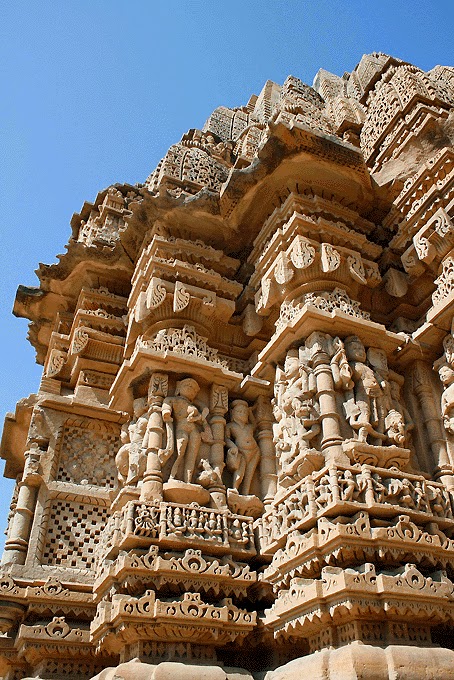



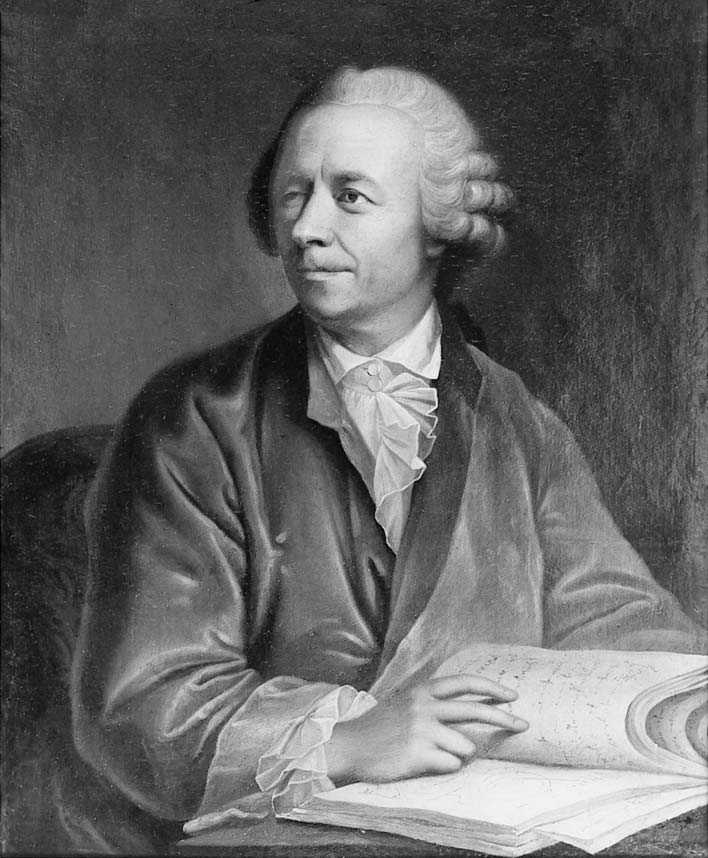


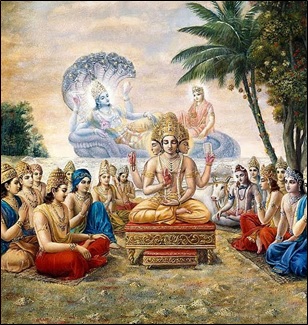
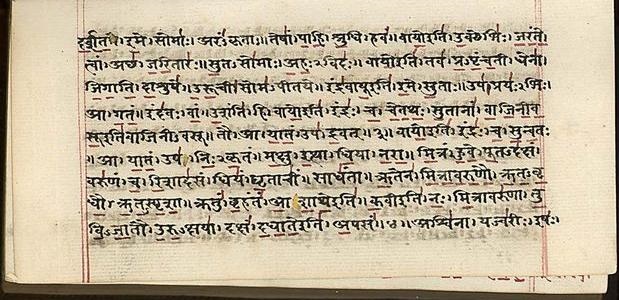

 GLOBAL HINDUISM