बृहदारण्यकोपनिषद – प्रलय के बाद ‘सृष्टि की उत्पत्ति

Sanatan Dharm and Hinduism's avatarHINDUISM AND SANATAN DHARMA

img_4902

‘बृहत’ (बड़ा) और ‘आरण्यक’ (वन) दो शब्दों के मेल से इसका यह ‘बृहदारण्यक’ नाम पड़ा है। इसमें छह अध्याय हैं बृहदारण्यक उपनिषदों पर भर्तु प्रपंच ने भाष्य रचना की थी।

इसमें छह ब्राह्मण हैं।

प्रथम ब्राह्मण में, सृष्टि-रूप यज्ञ’ को अश्वमेध यज्ञ के विराट अश्व के समान प्रस्तुत किया गया है। यह अत्यन्त प्रतीकात्मक और रहस्यात्मक है। इसमें प्रमुख रूप से विराट प्रकृति की उपासना द्वारा ‘ब्रह्म’ की उपासना की गयी है।

दूसरे ब्राह्मण में, प्रलय के बाद ‘सृष्टि की उत्पत्ति’ का वर्णन है।

तीसरे ब्राह्मण में, देवताओं और असुरों के ‘प्राण की महिमा’ और उसके भेद स्पष्ट किये गये हैं।

चौथे ब्राह्मण में, ‘ब्रह्म को सर्वरूप’ स्वीकार किया गया है और चारों वर्णों (ब्राह्मण, क्षत्रिय, वैश्य और शूद्र) के विकास क्रम को प्रस्तुत किया गया है।

पांचवें ब्राह्मण में, सात प्रकार के अन्नों की उत्पत्ति का उल्लेख है और सम्पूर्ण सृष्टि को ‘मन, वाणी और प्राण’…

View original post 7,936 more words

The Movements of the Sun per Śrīmad-Bhāgavatam

Sanatan Dharm and Hinduism's avatarHINDUISM AND SANATAN DHARMA

Srimad Bhagavatam Canto 5 Chapter 21 text 1 to text 19 : The Movements of the Sun by His Divine Grace A.C Bhaktivedanta Swami Prabhupada

This chapter informs us of the movements of the sun. The sun is not stationary; it is also moving like the other planets. The sun’s movements determine the duration of night and day.

When the sun travels north of the equator, it moves slowly during the day and very quickly at night, thus increasing the duration of the daytime and decreasing the duration of night. Similarly, when the sun travels south of the equator, the exact opposite is true — the duration of the day decreases, and the duration of night increases.

When the sun enters Karkaṭa-rāśi (Cancer) and then travels to Siṁha-rāśi (Leo) and so on through Dhanuḥ-rāśi (Sagittarius), its course is called Dakṣiṇāyana, the southern way, and when the sun enters Makara-rāśi (Capricorn)…

View original post 2,015 more words

The Cosmology of the Bhagavata Purana

Sanatan Dharm and Hinduism's avatarHINDUISM AND SANATAN DHARMA

The inquisitive human mind naturally yearns to understand the universe and man’s place within it. Today scientists rely on powerful telescopes and sophisticated computers to formulate cosmological theories. In former times, people got their information from traditional books of wisdom. Followers of India’s ancient culture, for example, learned about the cosmos from scriptures like the Srimad-Bhagavatam, or Bhagavata Purana. But the Bhagavatam’s descriptions of the universe often baffle modern students of Vedic literature. Here Bhaktivedanta Institute scientist Dr. Richard Thompson suggests a framework for understanding the Bhagavatam’s descriptions that squares with our experience and modern discoveries.

Jambudvipa: The Srimad-Bhagavatam describes that the universe lies within a series of spherical shells which is divided in two by an earth plane called Bhu-mandala. A series of dvipas, or ‘islands,’ and oceans make up Bhu-mandala. In the center of Bhu-mandala is the circular ‘island’ of Jambudvipa (inset), whose most prominent feature is…

View original post 2,557 more words

Sri Mani Manjari of Sri Narayana Panditacharya

Sanatan Dharm and Hinduism's avatarHINDUISM AND SANATAN DHARMA


Mani

Sri Narayana Panditacharya’s ‘Mani Manjari’ is a work of 301 slokas divided into eight chapters. Traditionally, it is the first text taught to Madhvas. It is among the three works on Sri Madhvacharya – Sri Hari Vayustuti and Sri Sumadhva Vijaya, being the other two – that has had a long tradition of being recited with devotion among orthodox Madhva circles. According to Dr. BNK Sharma, it is an essential prologue to Sri Sumadhva Vijaya. In the collection of essays on Sri Sumadhva Vijaya by Sixteen Eminent Scholars, released in Srirangam in late sixties, Sri Narayana Panditacharya is mentioned as amsha of Sri Subramanya, though no pramanas are given.

The first two chapters deal with Creation and Ramayana. The third and fourth chapter deal with Krishnavatara. The fifth chapter deals with ascent of Buddhism and early days of Advaita. The sixth chapter deals with the birth of Adi Sankara…

View original post 9,679 more words

The Vimanika Shastra- AS IT IS

Sanatan Dharm and Hinduism's avatarHINDUISM AND SANATAN DHARMA


VYMAANIKA-SHAASTRA


AERONAUTICS


by Maharshi Bharadwaaja


Propounded by Venerable SUBBARAYA SHASTRY


Translated into English and Edited, Printed and Published by G.R. JOSYER


SCHOLAR, HISTORIAN, ESSAYIST, SANSKRITIST


Maharshi Bharadwaaja’s


VYMAANIKA SHAASTRA


FIRST CHAPTER


Maharshi Bharadwaaja:


I make obeisance to the Divine Being, who is visible on the crest of the Vedas, who is the fountain of eternal bliss, and whose abode is reached by Vimaanas or Aeroplanes. Having studied the Shaastraas or sciences propounded by previous men of science to the best of my ability, for the benefit of mankind, I shall deal with the science of Aeronautics, which is the essence of the Vedas, which will be a source of joy and benefit to humanity, which will facilitate comfortable travel in the sky from world to world, in eight chapters, consisting of 100 topics…

View original post 44,004 more words

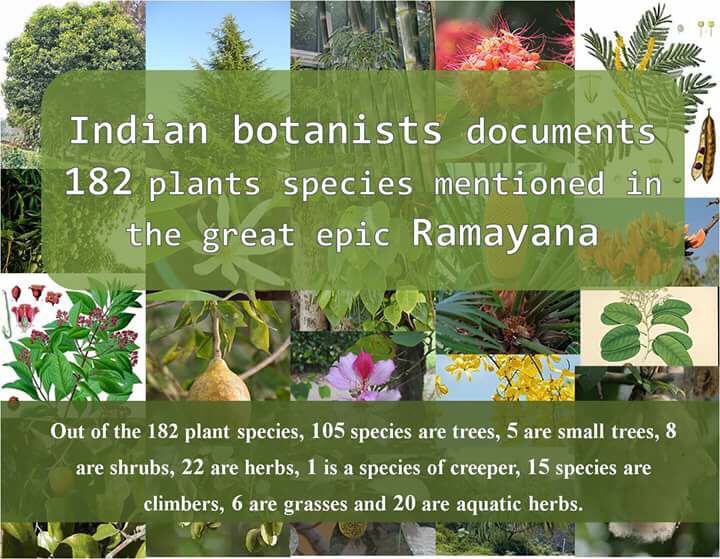
Vanaras (not monkey) of Ramayan decoded

Vanaras and Hanuman were not monkeys but advanced civilized race that was going down as new humans evolving. Western confused Hindus.

Sanatan Dharm and Hinduism's avatarHINDUISM AND SANATAN DHARMA

The world of plants is central to the Ramayana, and this Indian pre-historical book written in long poem describes several trees and plants that are geographically accurate, and even today, the plants that are described are found growing in the exact locations all over India where Valmiki, author of the Ramayana, has placed them. It is both geographically and botanically correct.

Mr. M. Amerthalingam, botanist with the C.P.R. Environmental Education Centre, Chennai, presented the paper, “Plant Diversity in the Valmiki Ramayana” at the February 2013 Conference on The Ramayana in Literature, Society, and the Arts. The proceedings have recently been published. Dr. P. Sudhakar, the co-author*, was invaluable in tracing the botanical and modern names for several of the plant species, which are named in Sanskrit. Valmiki Ramayana is replete with superb descriptions of nature’s glory. It hinges on two major events, namely Rama’s fourteen year exile in the forests…

View original post 340 more words

Maihar Ki Devi-A short fact

Sanatan Dharm and Hinduism's avatarHINDUISM AND SANATAN DHARMA

आल्हा को दिया था शारदा मां ने अमर होने का वरदान

बैरागढ़/उरई (जालौन)। जिले में पौराणिक स्थलों का अलग महत्व है। कभी दिल्ली, कन्नौज और महोबा की रियासतों के केंद्र रहे एट थाना क्षेत्र का बैरागढ़ अकोढ़ी में दिल्ली के शासक पृथ्वीराज चौहान और महोबा के आल्हा, ऊदल की आखिरी लड़ाई हुई थी। मान्यता है कि आल्हा को मां शारदा का आशीर्वाद प्राप्त था। लिहाजा पृथ्वीराज चौहान की सेना को पीछे हटना पड़ा। मां के आदेशानुसार आल्हा ने अपनी साग (हथियार) यहीं मंदिर पर चढ़ाकर नोक टेढ़ी कर दी थी। जिसे आज तक कोई साधा नहीं कर पाया है। मंदिर परिसर में ही तमाम ऐतिहासिक महत्व के अवशेष अभी भी आल्हा व पृथ्वीराज चौहान की जंग की गवाही देते हैं।

एट से आठ किलोमीटर दूर मां शारदा में श्रद्धालुओं का तांता लगा था। साधक तंत्र साधना में लीन थे। पुजारी शारदा…

View original post 1,090 more words

New additions

Ashtaadhyaayi Prathamavritti-3bhrigu samhita hindi1Brain meditationElementary first book of sanskrithigher sanskrit grammerkashika Nyasa Padamanjari—Sutrapatha Dhatupatha GanapathaKitabFutuhAl-buldanVol-1KitabFutuhAl-buldanVol-2.pdOm chant Effect on Nervous systemRig Vedas EngSamskrita Vakya Prabodh-SwamiDayanandSatsang ki Marmik BateinScience and AstronomyScienceVimanasSrimadDeviPuranaThirukkural – Sanskrit TranslationVacaspatyam Volume 1vedic Solar Eclipsevedic_vision_of_godYoga-rasayanam-sanskrit-hindiAshtaadhyaayi Prathamavritti-3scienceSomeMissingChapterOfWorldHistorySPEED OF LIGHT PER VEDASsusrut samhita vol 2 enVaidikVisvaRashthraKaItihas-Bhag1P.n.OakVaidikVisvaRashthraKaItihas-Bhag2P.n.OakVaidikVisvaRashthraKaItihas-Bhag3P.n.OakWorldVedicHeritage-Book1WorldVedicHeritage-Book2Panini astadhayi-Prathamavritti-1.pd

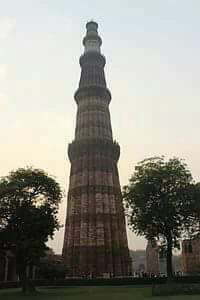
कुतुबुद्दीन ऐबक और क़ुतुबमीनार

कुतुबुद्दीन ऐबक और क़ुतुबमीनार—
किसी भी देश पर शासन करना है तो उस देश के लोगों का ऐसा ब्रेनवाश कर दो कि वो अपने देश, अपनी संस्कृति और अपने पूर्वजों पर गर्व करना छोड़ दें. इस्लामी हमलावरों और उनके बाद अंग्रेजों ने भी भारत में यही किया. हम अपने पूर्वजों पर गर्व करना भूलकर उन अत्याचारियों को महान समझने लगे जिन्होंने भारत पर बेहिसाब जुल्म किये थे।

अगर आप दिल्ली घुमने गए है तो आपने कभी विष्णू स्तम्भ (क़ुतुबमीनार) को भी अवश्य देखा होगा. जिसके बारे में बताया जाता है कि उसे कुतुबुद्दीन ऐबक ने बनबाया था. हम कभी जानने की कोशिश भी नहीं करते हैं कि कुतुबुद्दीन कौन था, उसने कितने बर्ष दिल्ली पर शासन किया, उसने कब विष्णू स्तम्भ (क़ुतुबमीनार) को बनवाया या विष्णू स्तम्भ (कुतूबमीनार) से पहले वो और क्या क्या बनवा चुका था ?

कुतुबुद्दीन ऐबक, मोहम्मद गौरी का खरीदा हुआ गुलाम था. मोहम्मद गौरी भारत पर कई हमले कर चुका था मगर हर बार उसे हारकर वापस जाना पडा था. ख्वाजा मोइनुद्दीन चिश्ती की जासूसी और कुतुबुद्दीन की रणनीति के कारण मोहम्मद गौरी, तराइन की लड़ाई में पृथ्वीराज चौहान को हराने में कामयाबी रहा और अजमेर / दिल्ली पर उसका कब्जा हो गया।

अजमेर पर कब्जा होने के बाद मोहम्मद गौरी ने चिश्ती से इनाम मांगने को कहा. तब चिश्ती ने अपनी जासूसी का इनाम मांगते हुए, एक भव्य मंदिर की तरफ इशारा करके गौरी से कहा कि तीन दिन में इस मंदिर को तोड़कर मस्जिद बना कर दो. तब कुतुबुद्दीन ने कहा आप तीन दिन कह रहे हैं मैं यह काम ढाई दिन में कर के आपको दूंगा।

कुतुबुद्दीन ने ढाई दिन में उस मंदिर को तोड़कर मस्जिद में बदल दिया. आज भी यह जगह “अढाई दिन का झोपड़ा” के नाम से जानी जाती है. जीत के बाद मोहम्मद गौरी, पश्चिमी भारत की जिम्मेदारी “कुतुबुद्दीन” को और पूर्वी भारत की जिम्मेदारी अपने दुसरे सेनापति “बख्तियार खिलजी” (जिसने नालंदा को जलाया था) को सौंप कर वापस चला गय था।

कुतुबुद्दीन कुल चार साल (१२०६ से १२१० तक) दिल्ली का शासक रहा. इन चार साल में वो अपने राज्य का विस्तार, इस्लाम के प्रचार और बुतपरस्ती का खात्मा करने में लगा रहा. हांसी, कन्नौज, बदायूं, मेरठ, अलीगढ़, कालिंजर, महोबा, आदि को उसने जीता. अजमेर के विद्रोह को दबाने के साथ राजस्थान के भी कई इलाकों में उसने काफी आतंक मचाया।

जिसे क़ुतुबमीनार कहते हैं वो महाराजा वीर विक्रमादित्य की वेदशाला थी. जहा बैठकर खगोलशास्त्री वराहमिहर ने ग्रहों, नक्षत्रों, तारों का अध्ययन कर, भारतीय कैलेण्डर “विक्रम संवत” का आविष्कार किया था. यहाँ पर २७ छोटे छोटे भवन (मंदिर) थे जो २७ नक्षत्रों के प्रतीक थे और मध्य में विष्णू स्तम्भ था, जिसको ध्रुव स्तम्भ भी कहा जाता था।

दिल्ली पर कब्जा करने के बाद उसने उन २७ मंदिरों को तोड दिया।विशाल विष्णु स्तम्भ को तोड़ने का तरीका समझ न आने पर उसने उसको तोड़ने के बजाय अपना नाम दे दिया। तब से उसे क़ुतुबमीनार कहा जाने लगा. कालान्तर में यह यह झूठ प्रचारित किया गया कि क़ुतुब मीनार को कुतुबुद्दीन ने बनबाया था. जबकि वो एक विध्वंशक था न कि कोई निर्माता।

अब बात करते हैं कुतुबुद्दीन की मौत की।इतिहास की किताबो में लिखा है कि उसकी मौत पोलो खेलते समय घोड़े से गिरने पर से हुई. ये अफगान / तुर्क लोग “पोलो” नहीं खेलते थे, पोलो खेल अंग्रेजों ने शुरू किया. अफगान / तुर्क लोग बुजकशी खेलते हैं जिसमे एक बकरे को मारकर उसे लेकर घोड़े पर भागते है, जो उसे लेकर मंजिल तक पहुंचता है, वो जीतता है।

कुतबुद्दीन ने अजमेर के विद्रोह को कुचलने के बाद राजस्थान के अनेकों इलाकों में कहर बरपाया था. उसका सबसे कडा विरोध उदयपुर के राजा ने किया, परन्तु कुतुबद्दीन उसको हराने में कामयाब रहा. उसने धोखे से राजकुंवर कर्णसिंह को बंदी बनाकर और उनको जान से मारने की धमकी देकर, राजकुंवर और उनके घोड़े शुभ्रक को पकड कर लाहौर ले आया।

एक दिन राजकुंवर ने कैद से भागने की कोशिश की, लेकिन पकड़ा गया. इस पर क्रोधित होकर कुतुबुद्दीन ने उसका सर काटने का हुकुम दिया. दरिंदगी दिखाने के लिए उसने कहा कि बुजकशी खेला जाएगा लेकिन इसमें बकरे की जगह राजकुंवर का कटा हुआ सर इस्तेमाल होगा. कुतुबुद्दीन ने इस काम के लिए, अपने लिए घोड़ा भी राजकुंवर का “शुभ्रक” चुना।

कुतुबुद्दीन “शुभ्रक” घोडे पर सवार होकर अपनी टोली के साथ जन्नत बाग में पहुंचा. राजकुंवर को भी जंजीरों में बांधकर वहां लाया गया. राजकुंवर का सर काटने के लिए जैसे ही उनकी जंजीरों को खोला गया, शुभ्रक घोडे ने उछलकर कुतुबुद्दीन को अपनी पीठ से नीचे गिरा दिया और अपने पैरों से उसकी छाती पर क् बार किये, जिससे कुतुबुद्दीन वहीं पर मर गया।

इससे पहले कि सिपाही कुछ समझ पाते राजकुवर शुभ्रक घोडे पर सवार होकर वहां से निकल गए. कुतुबुदीन के सैनिको ने उनका पीछा किया मगर वो उनको पकड न सके. शुभ्रक कई दिन और कई रात दौड़ता रहा और अपने स्वामी को लेकर उदयपुर के महल के सामने आ कर रुका. वहां पहुंचकर जब राजकुंवर ने उतर कर पुचकारा तो वो मूर्ति की तरह शांत खडा रहा।

वो मर चुका था, सर पर हाथ फेरते ही उसका निष्प्राण शरीर लुढ़क गया. कुतुबुद्दीन की मौत और शुभ्रक की स्वामिभक्ति की इस घटना के बारे में हमारे स्कूलों में नहीं पढ़ाया जाता है लेकिन इस घटना के बारे में फारसी के प्राचीन लेखकों ने काफी लिखा है. *धन्य है भारत की भूमि जहाँ इंसान तो क्या जानवर भी अपनी स्वामी भक्ति के लिए प्राण दांव पर लगा देते हैं।

।।साभार।।