Kundalini Rising: A Guide To The 7 Chakras

Sanatan Dharm and Hinduism's avatarHINDUISM AND SANATAN DHARMA

http://themindunleashed.org/wp-content/uploads/2014/03/fractal-1050x656.jpg

KUNDALINI RISING, PART 1: THE ROOT CHAKRA

“Until you make the unconscious conscious, it will direct your life and you will call it fate.” ~ Carl Jung

Imagine your spine is a tree trunk with seven ascending flowers (chakras) growing out of it. These flowers are either opened or closed depending upon your health, mental disposition, and ability to communicate with the cosmos. These flowers emit a distinct energy unique to your personal frequency, but they are profoundly interconnected, both with each other and with the greater cosmos. This article will discuss the significance of the first of these chakras:

Muladhara, the root chakra.

If the crown chakra is the Übermensch (overman) of the Kundalini process, then the root chakra is the Untermensch (underman). But don’t allow this lowly connotation to fool you into thinking that the root chakra is any less important, or even less powerful. After…

View original post 5,004 more words

Upanishads on Creation : THE SPIDER ANALOGY

Upanishad on creation is better and real theory.

Sanatan Dharm and Hinduism's avatarHINDUISM AND SANATAN DHARMA

A wonderful illustration from Upanishads on Creation : THE SPIDER ANALOGY

======= Must Read =======

=======The process of creation=========
===Brahman the source of everything===
(English)yathorṇa-nābhiḥ sṛjate gṛhṇate ca
yathā pṛthivayām oṣadhayas sambhavanti |
yathā sataḥ puruṣāt keśalomāni
tathākṣarāt sambhavatīha viśvam ||

…… Mundak Upanishad 1.1.7

“ As a spider projects forth and draws back (its threads), as plants grow on earth, as hairs grow on the body, so does the universe emerge from the Imperishable Being.“

PURPORT :

Here three illustration is used :

Spider spinning the web
Varieties of plants growing from the earth
Hairs growing from the body

1.The spider designs its web. So it is the intelligent cause of the web. Raw material is also produced by the spider itself (normally any raw material is different from the maker). So here spider is the intelligent as well as the material cause of the web. In many cases…

View original post 360 more words

Ramayan is > 2 million years old

Sanatan Dharm and Hinduism's avatarHINDUISM AND SANATAN DHARMA

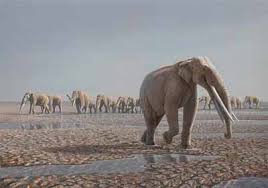
4-tusk-elephant

According to Vedic time calculations, we are at present in Kali Yuga (Iron Age) and Ramayana is supposed to have happened in Treta Yuga (Silver Age), when truth and justice prevailed about 75% among humans.
In Valmiki Ramayan, Sundar Kanda [4.27.12] states that Hanuman, on entering Lanka, sees FOUR-TUSKED elephants guarding the palaces of Ravan.

Modern anthropologists say that elephants with four tusks existed 12-1.6 million years ago.

The Gomphotheriidae were a diverse taxonomic family of extinct elephant-like animals (proboscideans). Referred to as gomphotheres, they were widespread in North America during the Miocene and Pliocene epochs, 12-1.6 million years ago. Some lived in parts of Eurasia, Beringia and, following the Great American Interchange, South America.

Gomphotheres differed from elephants in their tooth structure, particularly the chewing surfaces on the molar teeth. Most had four tusks, and their retracted facial and nasal bones prompt palaeontologists to believe that gomphotheres had elephant-like…

View original post 813 more words

Ram’s Era was >1.7 millions years ago

Sanatan Dharm and Hinduism's avatarHINDUISM AND SANATAN DHARMA

After conquering Lankhini, the Godess of Lanka, Sri Hanuma enters Lanka and searches for Seeta. Sage Valmiki describes what Sri Hanuma saw, as follows:

त्रिविष्टप निभम् दिव्यम् दिव्य नाद विनादितम् |
वाजि हेषित सम्घुष्टम् नादितम् भूषणैः तथा ||

रथैः यानैः विमानैः च तथा गज हयैः शुभैः |
वारणैः च चतुः दन्तैः श्वेत अभ्र निचय उपमैः ||

भूषितम् रुचिर द्वारम् मत्तैः च मृग पक्षिभिः |
राक्षस अधिपतेः गुप्तम् आविवेश गृहम् कपिः ||

The great Hanuma entered secretly Ravana’s inner city which was equal to paradise, rendered noisy by neighing of horses and tinkling of ornaments, by chariots, vehicles and aerial-cars and decorated by auspicious elephants and horses and great elephants with four tusks and by birds and animals in heat. It had beautiful entrances and was protected by thousands of rakshasas with great strength.

(Sundara Kanda 4th Sarga 26 – 28 Slokas)

उत्तमम् राक्षसावासम् हनुमानवलोकयन् |
आससादाथ लक्ष्मीवान् राक्षसेन्द्रनिवेशनम् ||

चतुर्…

View original post 2,049 more words

RAM SETU- ADAM’S BRIDGE >175,0000 YRS OLD

Sanatan Dharm and Hinduism's avatarHINDUISM AND SANATAN DHARMA

*”ॐ””श्री* ॐ”~”श्री*~* “ॐ”~”श्री*~ ॐ”~”श्री*~ॐ”*”श्री* ॐ”*”श्री”*”ॐ”*”श्री**”ॐ”

“The Radiocarbon dating of the bridge verges on around 1,750,000 years, which roughly coincides with the Indian estimate of the mythical ‘Treta Yuga’.”

“Life is Life, Awakened to Divine Light {Within} every moment with Positive Attitude & Perceptive without Advaita ( Duality).”

“Adam’s Bridge (Tamil: ஆதாம் பாலம் ātām pālam), also known as Rama’s Bridge or Rama Setu (Tamil: இராமர் பாலம் Irāmar pālam, Sanskrit: रामसेतु, rāmasetu), is a chain of limestone shoals, between Pamban Island, also known as Rameswaram Island, off the southeastern coast of Tamil Nadu, India, and Mannar Island, off the northwestern coast of Sri Lanka.
Geological evidence suggests that this bridge is a former land connection between India and Sri Lanka.”

“The bridge was first mentioned in the ancient Indian Sanskrit Epic Ramayana of Divine Saint Valmiki.
The name Rama’s Bridge or Rama Setu (Sanskrit; setu: bridge) refers to the bridge built…

View original post 2,568 more words

WHAT ARE THE VEDIC TEXTS

Sanatan Dharm and Hinduism's avatarHINDUISM AND SANATAN DHARMA

WHAT ARE THE VEDIC TEXTS

They started with Shruti. Shruti literally means “That which is heard”. For long periods of time there was no Vedic literature. It was a vocal or oral tradition, and passed down accordingly. The Vedas and Upanishads were in Shruti form for a long period of time. In fact, the word Upanishad means “Upa (near), Ni (down), Shad (sit).” This means that the teachings of the Upanishads are conveyed from Guru to disciple, when the disciple sits very close to the Guru.

The very first of the sacred books of Vedic culture, in fact the oldest books on earth, are called the Vedas. The word Veda means knowledge. The word Veda came from the root word vid meaning “to know”. The Vedas are the very first scriptures of Hinduism. Vedas, as described by the scriptures, were given by God. There are four Vedic samhitas, which…

View original post 2,428 more words

India is India , not south north west east. Common evolutionary language- one root.

Sanatan Dharm and Hinduism's avatarHINDUISM AND SANATAN DHARMA

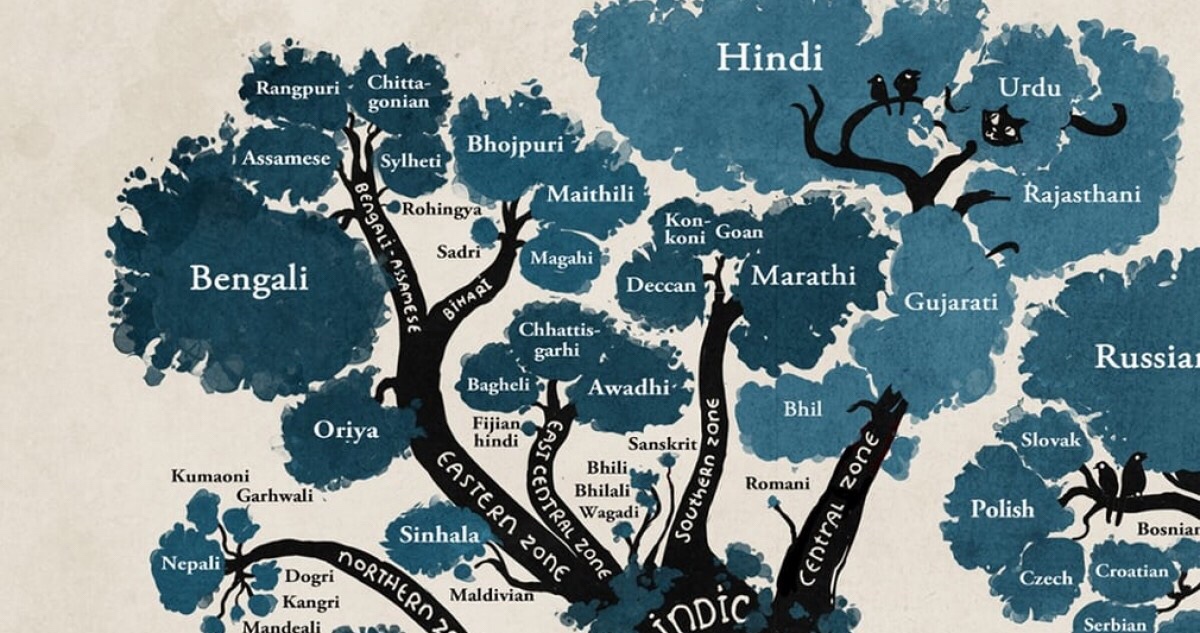
“Prakrit” is origin of modern language in India, and surrounding, Indo-Aryan, the Dravidian and the Munda languages.

In recent years studies have been made to correlate genetic background of populations with languages.

These studies have had some success in describing the spread of languages. It is significant that on many counts the vast majority of the Indian population, in North as well as South India, is classed as a single group.

The attested migrations of the Indo-Iranians into Europe explains the presence of several Dravidian features in the European languages.

From the Annals of the Bhandarkar Oriental Research Institute, vol. 75, 1994, pp. 185-195.

Read more Commonality of Indian language by Dr. Subhash Kak, PhD.

Indian language are one – Dr Frawley, David

View original post

https://pparihar.com/2015/10/26/kalki-avtar-will-be-not-a-human-like-but-alien-looking/

Nice article for hair loss and growth.

Massage

A study conducted in Japan showed that scalp massage could increase hair thickness. The men involved in the study had regular massages over a 24-week period, and while hair growth rate did not improve, thickness improved significantly.

Researchers believe that this could be to do with increased blood flow and direct stimulation of the cells.

Nutrition

While hair loss can be affected by nutrient deficiency, the exact links between diet and hair loss are complicated:

Iron: Iron deficiency is the most common nutritional deficiency in the world and is a known cause of hair loss. Women experiencing perimenopause and menopause are at risk of iron deficiency, as are vegans, vegetarians, and people with certain conditions, such as celiac disease. In a study on mice, the reversal of iron deficiency also leads to the restoration of hair growth.
Zinc: Zinc deficiency has a direct link with brittle hair, and increasing zinc levels also leads to the regrowth of hair. However, researchers do not know whether zinc supplementation would help those without diagnosed zinc deficiency.
Fatty acids: A deficiency in essential fatty acids can lead to hair loss on the scalp and eyebrows.
It is important to remember that there is a lack of research on the role of supplementation. Researchers do not know whether supplements will prevent hair loss in people that do not have nutrient deficiencies.

In fact, the over supplementation of certain nutrients, such as vitamin A, vitamin E, and selenium, can lead to hair loss.

Stress

There appears to be a direct link between stress and hair loss. Likewise, a shock to the system, be that through physical or emotional trauma, can also act as a shock to the hair follicles and they can stop growing.

More –
http://flip.it/pJye2g

Size of soul, spirit is decoded in Gita

Sanatan Dharm and Hinduism's avatarHINDUISM AND SANATAN DHARMA

Soul can not be seen and it can be imagined as per Gita. But just before you are about to die , you will know and see it but by the time your body already died and senses are gone so can not express it. Eyes can see though as picture .

soul

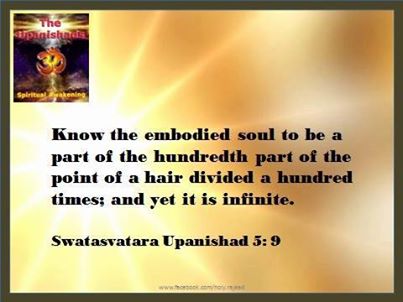
But ancient Indian Upanishad has described it.The Svetasvatara Upanishad (श्वेताश्वतरनोपनिषद् or Śvetāśvataropaniṣad) explains the actual dimension or size of soul.

Śvetāśvataropaniṣad is associated with the Krishna Yajurveda and contains 113 mantras in 6 chapters. It is estimated to have been composed when earth creation was done, no body knows when.

Most of this Upanishad is attributed to Sage Svetasvatara (Sveta-Asvatara i.e the one owing a white mule).
Other commentators are Adi Sankaracharya, Vijnanatma, Shankarananda and Narayana Tirtha.
Śvetāśvataropaniṣad is the earliest textual exposition of a systematic philosophy of Saivism, for the first time elevating Rudra to the status…

View original post 332 more words